Posted on 2 Comments

Tax Deductions Every Creative Needs to Know

Listen up, creative weirdos. It’s that time of year again and we have some helpful tax tips to help you save some money. Every year, artists, writers, musicians, and independent creators unintentionally hand the IRS more money than they need to. Why? Because they overlook deductions they are completely entitled to claim.

When you’re running a creative business, your brain is usually focused on the canvas, the manuscript, or the melody…not the ever-shifting complexities of the tax code. But missing out on these deductions is literally leaving money on the table. Money that could be funding your next project, buying better gear, or just keeping the lights on.

This is your Rogue Guide to the key business deductions to look out for before you file. (And as always, work with a tax professional who actually understands the freelance landscape to make sure you get every penny you deserve.)

Here are the key deductions to keep your hard-earned money where it belongs.
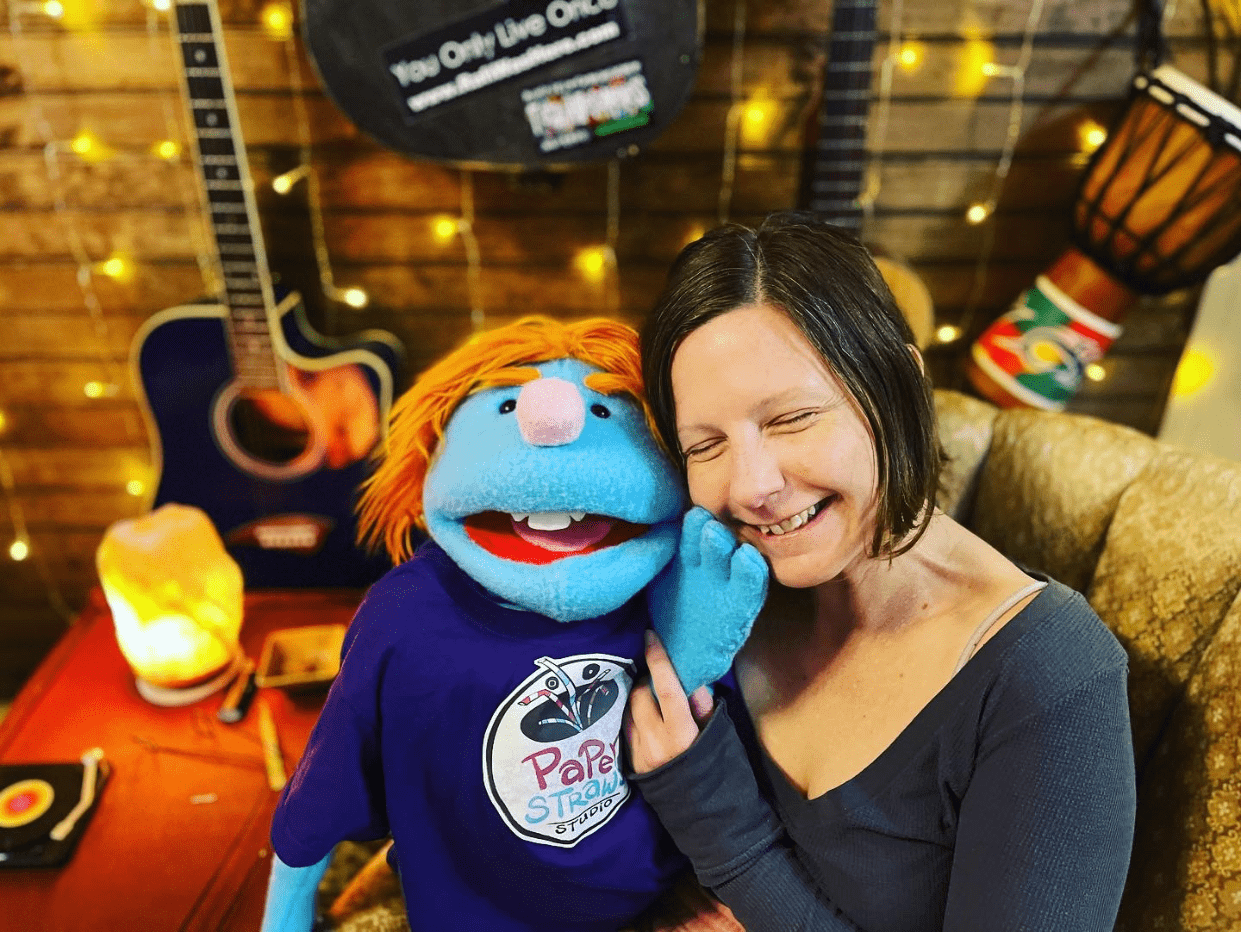
A woman and a blue puppet with orange hair happily pose together in a cozy room with warm lighting and musical instruments in the background.
We try and make tax time a game, so that we spend the day enjoying ourselves

Check these yearly because some rates change (such as mileage and food). This is not legal advice, it is just a helpful guide to writing off expenses for your creative business. Just about every expense you have to keep your business running is something you don’t have to pay taxes on. I know it’s a drag to keep track of, but it will save you a lot of money at the end of the year.

1. Materials & Supplies (Line 22)

  • Consumables: Paint, canvas, clay, ink, fabric, paper, and film. Materials you use to create your craft.
  • Tools: Brushes, palette knives, carving tools, and small hand tools. All your tools.
  • Safety Gear: Respirators, filters, gloves, aprons, and specialized footwear.
  • Finishing: Framing, glass, matting, and display hardware.
  • Shipping Materials: Crating, bubble wrap, tape, and boxes for artwork delivery.

2. Vehicle & Mileage (Line 9)

  • Business Mileage:72.5 cents per mile (2026 IRS Rate).
    • Includes: Trips to art supply stores, galleries, framing shops, art shows, and client meetings.
  • Incidental Auto: Parking fees and tolls for business-related travel.

3. Studio & Workspace (Line 20b or 30)

Choose either offsite, home office, or both if you rent a space and have a studio in your home.

  • Off-site Rent: Monthly rent for a commercial studio or storage unit.
  • Off-site Utilities: Electricity, water, and heat for a non-home studio.
  • Home Office Deduction:
    • Simplified: $5 per square foot (up to 300 sq. ft.).
    • Actual: Percentage of mortgage interest/rent, insurance, and utilities based on studio square footage.
A person holding a sign advertising an art show, standing by a bridge in Oil City, Pennsylvania. The sign includes details about the event on August 5th, featuring Rafe D. Klee and graffiti gallery.

4. Marketing & Advertising (Line 8)

  • Web Presence: Website hosting (your website), domain renewals, and SEO services. plugins for your website.
  • Digital Marketing: Social media ads (Instagram/Facebook) and email newsletter subscriptions.
  • Print: Business cards, portfolios, postcards, and printed catalogs.
  • Entry Fees: Application fees for juried shows, art fairs, and competitions.

5. Labor & Professional Services (Lines 10, 11, & 17)

  • Gallery Commissions: Fees kept by a gallery upon the sale of your work.
  • Contract Labor: Fees for studio assistants, models, or professional photographers.
  • Professional Fees: Payments to CPAs, tax preparers, bookkeepers, or legal counsel.
  • Filing Taxes Fee: What you paid last year to file your business taxes.

6. Office & Administrative (Line 18)

  • Software: Adobe Creative Cloud, QuickBooks, cloud storage, and office suites.
  • Office Supplies: Stationery, printer ink, stamps, and administrative folders.
  • Small Tech: Computers, tablets, or printers costing $2,500 or less (De Minimis Safe Harbor).
  • Shipping Costs: All business related shipping costs (including art).

7. Travel & Meals (Line 24a & 24b)

  • Travel: Airfare, lodging, and Uber/Lyft/Train for residencies, art fairs, or gallery openings.
  • Business Meals: 50% deductible for meetings with curators, collectors, or collaborators.
A group of people gathered in a room for an event, with a man in the foreground smiling at the camera. Several others are seated at tables, some engaging with materials and taking notes.

8. Professional Development (Line 27a)

  • Education: Workshops, masterclasses, and seminars.
  • Research: Museum memberships and gallery admission fees.
  • Subscriptions: Art magazines, trade journals, and professional organization dues.

Important Record-Keeping Note: The IRS requires documentation for all deductions. Always keep a digital or physical copy of your receipts and a detailed mileage log (including date, destination, and business purpose). We recommend you have one checking account dedicated to your business.

Non-Deductible Artist Expenses (The “No” List) You Cannot Write These Off.

1. Personal Clothing & Grooming

  • Everyday Clothes: You cannot deduct “work clothes” like jeans, shirts, or even a nice suit for an opening, as they are suitable for everyday wear.
  • Grooming: Haircuts, makeup, or manicures, even if you are attending your own gallery opening or doing a video interview, These are considered personal expenses.
  • Exception: Only specialized protective gear (welding masks) or theatrical costumes (performance clothing) not wearable on the street are deductible.

2. Commuting Costs

  • Home to Office: You cannot deduct the mileage or cost of traveling from your home to a regular, permanent studio or office. This is considered a “commute,” which the IRS deems a personal expense.
  • Exception: You can deduct travel between your first business stop (e.g., the art supply store) and your studio, or from your studio to a client.

3. Personal Meals & Groceries

  • Solo Meals: You cannot write off your lunch just because you worked through it at the studio.
  • Groceries: Standard groceries for your home are never deductible, even if you eat them while working.
  • Exception: Only meals shared with a business contact (client, curator, collaborator) for a clear business purpose are 50% deductible.

4. “Hobby” Expenses

  • Non-Profit Activities: If your art has not made a profit in at least 3 of the last 5 years, the IRS may classify it as a “hobby.” In this case, you cannot deduct any expenses that exceed your art income.

5. Fines & Penalties

  • Traffic Tickets: Parking tickets or speeding fines received while driving for business are not deductible.
  • Tax Penalties: Late filing fees or interest charged by the IRS/state.

6. Portions of “Dual-Use” Items

  • Personal Phone/Internet Use: You can only deduct the percentage of your cell phone or internet bill that is used specifically for business.
  • Unexclusive Home Office: You cannot deduct a home office if the space is also used as a guest bedroom, a TV room, or for any other personal purpose. It must be 100% exclusive to your art.

7. Health Insurance (on Schedule C)

  • Note: While self-employed health insurance is deductible, it usually goes on Form 1040 (Adjustments to Income) rather than Schedule C. It does not reduce your self-employment tax, only your income tax.

The Golden Rule: If you would have bought it or done it even if you weren’t an artist, it’s probably a personal expense. When in doubt, keep the receipt but flag it for your tax professional to make the final call! Download my notes below.
Posted on 11 Comments

Artist’s Self-Diagnosis: Which Muse is Driving Your Bus?

If you’ve been feeling a little “meh” in the studio lately, it’s time for a check-up. We all get hijacked by the wrong motivators sometimes. Print this form out below and put a checkmark next to the “villains” that have been whispering in your ear this week, then look at the “Good Stuff” to find your way home. Watch the video below to get insight into the different motivators we face in our art career.

The Toxic Villains

  • The ATM Hallucination: You find yourself staring at a blank canvas and calculating how many tubes of Cobalt Blue you can buy if this thing sells for exactly $400. You are essentially treating your muse like a bank teller, and she is currently “out to lunch.”
  • The Thumb Workout: You have checked your Instagram notifications four times in the last six minutes. Your thumb is getting ripped, but your soul is shriveling. You are currently a digital lab rat waiting for CatLover42 to give you a dopamine pellet.
  • The Toaster Oven Syndrome: You feel like a failure because you haven’t “popped” out a masterpiece today. You’ve forgotten that you’re a human being and have started identifying as a high-speed 3D printer. (Reminder: You do not have a crumb tray.)
  • The Higgins Vendetta: You are painting specifically to prove your third-grade teacher wrong. While spite is a fantastic short-term fuel, Mr. Higgins is retired. Let him go.

The Good Stuff (The Real Why)

  • The First Spark: You remembered why you started doing this art thing in the first place—before the bills, the “likes,” and the algorithms existed. Just you and the pure, quiet joy of making something.
  • The Creative Megaphone: You finally have something to say that doesn’t fit into a polite conversation at a grocery store. Your art is the only way to say it loud enough.
  • Legal Magic: You are taking a trauma, a heartbreak, or just a really bad Tuesday and performing “Creative Alchemy” to turn it into something beautiful. You’re turning trash into treasure.
  • The Life Force: You’re experiencing the sheer magic of bringing something to life that didn’t exist five minutes ago. You aren’t just an artist; you’re a creator, and that is its own reward.

DOWNLOAD THE CHECKLIST HERE:

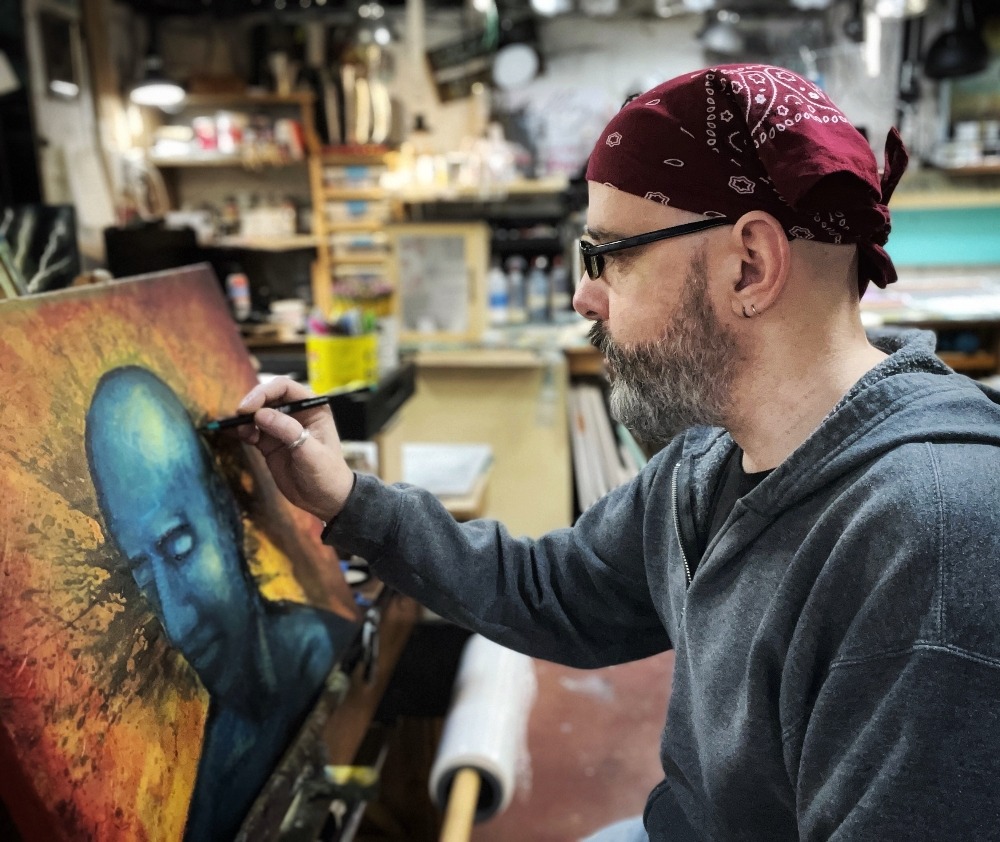
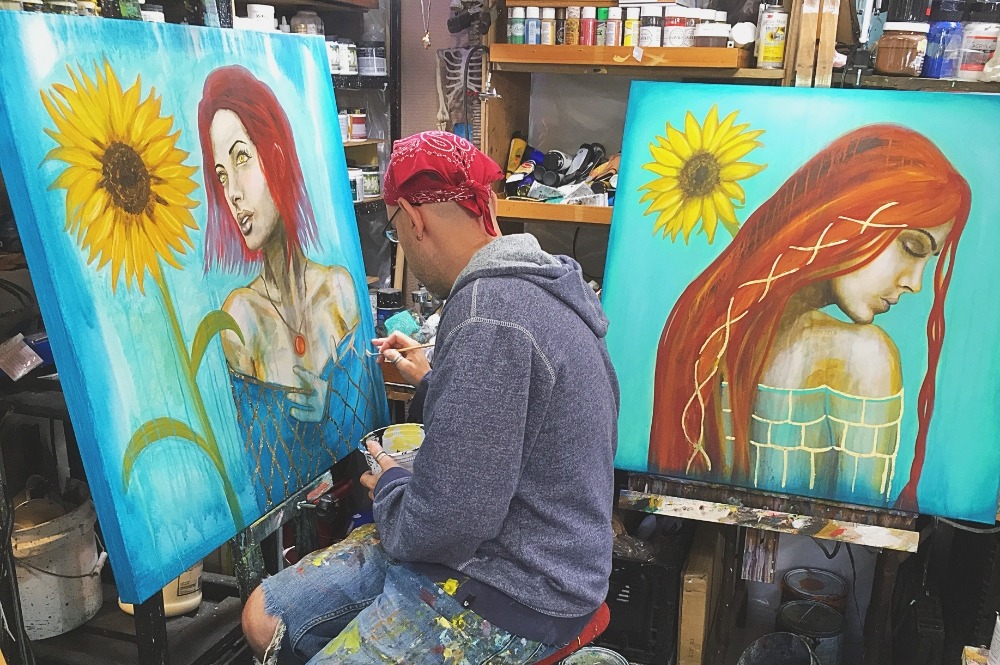
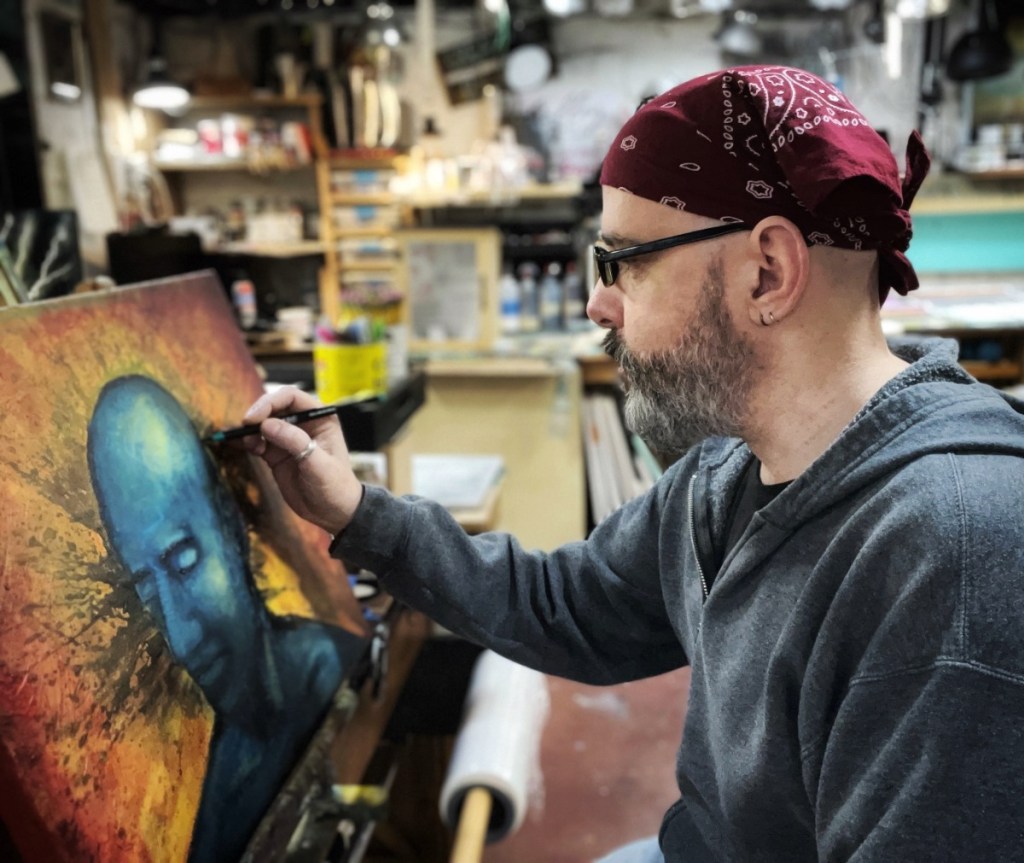
A person painting a blue figure on canvas in an art studio, wearing a red bandana and glasses.

The Prescription:

If you checked more boxes in the “Villain” section than the “Good Stuff,” your “Why” is currently being held hostage by the Corporate Conveyor Belt. The cure is simple:

  1. Stop being a production line. You aren’t here to churn out cheap art; you’re here to create fire.
  2. Reconnect with the magic. Forget the business plan for an hour. Go into the studio and make something so weird or personal that you’d be embarrassed to explain it to a stranger.
  3. Bring it to life. Remember that the power to create something from nothing is a superpower. Don’t waste it on trying to look like something normal.

How did you score? Are you currently in panic mode or a creative alchemist mode? Let me know in the comments! I’m in the trenches with you!

Posted on 7 Comments

Selling Art Is Like Talking About Tacos

The path of pursuing a career in the arts for the last fifteen years has taught me that the journey is both as simple and as complex as you can imagine. Early on, I spent way too much time wrestling with the “what.”

What to paint, what to post, and which “important” people I should be bothering. I was essentially waiting for a miraculous event or a stray lightning bolt to finally put me on the path to my dream life. I used to think that when someone finally noticed me, then I would do the work. I thought once the work sold, I’d paint bigger, or once I got the grant, I’d finally start that new body of work.

But the reality is always the other way around. You don’t get the feast before you show up to the kitchen and cook the meal. (And trust me, trying to eat a “theoretical” feast is a great way to starve.)

A woman smiling while posing with a colorful puppet, seated in a cozy room with guitars and decorative lights in the background.

We often think that success leads to happiness, but psychological research suggests the opposite is true. According to the “Broaden and Build” theory developed by Dr. Barbara Fredrickson, positive emotions like interest and love do more than just make us feel fuzzy in the moment, they actually broaden our sense of possibility.

When you start from a place of doing what you love, your brain is chemically primed to see opportunities that a stressed out, “discipline only” mind would completely miss. This isn’t just fluffy, “live laugh love” advice found on a discounted throw pillow. Love and curiosity trigger the release of dopamine, which enhances creative problem solving and cognitive flexibility. By starting with the thing you love, you are literally building the mental resources needed to sustain a creative career. You’re basically bio hacking your way to better “arting.”
This is why focusing on building up your follower count, stressing about the business side, or trying to create what sells will destroy your creative practice. You have to remember why you started creating in the first place.

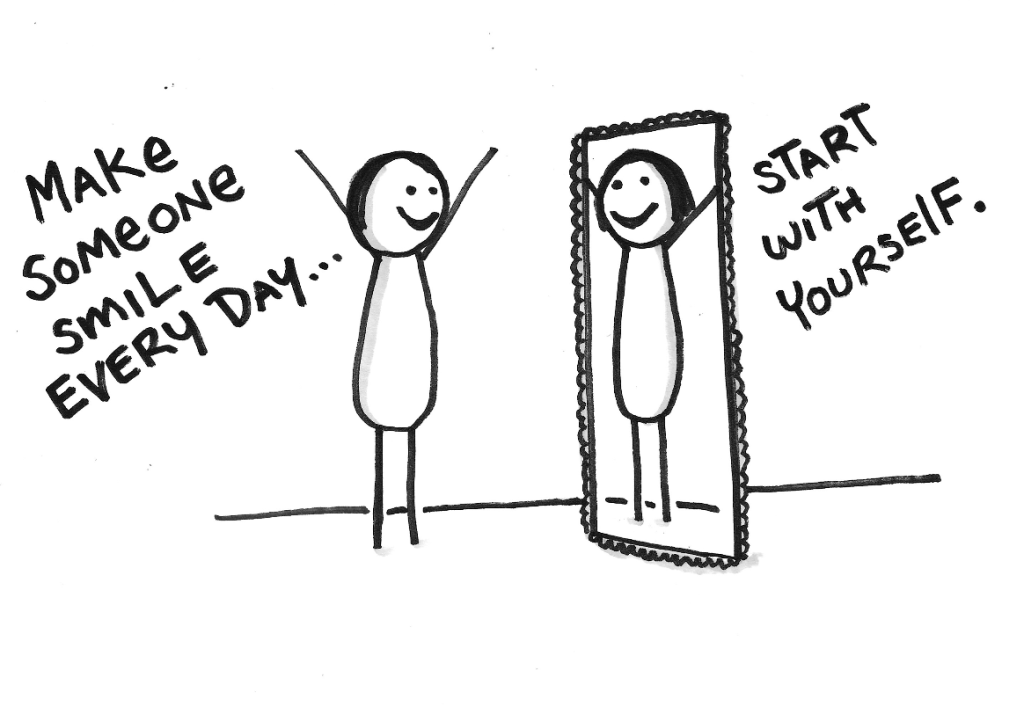
A simple illustrated sketch of a stick figure with arms raised in joy, looking at its reflection in a mirror, accompanied by the text 'Make someone smile every day... Start with yourself.'

The real secret is that the vision must always come before the validation. We often wait for a sign to know if we are successful, but devotion is required long before the proof arrives.

It is not about a hardcore, drill sergeant lifestyle of waking up at 4:00 AM to scream at a canvas while doing burpees. It is about really loving what you do and wanting to spend more time doing it. As a byproduct of that time, you get better. You articulate your vision more clearly, and people eventually respond to that.

Just this morning, some awesome person purchased one of my paintings. While that feels semi normal to me now, it was once a burning hope for a younger version of myself who just wanted someone to want the things I loved creating. I’ve realized that I am only responsible for nurturing my own vision and falling in love with the process. People can sense when things are forced or formulaic, but they truly feel passion. When you resonate with your own work, the world eventually starts to resonate with it too.

A man with a beard and bandana sits on a couch surrounded by various paintings. He holds two paintings featuring women with red hair and sunflowers, with additional artwork displayed on the couch and a larger piece behind him.

My advice is that your focus shouldn’t just be on “scaling a business” or “optimizing an art career,” but on a deeper question: How can I make my entire day a fun work of art? When the path is enjoyable, you don’t have to force yourself to show up.

Think about it: no one has to force you to go out for tacos. You want that spicy, crunchy, delicious goodness. You don’t need a motivational speaker or a $1500 self help marketing course to get you to the taco stand.

If you are struggling with a creative or business block, ask yourself if you are making the work for you or if you are following some kind of external pressure of things you think you “should” do. When you make something you are proud of, you naturally want to share it with the world… just do that. The connection will happen on its own. You don’t have to force it, despite what the marketing gurus (who usually only sell courses on how to be a marketing guru) have to say.

Connecting with other people is just a byproduct of your excitement. Think about it: if you are excited about that taco place you just experienced and tell your friends about it, you’ve become an expert in marketing. You boast about the atmosphere, the experience, and the salsa that changed your life. You want to share that info with everyone you know.
Do the same with what you create. That is fun and “marketing” at its best.

Let’s keep it simple. Get in the kitchen, have some fun, and go out and talk about your creative tacos.

Posted on 9 Comments

The “Art Isn’t Real” Tax Fiasco: A Love Letter to the PA Dept. of Revenue

I recently received a piece of mail that made me laugh, then get angry, then consider moving my entire studio to a different planet. It was a letter from Blick Art Materials informing me that the Pennsylvania Department of Revenue has decided that the production of artwork (you know, the thing we do with our lives) does not qualify as “exempt manufacturing” under some dusty statute called 72 P.S. 7201 (c).

UPDATE: WE WON! Read About It Here: https://rafiandklee.com/victory-for-the-artists-but-the-war-isnt-over/

Basically, some pencil-pusher in a cubicle somewhere has decided that when we take raw materials and transform them into something entirely new, we aren’t actually making anything. We’re apparently just… having an expensive hobby? This may have just happened to us, but at this point I’m assuming we are not the only ones dealing with this.

An artist working in a colorful studio filled with art supplies and tools.

How Does The Sales Tax Exemption Work (The Boring-but-Vital Part)

In case you’re unaware of how the grown-up business world is supposed to work: when you are a registered business that manufactures goods, you get a tax break. It’s called a Sales Tax Exemption.

Here’s the deal: If I buy a hunk of clay, paint, canvas, or a gallon of resin to make a sculpture that I then sell, I’m not supposed to pay sales tax on those materials. Why? Because the state gets its cut when the final customer buys the finished piece. If I pay tax on the materials, and the customer pays tax on the statue, the state is double-dipping.

To get this, you usually fill out a form (the REV-1220) and give it to your suppliers (like Blick). It’s a standard system designed to help small businesses actually, you know, stay in business.

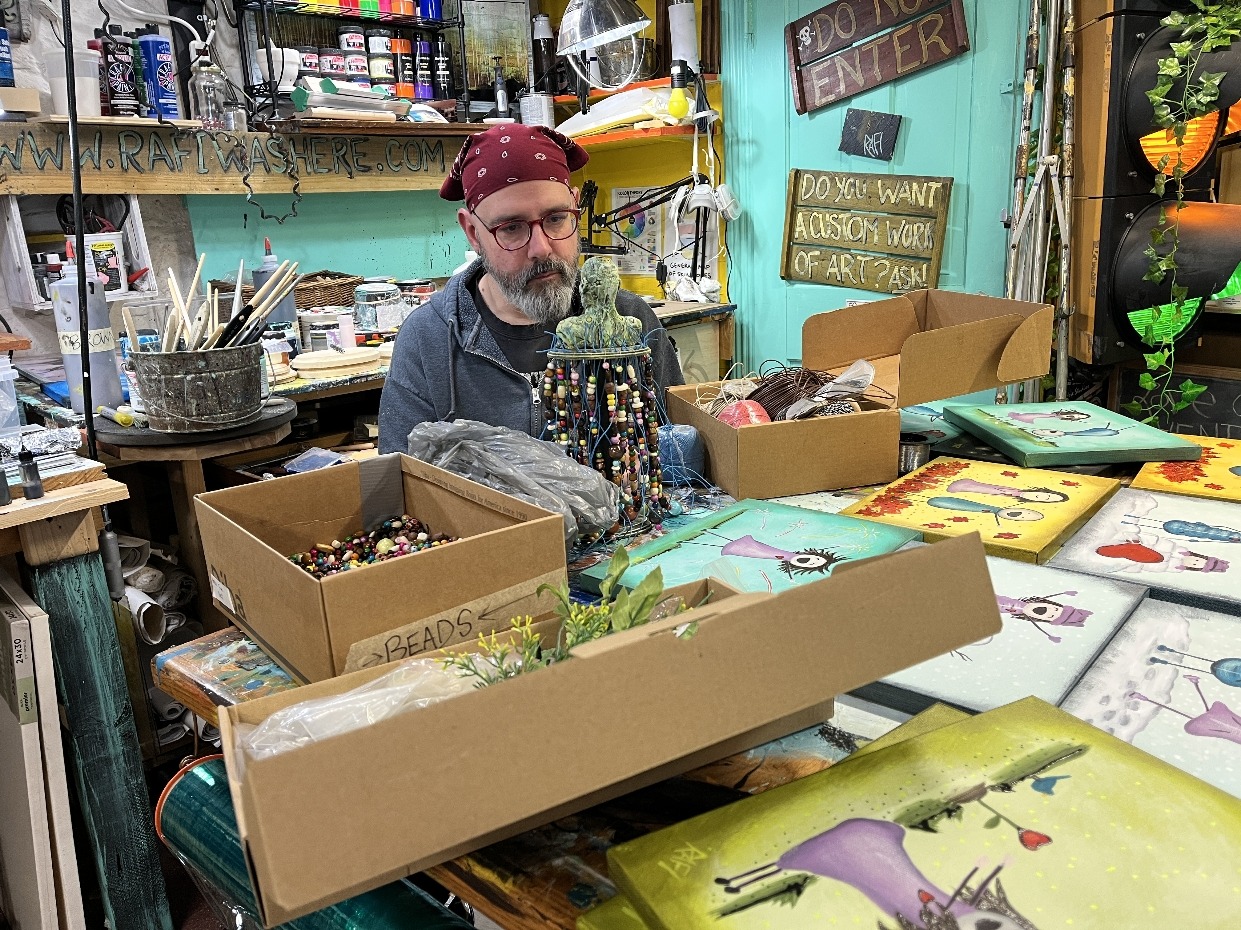
An artist sitting at a cluttered studio workspace filled with art supplies, painted canvases, and boxes labeled 'BEADS' and other crafting materials.

Apparently, Art Supplies Are Not “Raw Material”

We’ve been in business for a while, and I’ve never run into this issue. According to Pennsylvania Department of Revenue, the state doesn’t think art is “manufacturing.” Apparently, they think we just wave a magic wand and the artwork appears. They don’t see the process of creation, or the physical labor of turning a blank canvas into a product. To them, we aren’t “producing goods.”

The core of the problem is that this statute is fundamentally outdated. The lingo used in the current law is written to benefit specific large-scale industries while leaving the door open for interpretations that exclude small businesses and independent makers.

This decision is, to use a technical term, dumb. It directly impacts how I order my materials and how much it costs to keep the lights on in my studio.

A woman stands in an art gallery, looking thoughtfully at the artwork displayed on the walls. She wears a red shirt and beige pants, with a backpack slung over her shoulder.

Standing Up to the Pencil-Pushers

I’m not taking this lying down. I am currently in the process of fighting this at the state level. As artists who run small businesses, we’re often treated like we’re playing pretend. We have to fight twice as hard just to get established systems to recognize our rights as legitimate businesses.

I’m now in communication with my local state representative to make them aware that the Department of Revenue is effectively penalizing the creative economy of Pennsylvania.

Here is my “Rogue Challenge” for you: Whether you use this tax exemption or not, this is about the principle. If the state decides our work isn’t “manufacturing,” they are deciding our work doesn’t have value.

  1. Check your orders. If you’re a registered business, see if you’re being charged tax on your raw supplies.
  2. Contact your State Rep. Seriously. Send a polite but firm email. Tell them that art is manufacturing, that we are businesses, and that this ruling is a blow to local makers.

We have a bit of a road ahead of us to get the “powers that be” to see us as the economic engine we actually are. Sometimes, the only way to get a seat at the table is to stand up and start making some noise.

Banner promoting a local project for artists in Northwest Pennsylvania, featuring playful graphics and the text "ARE YOU A NORTHWEST PA ARTIST? JOIN OUR NEW LOCAL PROJECT FOR ARTISTS IN OUR REGION."

If you live in PA, here is an example letter you can copy, paste and rewrite to suit you:

Subject: URGENT: PA Dept. of Revenue Ruling on Sales Tax Exemption for Artists (Statute 72 P.S. 7201 (c))

Dear Representative [Name],

I am writing to you as a constituent and a small business owner in our region to bring a concerning matter to your attention regarding a recent shift in the Pennsylvania Department of Revenue’s interpretation of tax law.

Recently, the Department has been contacting major art supply vendors (such as Blick Art Materials) to state that the production of artwork no longer qualifies as “exempt manufacturing” under Statute 72 P.S. 7201 (c).
The manufacturing exemption is a standard business practice designed to prevent “double-taxation” by allowing businesses to purchase raw materials—which are then transformed into a new, finished product—without paying sales tax at the point of purchase.

The core of the problem is that this statute is fundamentally outdated. The lingo used in the current law is written to benefit specific large-scale industries while leaving the door open for interpretations that exclude small businesses and independent makers. By ruling that artists are not “manufacturers,” the Department of Revenue is effectively:

  • Invalidating our status as legitimate businesses: It suggests that the physical transformation of raw materials into a finished good only “counts” if it happens in a traditional factory setting.
  • Creating a Double Standard: It allows large corporations to enjoy tax breaks on production while penalizing the small, local studios that make up the backbone of the creative economy in regions like ours in PA.
  • Increasing Overhead Costs: This interpretation forces double-taxation on our materials, making it even harder for local makers to remain competitive.

The process of creating a sculpture, a piece of jewelry, or a painting is a physical transformation of raw materials into a manufactured good. I ask for your support in advocating for a modernized interpretation of this statute—one that recognizes the reality of 21st-century small business and ensures that “manufacturing” isn’t a term reserved only for big industry.

We are taxpayers, business owners, and vital contributors to the economic and cultural vitality of this district. I look forward to hearing your thoughts on how we can resolve this issue.

Sincerely,

[Your Name] [Your Business Name] [Your Address] [Your Phone Number]

Posted on Leave a comment

Facing Fear Is Basically the Job Description of an Artist

I wanted to share something with you that’s been bouncing around in my head since our ride home last night from the Hatch Hollow exhibition. That was such a cool show. The art was beautiful, the space felt alive, and we met some awesome humans… and yet, the entire time, Klee and I were our usual awkwardly-introverted selves trying to look like we knew what we were doing.

Which brings me to the thing I keep thinking about.

Being an artist means living in a constant rotation of “oh cool… I’m terrified again.”
Every single thing we do is a push out of a comfort zone.

We put ourselves out there.
We show our art.
We share our weird ideas.
We get rejected.
We face crickets.
We push through doubt.
We get asked weird questions about how we look (especially by kids in school lol).
We get looked at like we’re strange for daring to do something many people don’t understand.

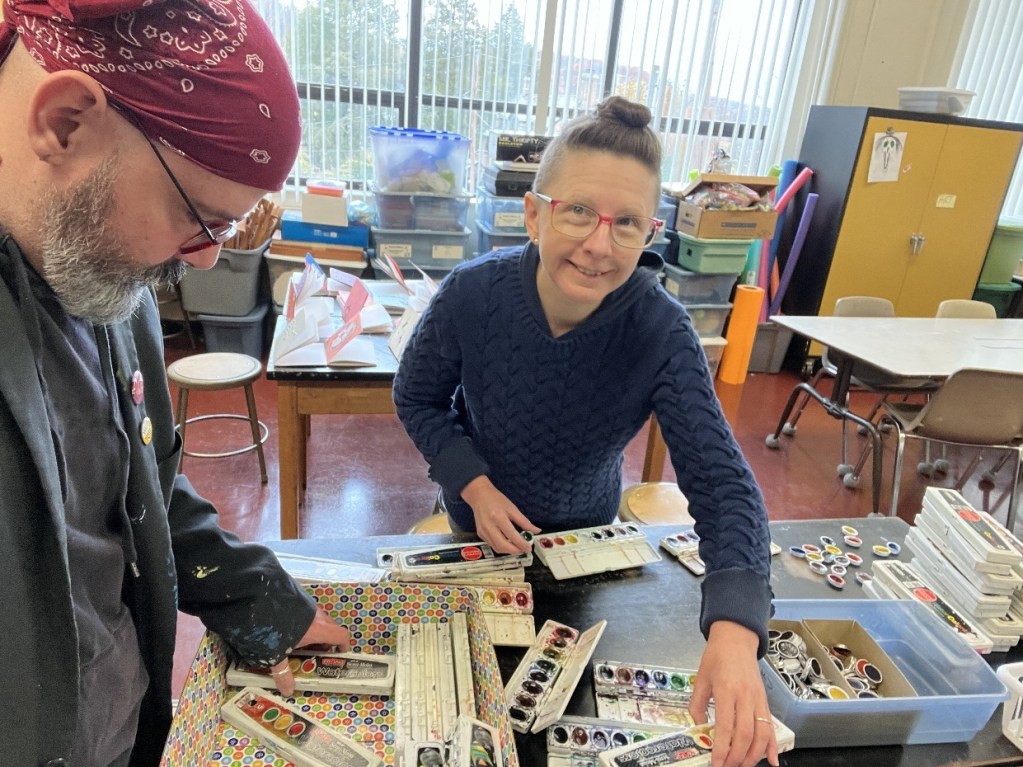
Two artists sorting through art supplies in a classroom, one wearing glasses and a blue sweater, the other with a bandana and beard, reflecting a creative and collaborative environment.

And somehow… we keep going.
Honestly, if you’re here reading this, you’re a freakin’ badass. Full stop.

People talk about bravery like it’s a singular moment, but as artists, bravery is the entire lifestyle. You wake up, you make something from your insides, and then you release it into the world knowing full well that someone might not get it, might not like it, or might straight-up ignore it. And you still do it. That’s not just brave… that’s wild, powerful, rogue-level bad-assery.

A Little Food for Thought

Last night reminded me that fear doesn’t go away just because we’ve been doing this for years. It just shows up wearing different outfits. Sometimes it’s a group gallery opening. Sometimes it’s launching something new. Sometimes it’s just saying hello to someone when your introvert circuits are fried.

All of it counts.
All of it is part of the ride.
All of it shapes who we are as creative humans.

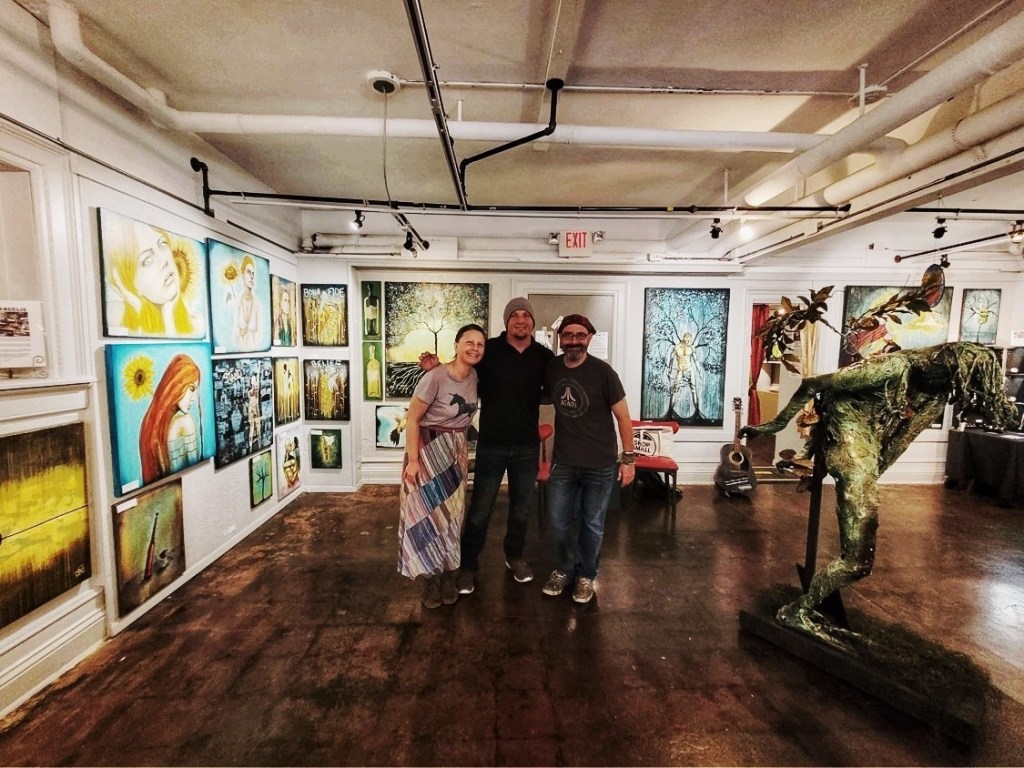
Group of people at an art gallery exhibition, with a focus on three individuals in the foreground smiling at the camera. The background features artworks on display and attendees mingling.

How We Push Through Comfort Zones

Just a little something I’ve learned the hard, awkward way:

Acknowledge the fear, but don’t let it drive. Let it sit in the passenger seat and complain, but keep your hands on the wheel.
Take the small step, not the perfect step. Fear loves perfection. We don’t.
Celebrate the weird victories. Did you talk to one human today? Did you post that thing that made you sweaty? Did you show up? Victory.
Remember why you do this. Not for approval, not for permission, not for the algorithm. You do this because you have something inside you that won’t shut up until you create it… and you might as well share it with the world.

We are all out here stumbling forward together, pushing boundaries, and doing the uncomfortable, magical work of making something from nothing.

You’re not alone. You’re not strange. You’re not behind.
You’re an artist, which means you’re braver than you think, more capable than you realize, and part of a community of rogues who refuse to give up.

Love you awesome humans. Keep stepping outside that comfort zone, even if it’s just one wobbly step at a time.

-Rafi

A colorful banner promoting a Patreon page for artists, featuring two smiling individuals, Rafi and Klee, inviting viewers to join for tips and special offerings.
Posted on 5 Comments

How I’m Still Winging It After Four Books?

So… I released a book! YAY!
And we had a Book Release Party Stream, and holy heck, it was awesome. Seeing all of you awesome humans pop in, chat, laugh, and celebrate with us! That moment was pure gold. I may or may not have ugly-cried off-camera (don’t judge).

There’s something incredible about spending months (okay, years) sweating over words, punctuation, and coffee stains, only to finally see the book out in the world. It’s like raising a kid who finally moves out… except the kid is made of paper and crippling self-doubt. It’s amazing seeing the thing you wrestled into existence finally out there. You spend months hunched over a laptop, muttering at Word documents and threatening your spell checker, and then one day… boom ! It’s a real book!

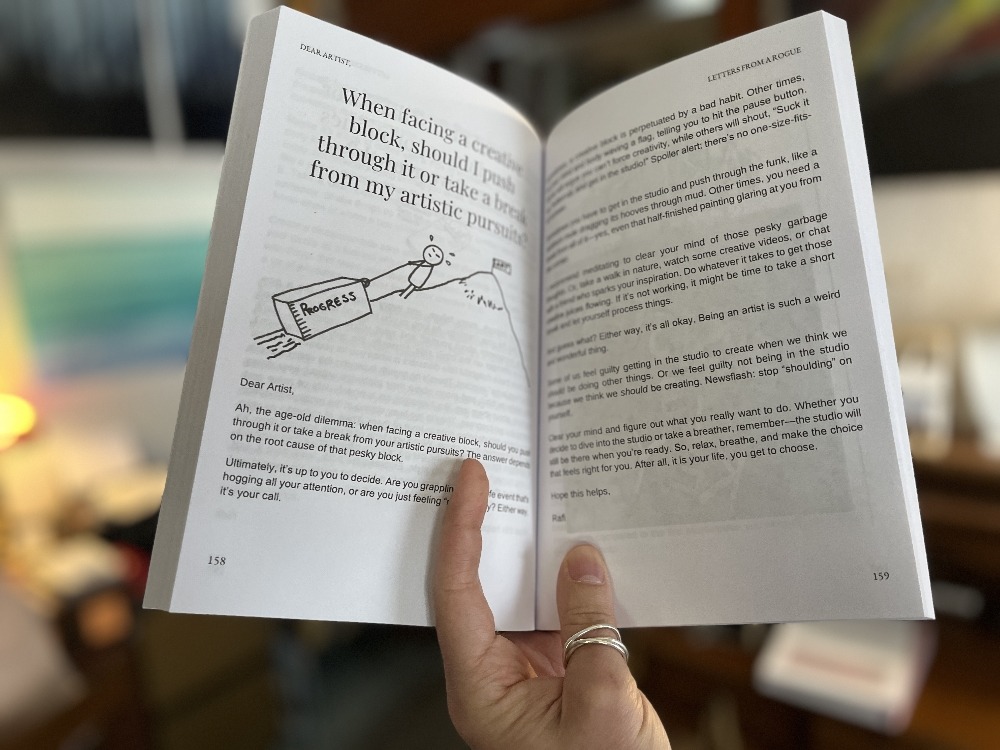
A person holding a page from a book titled 'Dear Artist' with text discussing creative block, accompanied by an illustration of a character debating whether to push through or take a break.

Let’s be honest, I feel like I have a handle on creating art and sculpture. Paint? Metal? Wood? No problem. Writing? Pfft. Total mystery. I’ve published four books now, and I still have no idea what I’m doing.

Like, I’ll sit there thinking, “Ah yes, I’ll write a profound paragraph that will move humanity.”
Three hours later: “Why does every sentence sound like I’m trying to explain taxes to a squirrel?”

The learning curve for me has looked like this:

  • Book 1: “What’s a copyright?”
  • Book 2: “Wait, I have to format this myself?”
  • Book 3: “Why do I hate every word I’ve ever written?”
  • Book 4: “Okay, maybe I’m getting the hang of this?” (Narrator: he is not.)
A cartoon depicting a character in an art studio painting a dog on an easel. The text reads: 'IF YOU WAIT UNTIL IT'S PERFECT, YOU'LL BE WAITING FOREVER. Just paint the damn thing.'

Let me paint a picture of my writing process so you understand where I’m coming from and how I’ve come to grips with writing:

  1. Stage One: Confidence. “I’ve got this. I’m an author now.”
  2. Stage Two: Doubt. “Wait… why does this sound like a grocery list?”
  3. Stage Three: Despair. “I’ve made a huge mistake.”
  4. Stage Four: Delusion. “Actually, this might be genius!”
  5. Stage Five: Editing. “Who wrote this garbage?? Oh right, me.”

It happens every time. It’s funny when I think about it. This pretty much describes my creative process. For example, in book writing adventures, here’s what I’ve experienced:

  • I once spent two days trying to decide whether “artist’s” or “artists’” had the right number of apostrophes.
  • I re-read entire chapters out loud just to realize I’d used the word actually 27 times.
  • My inner critic doesn’t even whisper anymore… it shows up in a bathrobe, eating chips, and says, “You sure this isn’t just word salad with feelings?”
  • Half my first drafts read like I’m trying to win an argument with myself.
  • Don’t even get me started on formatting. Every time I export a file for print, it’s like opening a book report full of red marks.
An artist reviews a stack of books at a cluttered workbench, surrounded by various art supplies and artworks in progress.

That being said, I started to notice something familiar in the chaos. The insecurity, the trial and error, the weird joy when something finally clicks. Writing a book isn’t that different from creating art.

When I paint or sculpt, there’s that ugly middle stage. You know, when everything looks wrong and you question your life choices. Writing has that too. You stare at the screen thinking, This makes no sense. I’m a fraud. I should go sell fruit baskets by the highway.

Then, just like in art, you keep showing up. You move things around. You trust that eventually, the mess will start making sense. It’s that same mix of doubt and wonder that keeps you going, the same muscle that turns chaos into creation.

At this point, I’m convinced writing a book is 20 percent inspiration and 80 percent figuring out what you did wrong after you hit publish. One of the biggest issues I ran into after publishing my book is ISBNs.

Two individuals seated at a table, each signing copies of the book titled 'DEAR ARTIST: DON'T GIVE UP!' surrounded by stacks of the book.

Oh, the glamorous world of ISBNs. You know those little numbers on the back of books? Yeah, those. They come from a company called Bowker, and they’ve been running the ISBN racket since the late 1800s.

It started with a guy named Frederick Leypoldt, a publisher who apparently thought, “You know what would make books more fun? Numbers!” Then R. R. Bowker took over and turned it into a business. And not just any business, a business that has been charging authors for numbers for over 145 years. I’m not saying it’s a monopoly, but… okay, it’s totally a monopoly.

Here’s how it works:

  • 1 ISBN = $125
  • 10 ISBNs = $295
  • 100 ISBNs = $575

It’s like a Costco membership for book numbers that make no sense. Buy in bulk, or pay the “I only need one” sucker price. And you need a separate ISBN for every format: paperback, hardcover, e-book, audiobook, second edition, third edition, even that “slightly-different-cover-because-I-changed-my-mind” edition. Each one needs a different ISBN.

A person with a bandana and tattoos is working at a bulletin board filled with small notes, while a sign above reads 'The Rogue Artist's: Survival Guide, written by Rafi.'

This is where I’m running into my next conundrum. The audiobook and e-book for Dear Artist is done and ready to go, but I don’t have any ISBNs to publish them under.

Honestly, it’s wild. I feel like Bowker could release a board game: “Guess how many ISBNs you forgot to buy!” Winner gets anxiety and a lighter wallet.

So yeah, I released the soft cover during the Book Release Party (woohoo!) and now I’m running a little fundraiser sale to raise money for the next batch of ISBNs. The goal? Get 100 of them so I don’t run out before I die or write another four books that I “accidentally” format wrong. The sale works like this, buy an original book drawing, poster, or signed copy of the dear artist book and we set that aside for a new batch of ISBNs. Everything is on sale to make it more irresistible.

An original drawing featuring a character holding signs that say 'Support Local Artists,' 'Will Paint 4 Support,' and 'Open Commissions,' alongside the book 'Dear Artist, Don't Give Up!'

We’re 42 percent of the way there (which feels like the perfect “Hitchhiker’s Guide to the Galaxy” number).

If you want to help us get there:
Buy an original drawing, poster, or signed book.
Every purchase helps me avoid future ISBN shortages, artistic meltdowns, and potential caffeine overdoses.

To everyone who tuned in to the book release stream. thank you. You made the whole thing unforgettable. I can’t tell you how good it felt to share that moment with you instead of just screaming triumphantly alone in my studio (though, to be fair, that has also happened).

You guys make this crazy ride worth it. You remind me why I keep writing, even when I feel like I’m wrestling with grammar and losing.

So here’s to doing it wrong, learning as we go, and celebrating every weird, wonderful victory along the way. I may still be winging it, but I’m winging it with style.

— Rafi

Posted on 3 Comments

Finding Your Creative Flow After Life Disruptions

Life has a funny way of throwing curveballs. Sometimes, it’s a small bump in the road, and other times, it’s a full-on derailment. As a lot of you know, December threw a massive wrench into our world when Klee got pretty sick. And when I say a wrench, I mean one of those ridiculously oversized, cartoon-style wrenches that completely shut down the creative machine that is our life and business. To say it was a challenge would be the understatement of the century.

Honestly, it got pretty hairy there for a while. My focus became Klee—making sure she was okay, trying to keep things together, and, quite frankly, barely keeping my own head above water. When life demands that kind of energy, creativity, business, and all those other moving parts take a backseat. It’s like standing in the middle of a creative tornado and suddenly realizing you don’t even remember how to pick up a paintbrush.

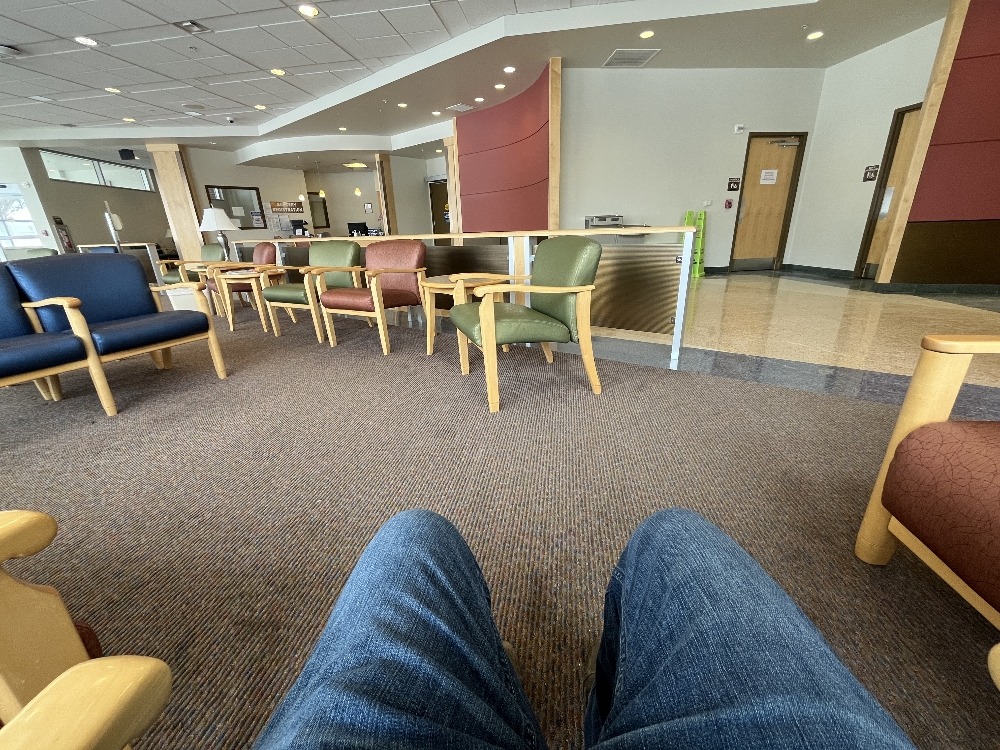
A lot of hospital waiting rooms

But the good news? Klee is feeling much better! We still have a ways to go, but her smile has returned, and we’re both back in the studio.

Stepping back into that space after months of not being creative is… well, weird. Because getting back to “normal” after life has thrown you off course isn’t as simple as flipping a switch.

For anyone who has had life put their passion on pause, you know how tough it is to return. Things have piled up, been neglected, or pushed aside. And now, they all sit in front of you, staring you down like a boss battle in a video game you’ve never played. It’s overwhelming.

For me, I tried to keep things running while Klee was sick—I handled urgent things like orders and communication with collectors—but everything else? Yeah, it sat there, collecting dust and waiting for me to figure out how to be creative again. And let’s be real, I don’t just feel rusty—I feel like I have completely forgotten how to create art.

So, how do you get back into the groove when life has thrown you off your creative rhythm? Here’s what’s been working for me:

1. Start Small and Give Yourself Grace

Creativity isn’t a faucet you just turn back on. If it feels like you’ve forgotten how to do what you love, don’t panic—it’s normal. Start small. Doodle, hum, play with materials, move your body, do something low-pressure. The first thing you create after a long break will probably feel awkward, but that’s okay. Progress, not perfection.

2. Let Go of the Guilt

It’s easy to beat yourself up for all the things you “should have” done. Don’t. Life happens. It’s okay that things paused. The important part is that you’re here now, ready to begin again. Creativity doesn’t hold grudges—it just waits for you to come back.

3. Make Time, Even if It’s Messy

Your brain will try to convince you that you need the perfect setup, the perfect moment, or the perfect amount of time to dive back in. That’s a lie. Just show up, even if it’s for 10 minutes. Creativity thrives on momentum, not time shortage mentality.

4. Move Through the “This Isn’t Working” Phase

Right now, I’m working on a mural, a commission, and some new art. I am slowly (very slowly) crawling out of the “this isn’t working” stage. That stage is real. And it’s frustrating. But if you keep moving through it, even when it feels like you’re pushing through molasses, you’ll come out the other side. Trust the process, even when it feels like it’s laughing at you.

5. Do Something That Reminds You Why You Love It

Go back to your roots. Listen to music that inspires you. Look at old sketches. Read something that made you want to create in the first place. Remind yourself that you didn’t start this journey for perfection—you started it because it made you feel alive.

6. Be Patient with Yourself

Coming back to creativity after a break is like rebuilding a muscle. You wouldn’t hit the gym after months away and expect to lift the heaviest weight on day one. Creativity is the same. Give yourself the space to rebuild your confidence and strength.

7. Find the Joy in the Process

It’s easy to get caught up in productivity and deadlines, but don’t forget to enjoy the ride. Laugh at the weird mistakes. Let yourself play. The best way to rebuild your creative groove is to fall in love with creating again.


So, if you’re out there, feeling stuck, feeling rusty, feeling like you’ve lost your creative spark—know that you’re not alone. Life happens, and sometimes, it completely reroutes our plans. But creativity is patient. It waits for you. And when you’re ready, it welcomes you back with open arms (and probably a bit of frustration, but hey, that’s part of the deal).

We’re back at it, one brushstroke, one piece of jewelry, one idea at a time. And if you’re climbing out of your own creative funk, I hope you give yourself grace, patience, and permission to just start. Because once you do, that groove you thought you lost? It’ll find its way back to you.

And when it does, oh man, is it going to be awesome.

CONGRATUALATIONS ALIYU!

Posted on 4 Comments

A Lesson in Self-Care And Caregiving

Hey, creative humans, we’re back! Kind of. As many of you know, we had to take an unexpected break from the YouTube world because Klee got pretty sick. It was a whirlwind of hospital visits, blood work, IVs—basically the whole nine yards. It got serious there for a while, and if you’ve ever been in a situation like that, you know how fast life can turn upside down.

We’re incredibly grateful to say that Klee is feeling a lot better, though the road to full recovery is still ahead. There are still medications, check-ups, and all kinds of things to keep track of, but we are back on our feet and moving forward.

This whole experience was an intense reminder of something I think a lot of us creatives struggle with: balancing life, our passions, and the unexpected challenges that get thrown our way. And for those of you out there who are caregivers while still managing an art career (or any career, really), I just want to say—you are a freaking badass.

The Reality of Being a Caregiver and an Artist

One thing that really hit me during this whole ordeal was how easy it is to neglect yourself when you’re focused on taking care of someone else. The first couple of days, I barely thought about my own needs—I was just running on adrenaline, making sure Klee had everything she needed. And let me tell you, that kind of neglect catches up to you fast.

Case in point: I had to throw away a pair of shoes because they got wet while I was rushing around the hospital, and something… unholy started growing in them. (Let’s not talk about the smell.) It was a small, gross reminder that I needed to start taking care of myself too.

So, for anyone else in this kind of situation—whether you’re taking care of a loved one, balancing a creative career, or just trying to keep your head above water—here are some things I learned the hard way.

1. Prioritize Self-Care (Seriously, Don’t Skip This)

It might sound cliché, but self-care is not optional when you’re in a high-stress situation. When you’re taking care of someone, it’s easy to put yourself on the back burner. But the truth is, if you’re not taking care of yourself, you’re not going to be much help to anyone else.

That means making sure you’re eating, getting some sleep (even if it’s just a few solid hours), and stepping away for a breather when you need it. Trust me, skipping self-care doesn’t make you a hero—it just makes everything harder in the long run.

2. Set Realistic Expectations

When this all started, I was convinced I could juggle everything—caregiving, running Rafi and Klee Studios, getting commissions done, answering emails, and basically being an unstoppable force of productivity. Spoiler alert: I was wrong.

The reality is, when life throws something big at you, you have to adjust. I had to accept that I wasn’t going to be creating a ton of new art that week. I wasn’t going to be knocking out 50 commissions. And that was okay.

If you’re in a situation where life is demanding more from you, cut yourself some slack. Set small, manageable goals, and know that it’s okay if things take longer than expected. The world won’t end if you need to slow down.

3. Simplify Your Art Practice

When my brain was completely fried from everything going on, I realized I had to simplify my approach to creativity. Normally, I juggle multiple projects at once, but that just wasn’t realistic. Instead, I focused on one thing at a time.

Instead of bouncing between 10 different projects, I picked one small creative task per day. Even if it was just sketching or organizing my studio, it gave me a sense of normalcy without overwhelming me.

If you’re in a similar spot, try breaking things down into tiny, manageable steps. Even if all you can do is one little thing each day, that’s still progress.

4. Schedule Around Downtime

Klee had a very specific schedule with medications, meals, and rest times. So, I structured my day around those moments. When she needed to rest, I used that time to check emails, sketch, or work on something small.

This was a game-changer because it meant I wasn’t trying to force work into an unpredictable schedule—I was working with the flow of the situation.

If you’re balancing caregiving with creative work, try carving out dedicated time that aligns with your responsibilities. Even short bursts of productivity can add up.

5. Accept Help (Even If You Hate Asking for It)

I’ll be honest—I am terrible at asking for help. But when people in our community reached out, offering food, support, or just checking in, it meant the world to us. And I realized something: asking for help isn’t a weakness.

If you’re in a tough situation, don’t hesitate to reach out. Whether it’s friends, family, or an online community, there are people who genuinely want to support you. Let them.

6. Watch Out for Resentment

Caregiving is hard. It takes a toll, not just physically, but emotionally too. When I was helping take care of my dad years ago, I struggled with feeling overwhelmed and frustrated.

This time around, I made sure to keep my emotions in check. I knew I didn’t want to bring negativity into the situation with Klee, so I focused on staying aware of my emotional state and communicating openly.

If you’re in a caregiving role, be mindful of your feelings. If you start feeling resentful, take a step back and find ways to relieve that pressure—whether it’s journaling, venting to a friend, or just taking a moment for yourself.

The Biggest Lesson? Be Easy on Yourself.

At the end of the day, one of the hardest but most important lessons I learned was to just be kind to myself.

I had to accept that I wasn’t going to be operating at 100% efficiency. I wasn’t going to keep up with everything the way I normally would. And that was okay.

So if you’re in a similar situation—whether you’re caring for someone, balancing life and art, or just going through a rough patch—give yourself some grace.

My new motto? “It is what it is. And good enough.”

Because sometimes, good enough is all you need.

A Huge Thank You

I want to take a moment to say thank you to everyone who sent well wishes, checked in on us, or offered support during this time. You guys are amazing, and we appreciate you more than words can say.

We’re slowly getting back into the swing of things, and I’m excited to start creating and sharing again. Klee isn’t back to 100% yet, but she’s feeling so much better—and that is the best news of all.

Also, quick announcement!  We just wrapped up our January calendar giveaway, and we’re kicking off a new giveaway for February—a one-on-one video call with Klee and me! If you want to enter, head over to our website for all the details.That’s all for now. Take care of yourselves, and remember—you don’t have to do it all. ❤️

CONGRATUALATIONS ALIYU!

Posted on 1 Comment

Put Together a Solo Art Show Without Losing Your Mind

So, you’re planning a solo art show. First of all—hell yeah! This is a huge milestone. It means you’re ready to put yourself and your art out there in a big way. But let’s be honest—this can be equal parts exhilarating and terrifying.

Maybe you’re thinking: I have no idea what I’m doing! What if no one shows up? What if it’s a disaster? What if I trip over my own feet in front of everyone and become a viral internet meme?

Breathe, my creative human. I’ve done this, I survived, and I’m here to help you do the same. So let’s break it down—step by step—so you can put together a badass solo show without losing your mind.

Step 1: Find a Venue (Even If a Gallery Won’t Give You the Time of Day)

If you’re already working with a gallery, great. But if you’re not, don’t sit around waiting for someone to discover you like a Hollywood movie. You don’t need gallery representation to have a killer solo show.

Try This Instead: The Pop-Up Art Show Move

Find an empty storefront in a busy area and contact the owner. Many landlords would rather have something happening in their space instead of it sitting there collecting dust. Offer to rent it for a few days, clean it up, and make it look nice. Sometimes you can even get it for free just by promising to leave it better than you found it.

The key is thinking outside the box—coffee shops, breweries, coworking spaces, even an industrial warehouse could work. You’re not just putting on a show—you’re creating an experience.

Step 2: Curate Like a Boss

Now that you have a space, you need to fill it with work that makes people stop, stare, and say, Whoa.

What You Need:

  • Enough Art to Fill the Space – Aim for at least 20-40 pieces that fit a theme.
  • A Killer Name for Your Exhibition – Something catchy, intriguing, and meaningful.
  • A Showstopper Piece – One or two jaw-dropping, mind-blowing works that people can’t stop talking about. Bonus points if it’s interactive.
  • A Cohesive Experience – Make sure everything in your show feels intentional. You don’t want a beautiful, moody series about introspection next to a random painting of a cat wearing sunglasses. (Unless that’s the theme—then by all means, go for it.)

Step 3: Design the Space Like You’re Crafting a Story

People aren’t just coming to look at your art. They’re coming to experience it. The layout of your show should guide them on a journey—like a visual mixtape that hits all the right emotional beats.

Pro Tips:

  • Map It Out – Take measurements. Sketch a floor plan. (Yes, actual planning—it’s worth it.)
  • Create a Flow – Think about what people see first when they walk in. Where do their eyes go? Where do their feet go? Lead them like a mastermind.
  • Use Corners for Drama – Make people turn a corner and get hit with a moment that stops them in their tracks.
  • Avoid Bottlenecks – If you have a bar or snack area, make sure it’s not blocking traffic. People shouldn’t have to play an awkward game of Twister just to get a drink.

Step 4: Set the Mood (Because Art Is More Than Just What’s on the Wall)

An art show is a full-body experience. The art is the main event, but the atmosphere? That’s what makes it unforgettable.

  • Lighting Matters – Spotlights for hero pieces, ambient lighting for mood. Think about how light affects color and texture.
  • Music Sets the Vibe – Don’t just put on a random playlist—choose something that enhances the art. And no, elevator jazz is not the default.
  • Food & Drinks Are Your Secret Weapon – People love free snacks. Even something simple—wine, cheese, crackers—keeps people happy and lingering longer.
  • Make It an Experience – Could you add something interactive? A live painting demo? A guest book where people leave thoughts and doodles? A surprise performance? Anything that makes your show stand out from the usual “art-on-walls” setup.

Step 5: Get People to Show Up (Because an Empty Show Is Just You, Sitting in a Room, Staring at the Wall)

You’ve got the art. You’ve got the space. Now you need people.

Start Promoting Two Months in Advance:

  • Social Media Slow Burn – Don’t just blast “COME TO MY SHOW” 50 times. Instead, tease the process—show your studio, works-in-progress, close-up details, behind-the-scenes struggles. Get people invested before you hit them with the invite.
  • Flyers & Posters Still Work – Drop them at local coffee shops, bookstores, community centers, anywhere cool people hang out.
  • Press Releases = Free Publicity – Send a short, punchy press release to local newspapers, blogs, radio stations. Many will cover local events for free—but only if they know about it.
  • Event Listings Are Your Friend – Most cities have free event calendars online. Use them.
  • The One-Week Hype Bomb – In the final week, go all in with reminders, countdowns, last-minute teasers. The goal? Create excitement and urgency.

Step 6: The Show Itself (AKA: Don’t Panic and Just Enjoy It)

  • Don’t Stress About Sales – People hate being pressured. Just enjoy the night. If someone loves your work, they’ll ask. And if they don’t buy now, they might later—especially if the experience sticks with them.
  • Be Present, Not Salesy – Instead of pushing for a sale, share stories about your work. People connect with why you made something, not just what it is.
  • Thank People for Coming – Even if they don’t buy anything. Even if they just wandered in off the street for free wine. Gratitude goes a long way.
  • Have a Way for People to Stay Connected – A sign-up sheet, a QR code to your website, business cards—something so they can follow your work after the show.

Final Thoughts: Make It Fun, Make It Memorable, and Just Go for It

Look, I get it—putting on a solo show is scary. But it’s also one of the most rewarding things you can do as an artist. You’re creating an experience, sharing your work, and showing the world that you’re serious about this art thing.

So plan it well, make it an event people talk about, and most importantly—have fun with it.

Now go forth and make some art magic happen.

Have a solo show coming up? Tell me about it in the comments.

Watch The Video I created About Having A Solo Art SHow:

Posted on 7 Comments

The Artist’s Eternal Battle Against “Helpful” Advice

There’s a universal truth about being an artist: at some point, you will find yourself sitting across from a random business “expert” who has absolutely no idea what to do with you.

This isn’t to say business programs are all bad—some programs out there are fantastic for small creative businesses. But every now and then, the system spits out someone whose entire entrepreneurial philosophy is deeply allergic to creativity.

Take, for instance, my brilliant artist friends—creative powerhouses who could probably design an entire alternate universe if left alone in a room with enough coffee and a glue gun. They dabble in a variety of art—puppet-building, drawing, painting, animation, candle-making, writing, and photography. Storytelling is at the heart of everything they do, whether through short stories, photographs, puppetry, or a collection of unique candle scents. Their mission is simple: create something fun and unique to share with the world while embracing a life of adventure, travel, and boundless creativity.

Early in my career, I was told I was wasting my time and needed to get a real job.

They recently got into a really good business program that would give them access to a business coach, which sounds great in theory. A chance to learn, expand, and take their art to the next level. Except… the coach was the human embodiment of a beige PowerPoint presentation on “synergy.”

My friends, fueled by artistic chaos and brilliance, met with this coach, eager to share their vision. The response?

“Puppets are dead.”

I repeat: puppets. are. dead.

Now, I don’t know about you, but last time I checked, puppets were very much alive, thriving, and probably plotting world domination (because have you met puppeteers? They have plans). The coach then proceeded to tell them that pretty much, everything they were doing was wrong—not “needing refinement,” not “requiring a strategic tweak,” just wrong.

Puppets are not dead.

I’m sure he didn’t mean to sound like a robot programmed to discourage anyone who doesn’t sell widgets at Walmart, but let’s be real—this is a tale as old as time.

Artists and the Box That Does Not Fit

The biggest battle for artists isn’t making art. It’s dealing with people who just don’t get it. Many people love art and artists. But some have no idea what actual art is. Those people like art only in safe, pre-approved formats:

  • Big blockbuster movies? Love it.
  • Art prints at Target? Aesthetic!
  • Pre-made sculptures made out of recycled toaster parts with an interactive light show? What is this sorcery?

Too many business “experts” view creative careers through the lens of traditional marketing strategies. They want to fit us into their pre-cut, shrink-wrapped boxes, and if we don’t fit? Well, obviously, it’s because we’re wrong.

It’s frustrating, it’s exhausting, and it’s deeply stupid. Because here’s the thing:

  • Art is not meant to fit in a box.
  • Art is not safe.
  • Art is the wild, untamed, chaotic force that dares to bring something new into the world.

That’s why artists struggle when they encounter people who insist on the “proven” way of doing things. Those “proven” methods only work for things that already exist. But we’re here to create what doesn’t exist yet.

If we followed the “rules,” we wouldn’t have surrealism, street art, or the entire concept of animation (which, fun fact, was also declared “a waste of time” once).

Persistence is the only thing that shuts people up.

The Real Problem: Judgment Disguised as Advice

Let’s be honest, the hardest part of being an artist isn’t the work—it’s the constant judgment. It’s the well-meaning “concern” from people who act like we’re throwing our lives away because we don’t have a LinkedIn profile filled with business achievements.

It’s the casual dismissals. The naysaying. The patronizing conversations where someone talks to you as if you’re a wayward toddler instead of a highly skilled creative professional.

And I get it. It stings. It’s frustrating. It makes you want to throw a puppet at someone’s head just to prove that, no, they are not dead.

But I want you to remember something very important: their opinions do not define your potential.

At the end of the day, no one has walked in your shoes. No one knows what you are capable of. No one can tell you what’s possible unless you let them.

If they don’t get it? That’s their loss. There are plenty of people who will.

Artists are the kinds of people who figure their own way of doing things.

Some Advice for When the World Doesn’t Get You

  1. Trust Your Vision – If your ideas excite you, they are worth pursuing. The greatest creative breakthroughs have always started as something that others dismissed as too weird, too different, or too impractical. Keep going.
  2. Consider the Source – If someone gives you advice, ask yourself: does this person have experience in what I do? Do they understand the creative world? If not, take their words with a grain of salt. Some people give advice because they want to help. Others do it because they can’t handle anything outside of their own limited perspective.
  3. Remember, Everything New is “Impossible” at First – The lightbulb was ridiculous before it worked. The internet was a joke before it changed the world. Animation was “silly” before it became a multi-billion dollar industry. Every great idea looks strange to the people who can’t see beyond what already exists.
  4. Surround Yourself with People Who Get It – There will always be voices telling you to stop, to do something safer, to follow the well-worn path. The key is to tune them out and listen instead to the people who understand your vision—the ones who push you forward instead of holding you back.
  5. Let Rejection Be Your Fuel – If someone tells you it can’t be done, take that as a personal challenge. The best revenge against doubters is to succeed in a way they never saw coming.
  6. Create Anyway – At the end of the day, art is about making something because it needs to exist. Whether the world is ready for it or not, whether the business experts approve or not, whether it fits in their box or not—create anyway. Because what you make might be the very thing that changes everything.

So go forth and keep making things that don’t fit in a box. The world needs you, even if some people are too narrow-minded to see it.