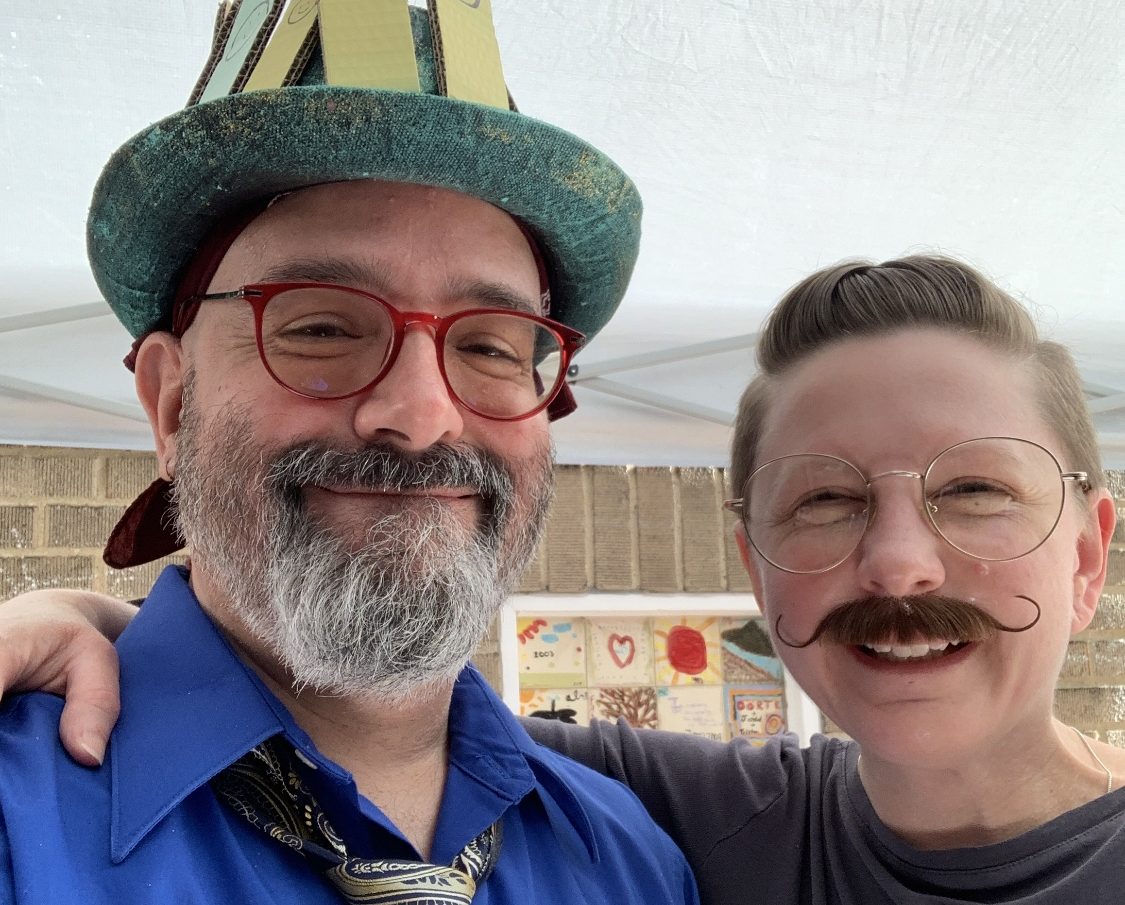
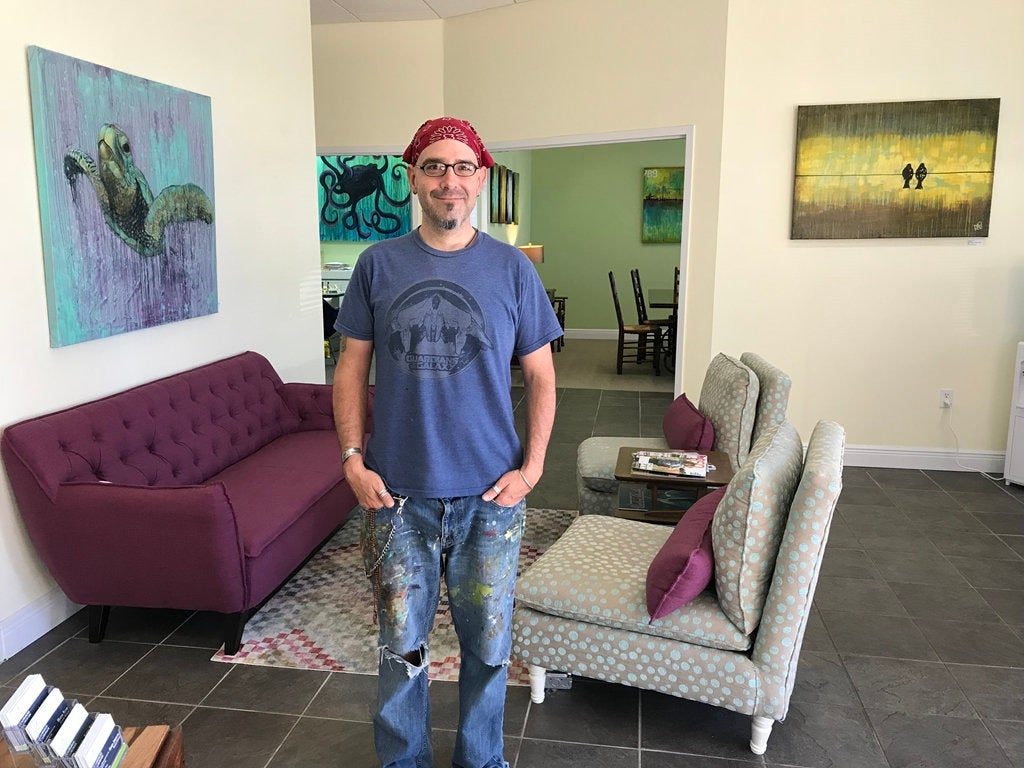
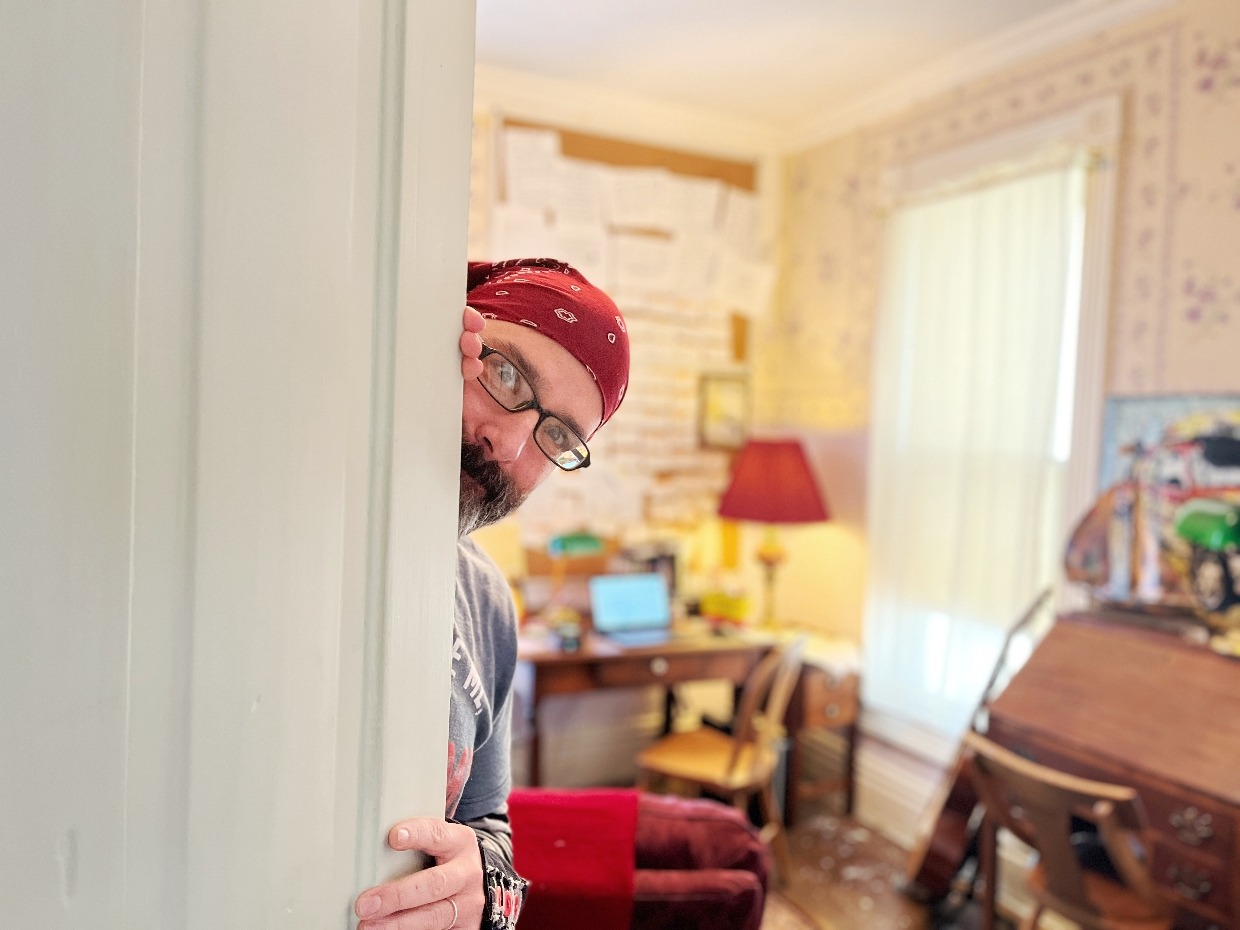
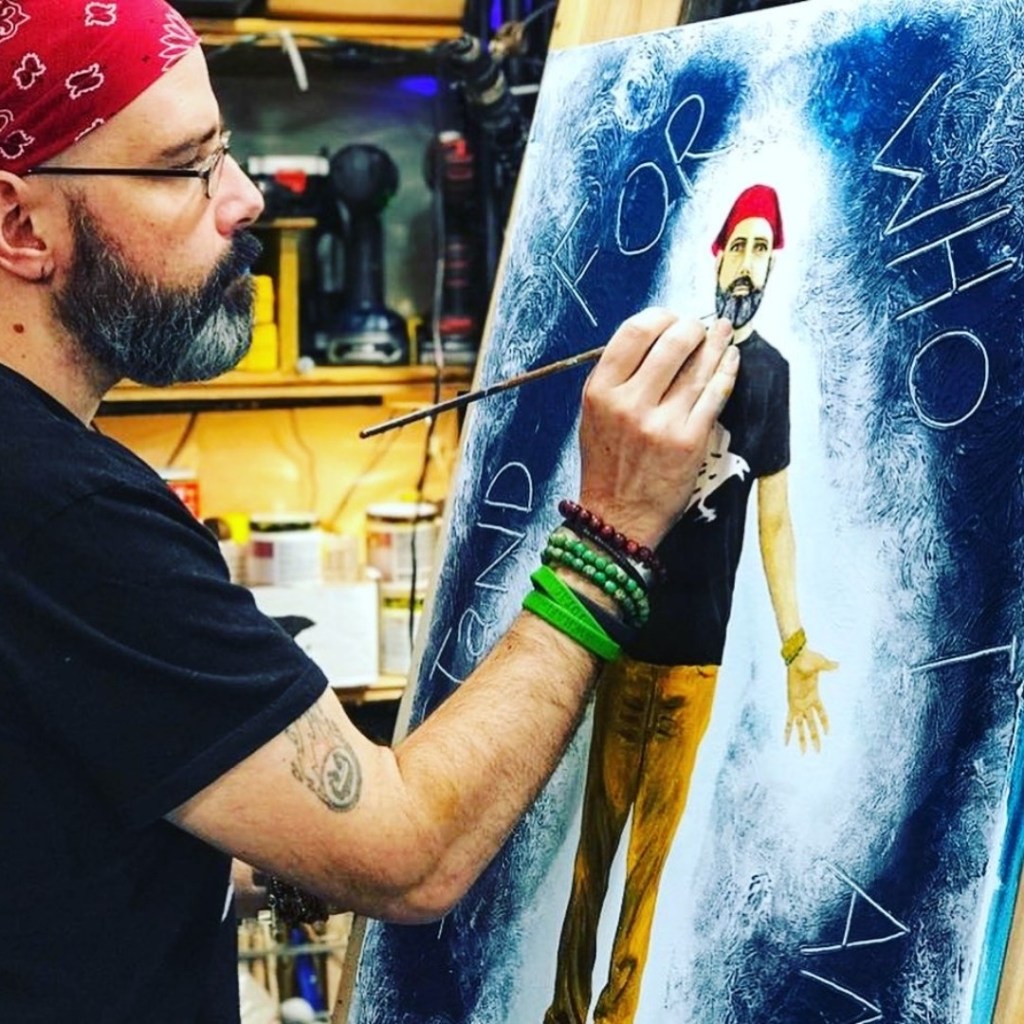
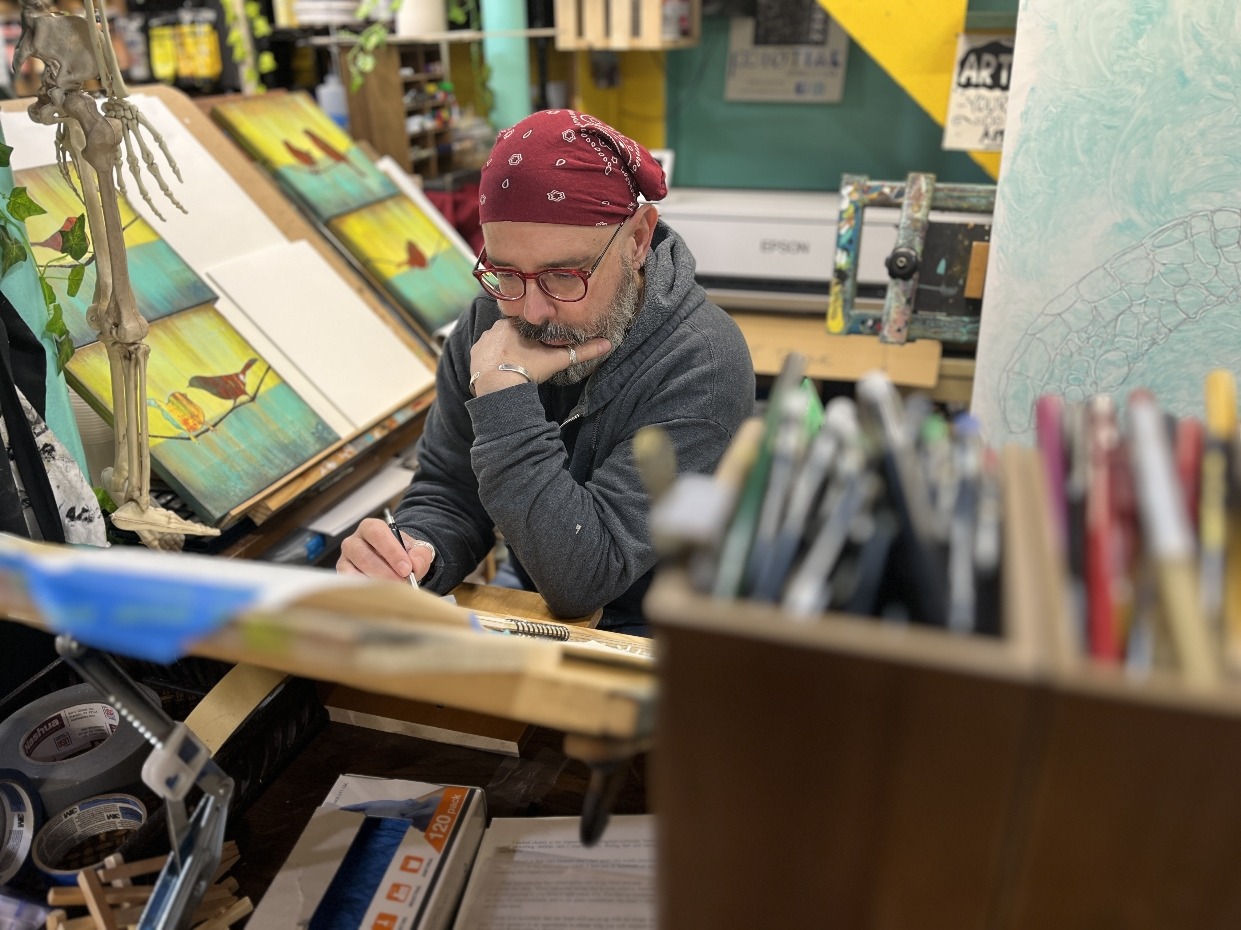
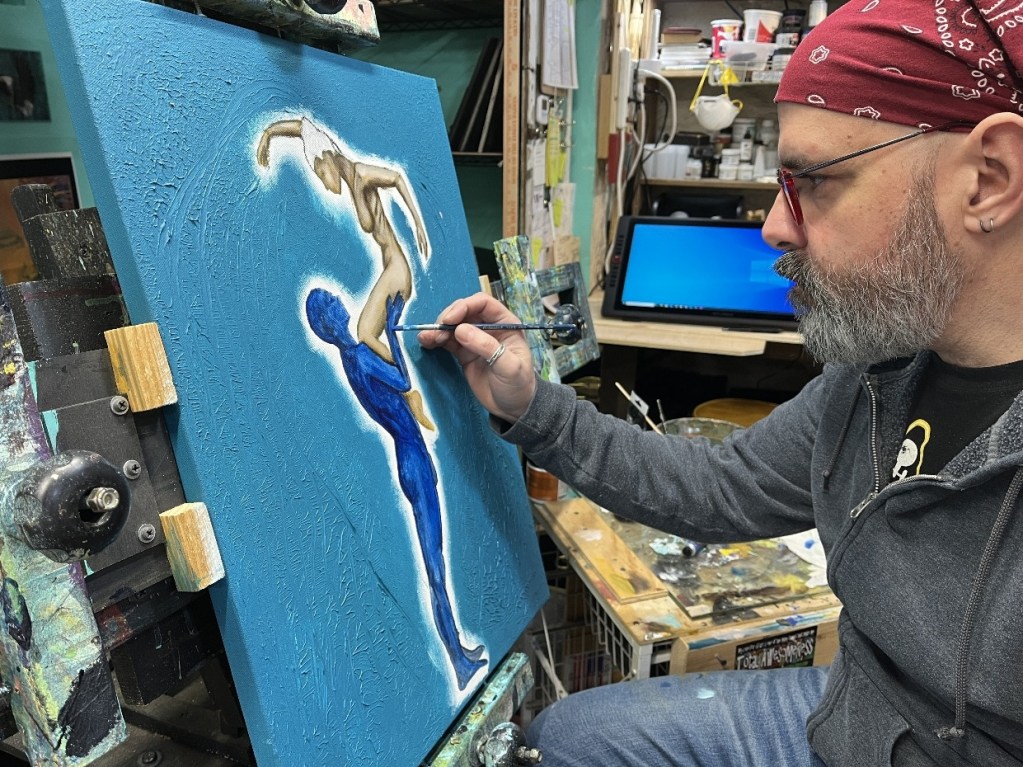
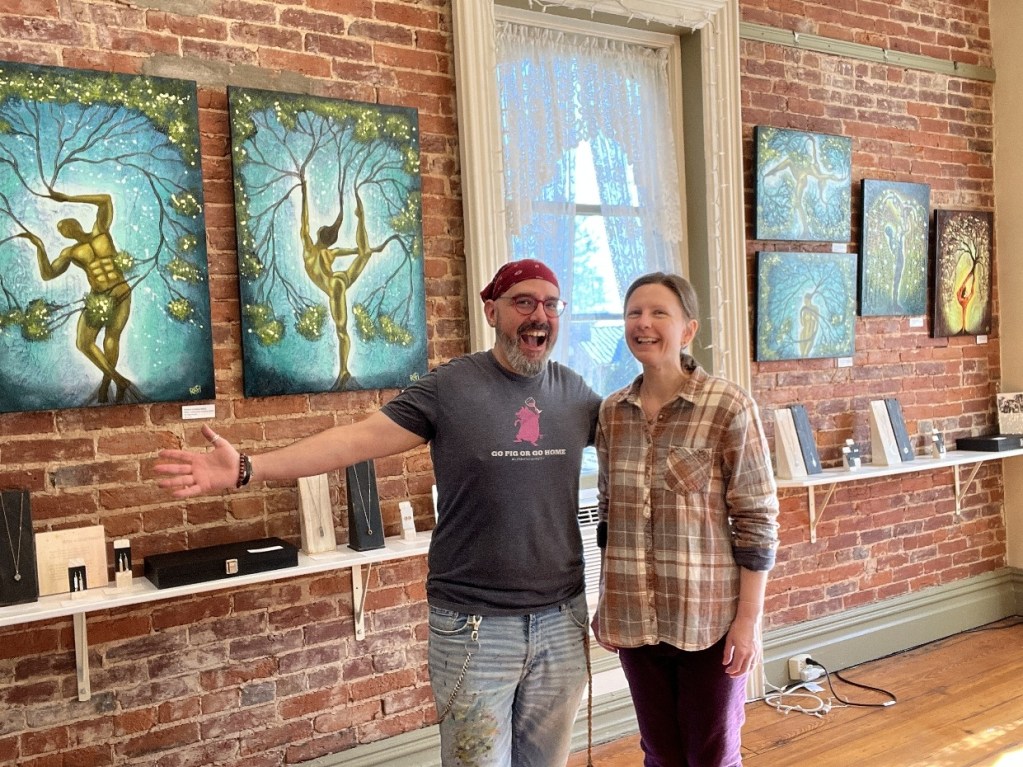
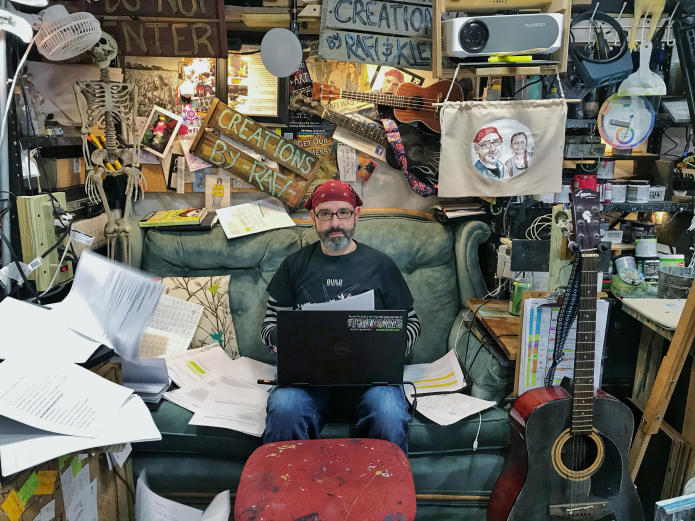
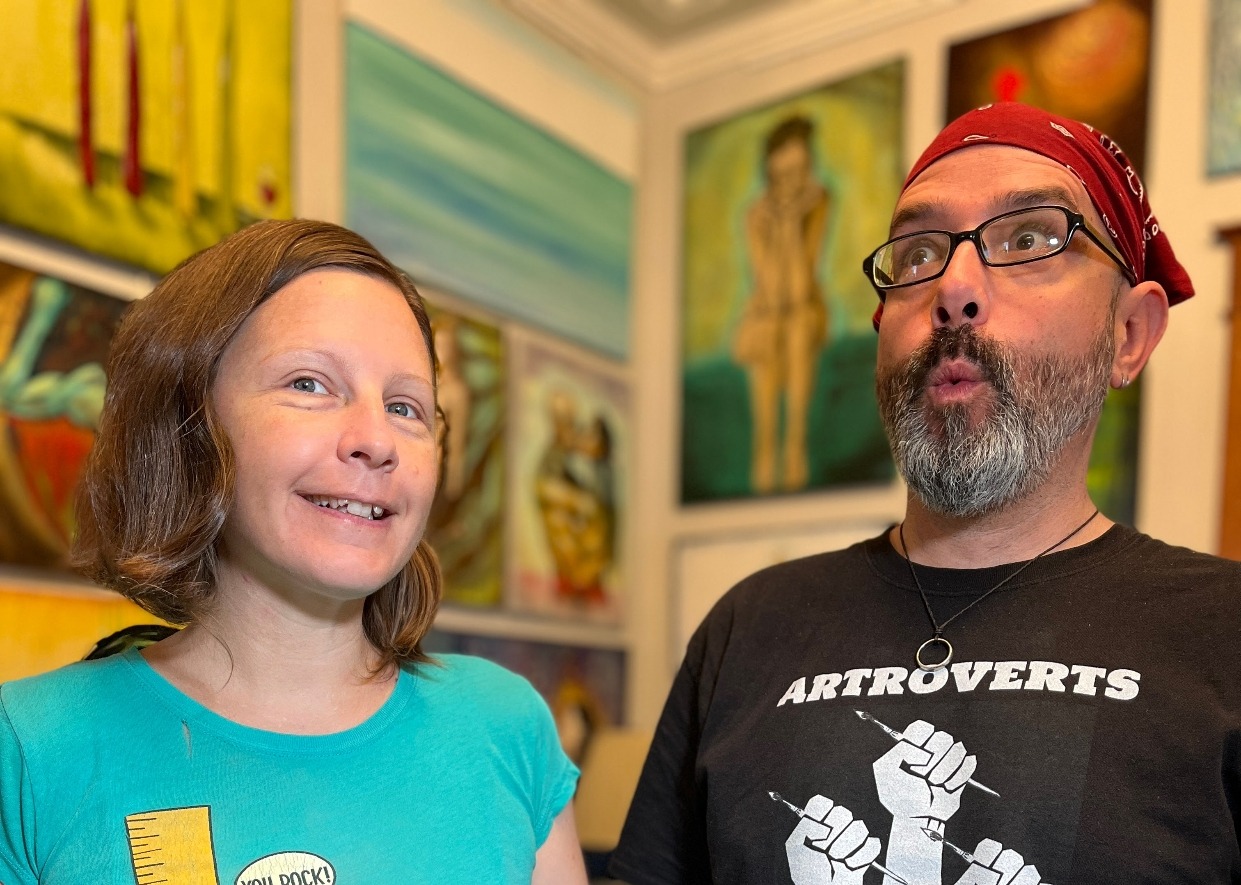
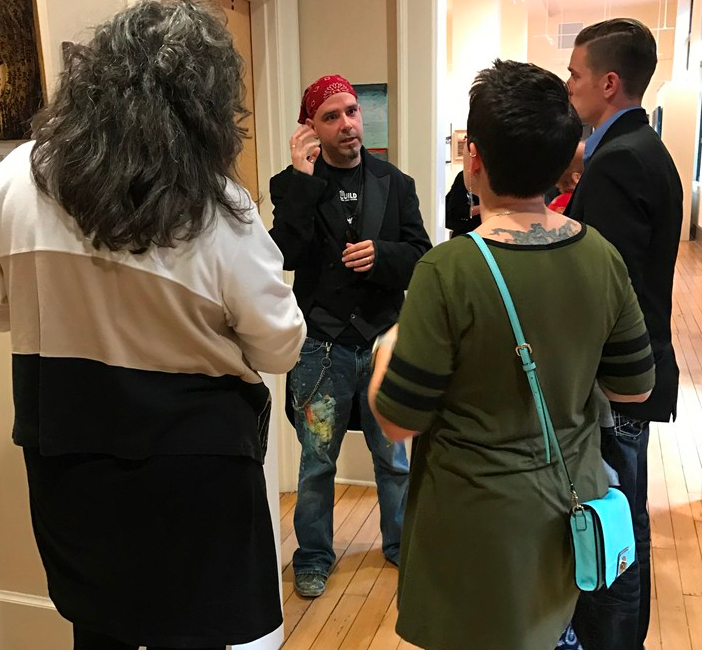
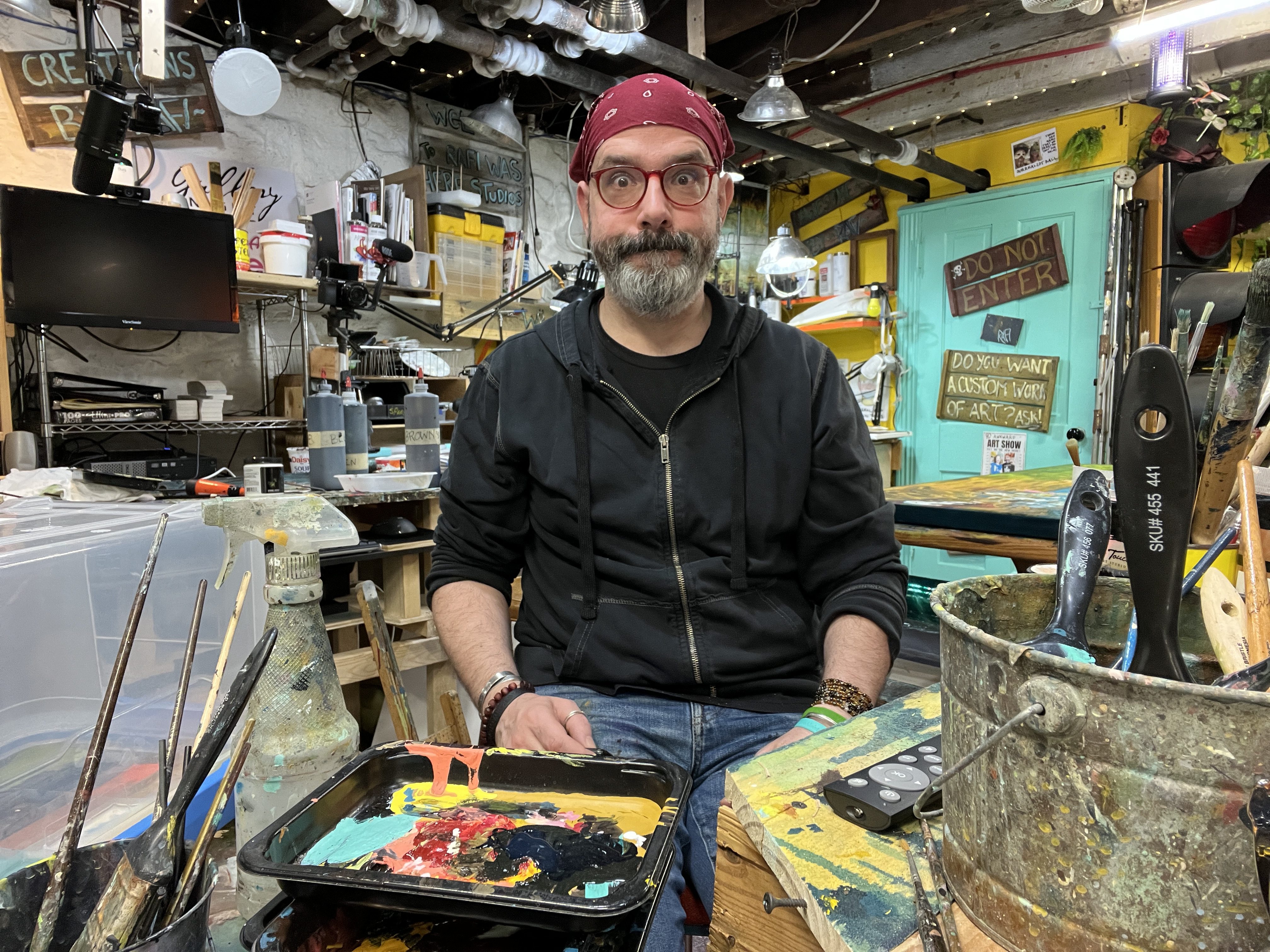
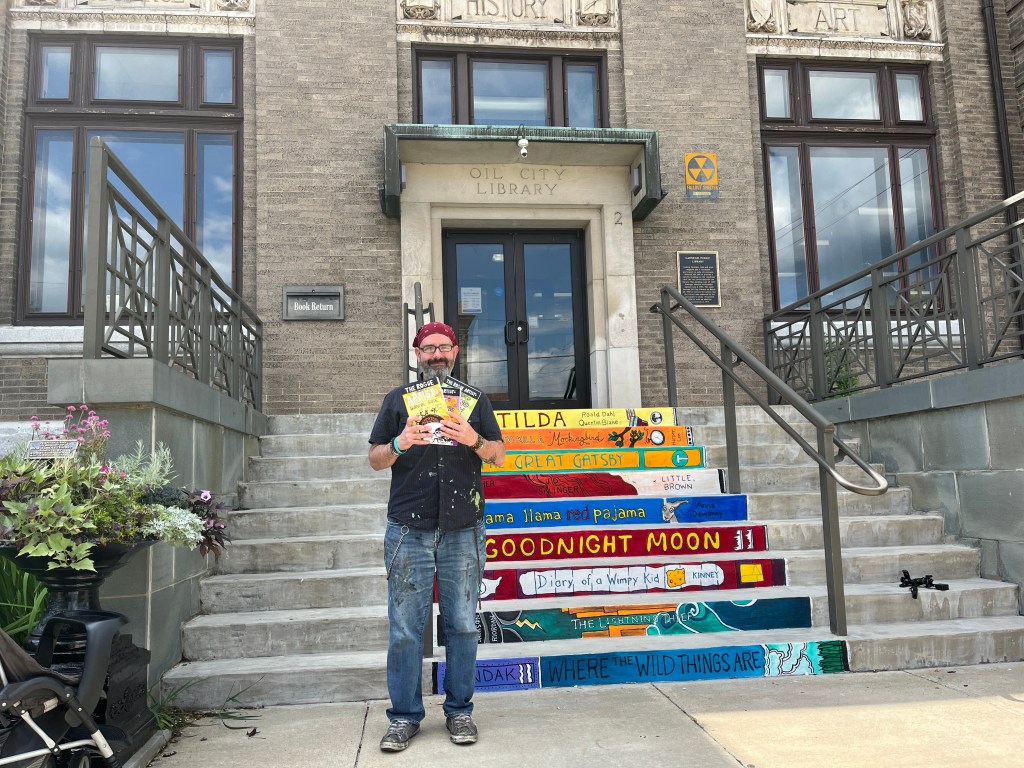
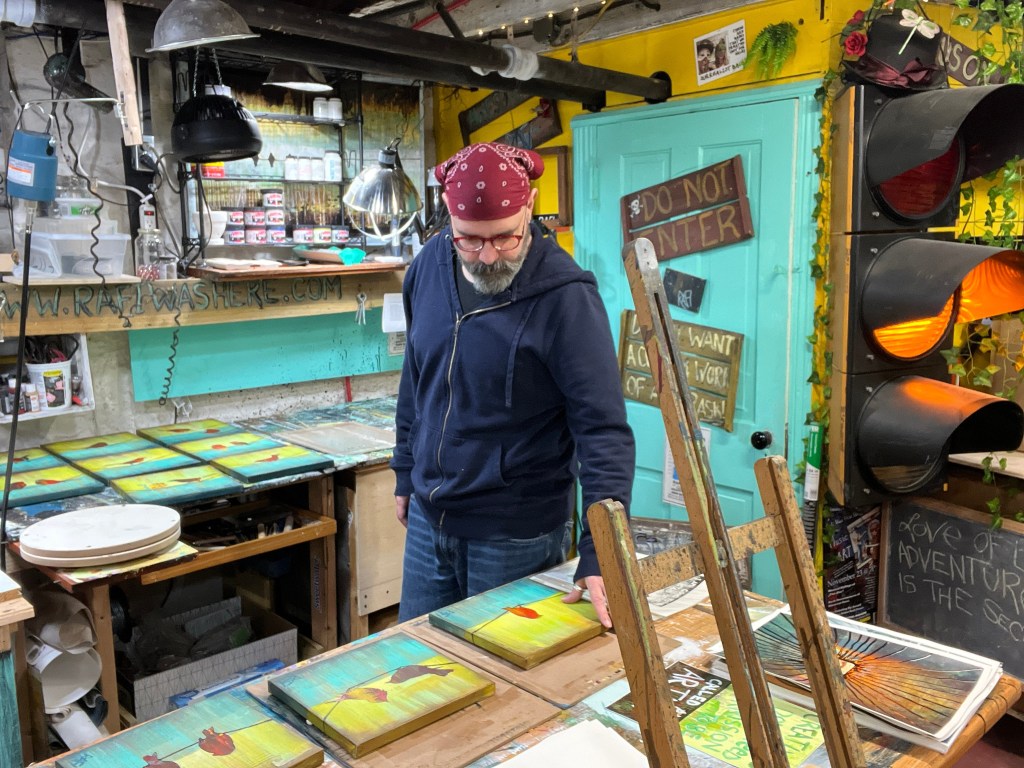
Rafi is an award winning contemporary artist who creates emotionally charged works. He is best known for his use of texture and bold color palates in striking pieces that each has a story to tell.
Rafi is a self taught artist who spent years refining his own techniques and creating a style that is all his own. He has a unique ability to absorb colors and emotions in a very abstract way and is somehow able to translate it into the high energy fine art for which he is known.
"He is driven to communicate visual qualities of perhaps the external environment which offers us freedom and inspiration as we cope with awesome focal points in the vast open space surrounding our existence. He attempts to show the internal passion of human sensuality that brings quality to our senses stimulating and extending our consciousness elevating life as individuals or sharing space with others around us. Ultimately Rafi seems to convey simple sophistication and intellectual freedom as he uses the visual language to express the human potential." - Spiros Zachos (PO10TIAL Magazine)
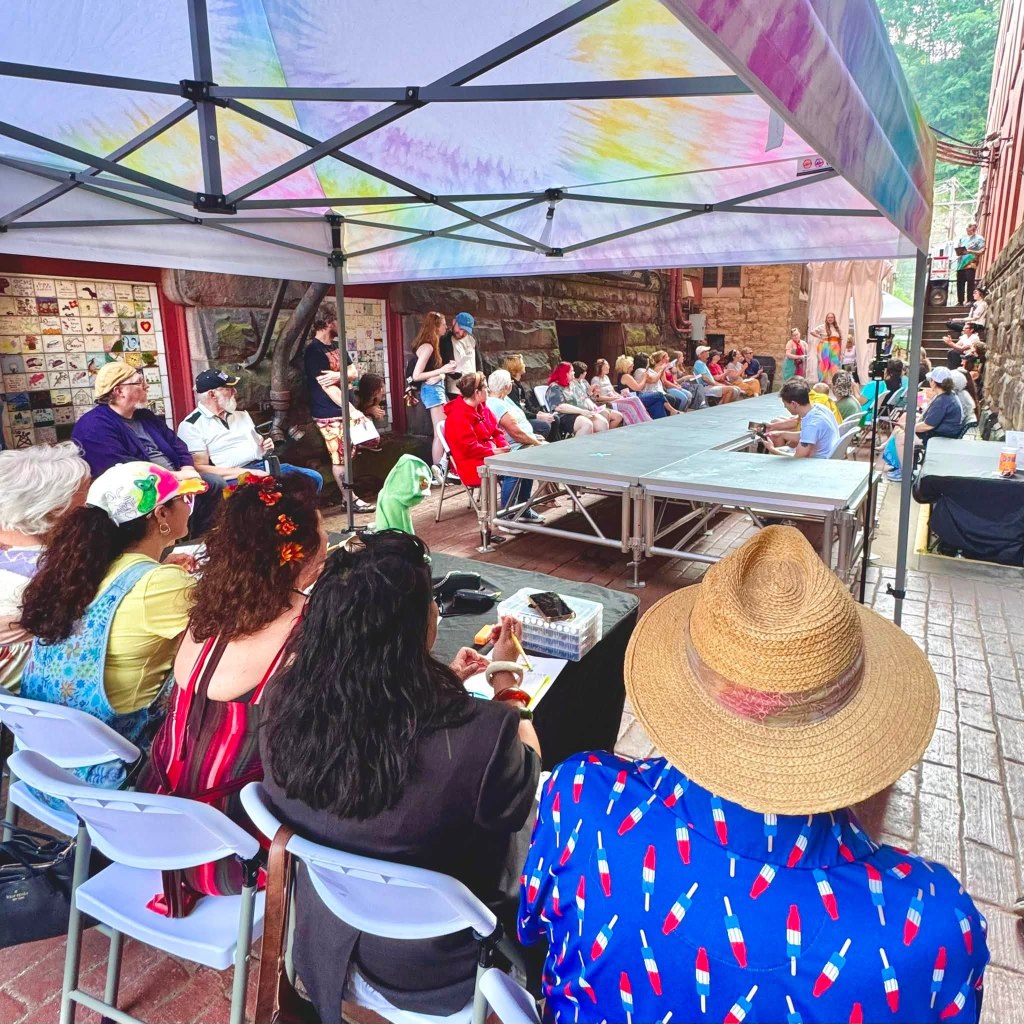
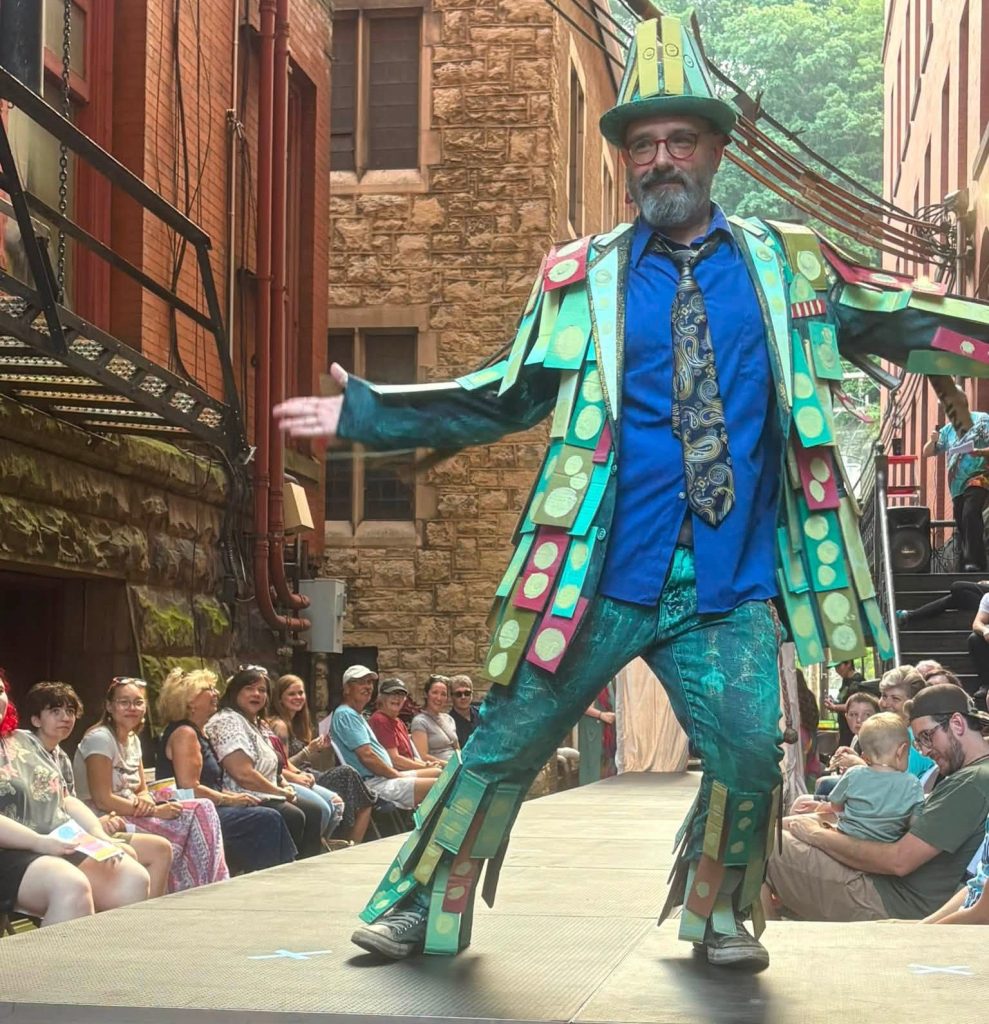
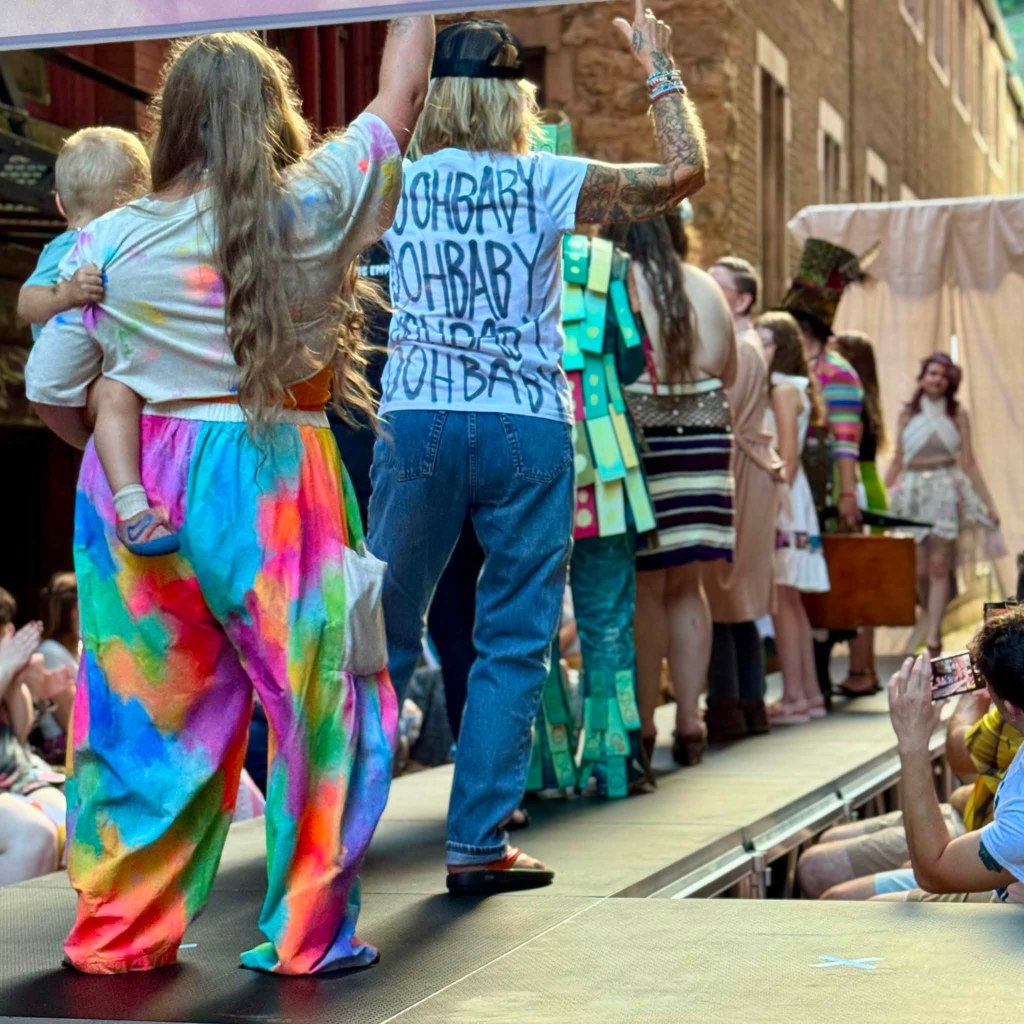
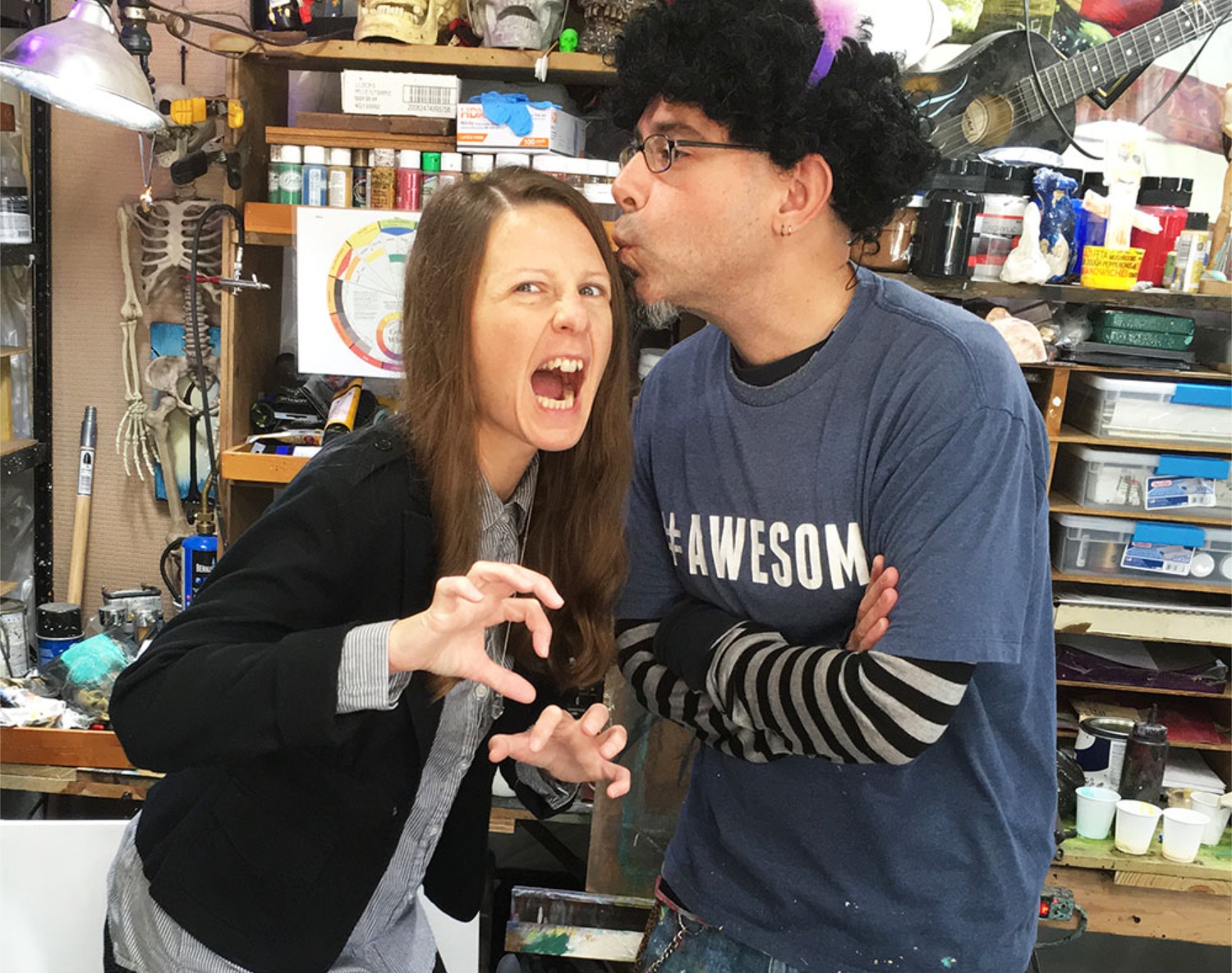
Oil City held its very first wearable art fashion show, and we are still riding the high from it. It was pure, unadulterated art for art’s sake, packed with endless laughter, wild creative energy, and so many incredible people.
The whole event went down in a gorgeous stone alleyway that was transformed into a full-on runway, surrounded by supportive faces and electric energy. Seeing the sheer variety of wild concepts everyone brought was mind-blowing. People showed up with everything from full-on Mad Hatter ensembles to vibrant, head-to-toe tie-dye masterpieces.
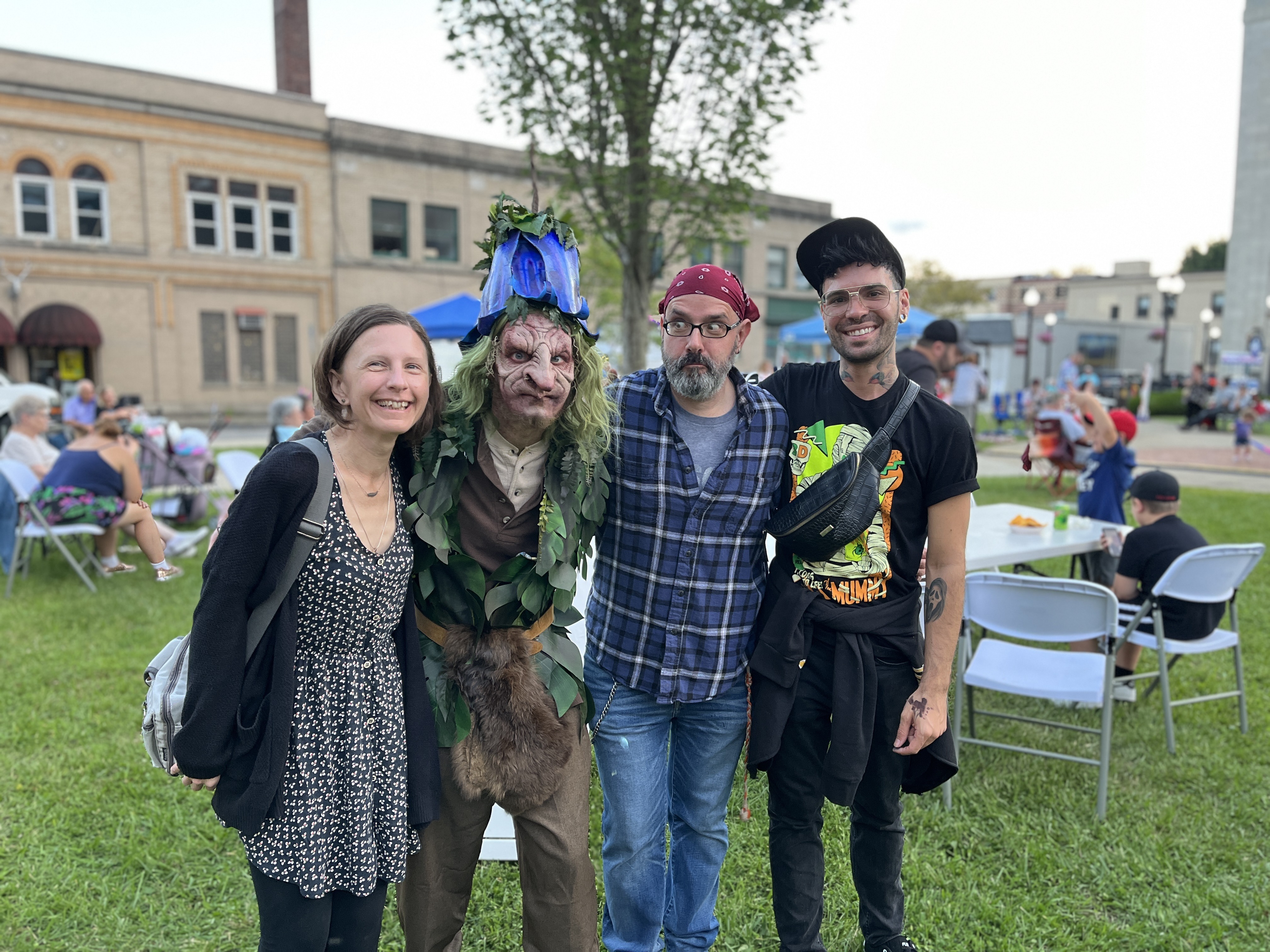
For our own outfits, we decided to lean 100% into the fun and ridiculous!
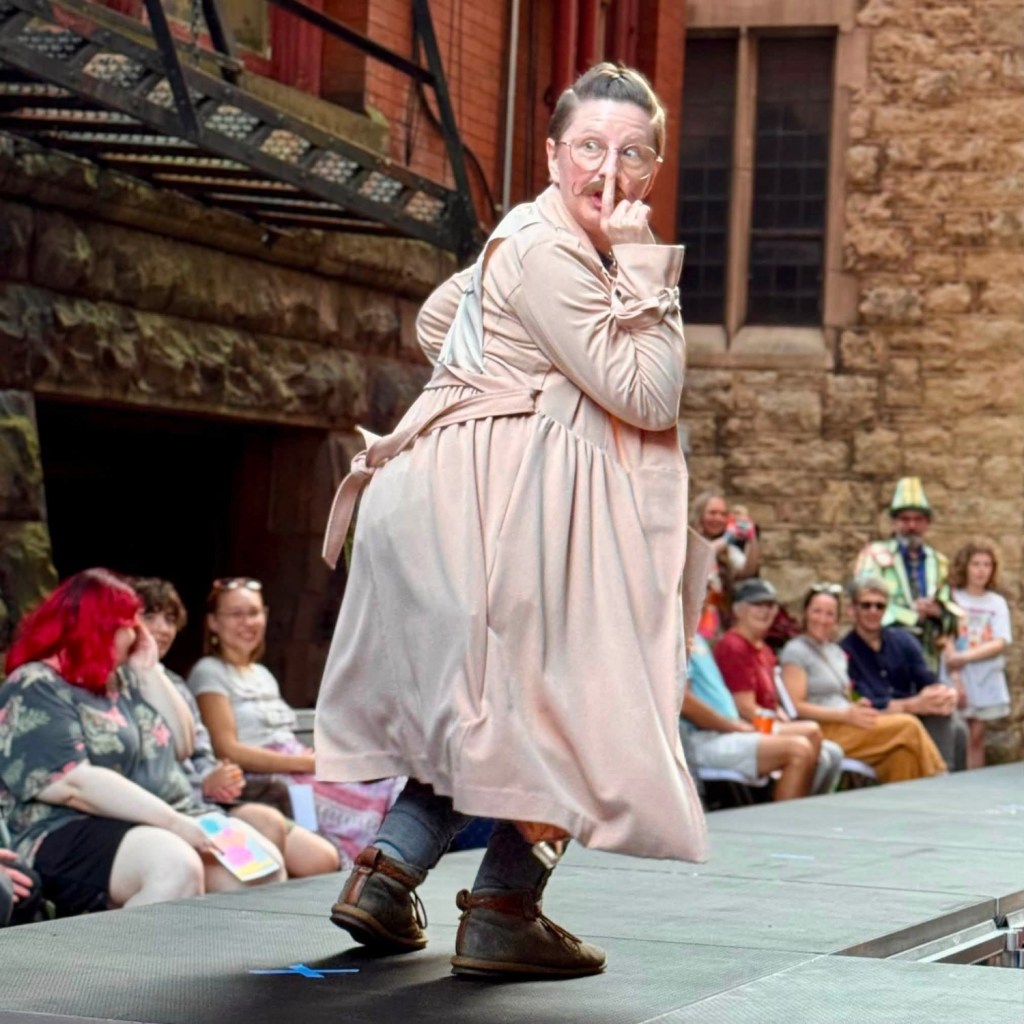
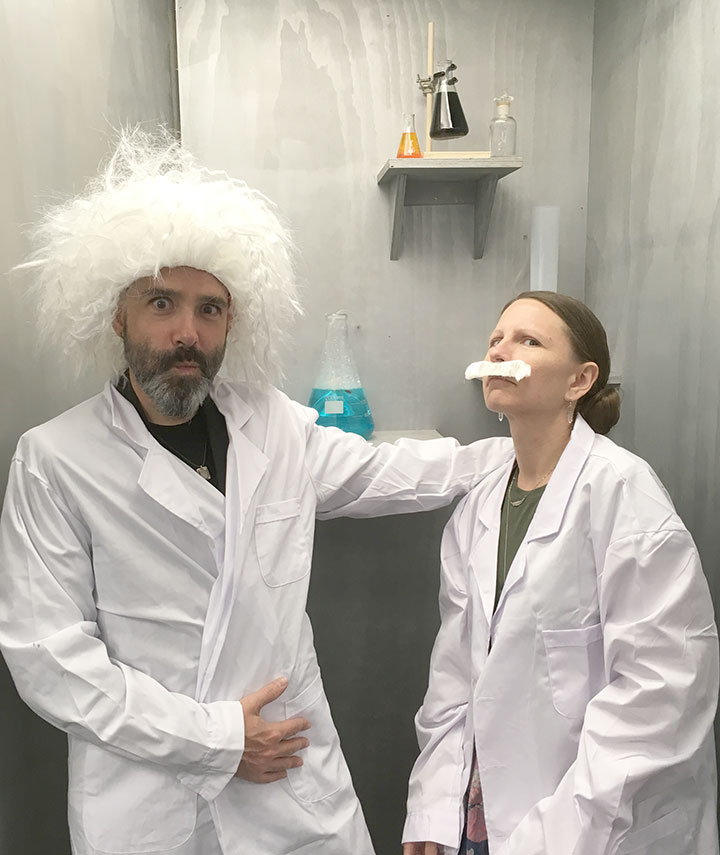
Klee put together this incredible interactive costume featuring a fake mustache, round specs, and a mysterious trench coat. She fully committed to the character, sneaking around the runway and dramatically slinging her coat open to reveal a secret display of jewelry hidden inside for the judges and the crowd. It was hilarious, clever, and an absolute hit!
As for me, I went all out as a colorful, cardboard-covered “Art-Mageddon.” I just wanted to be as playful, loud, and uninhibited as possible, and strutting down that runway was an absolute blast. It felt like being a kid again, making art just for the sheer thrill of building something goofy and fun.
Huge shoutout and massive kudos to The Artists of The Annex for organizing such an awesome event, to all the incredible artists who brought their wildest imaginations to life, and to our amazing local community for coming out in full force to support it. Days like yesterday are such a great reminder of why we do what we do and how awesome it is to be part of this community!
I’ll be editing footage of the event soon to share it on YouTube, so keep an eye out for that video if you want to see all the outfits, the runway walks, and the behind-the-scenes chaos in action.
Let’s Hang Out Tonight!
This is the exact vibe we are bringing to our live stream tonight with the Rogue Fam on Patreon! The stream is called FINDING THE FUN IN MAKING AN ART CAREER, and we are going to hang out, celebrate finding the fun in what we do, and chat about keeping that creative energy alive.
If you are one of our wonderful Patrons, go to patreon.com/Rafiwashere to access the link to join the chat.
Bring your drinks, your stories, and your favorite creative memories. Let’s hang out tonight!
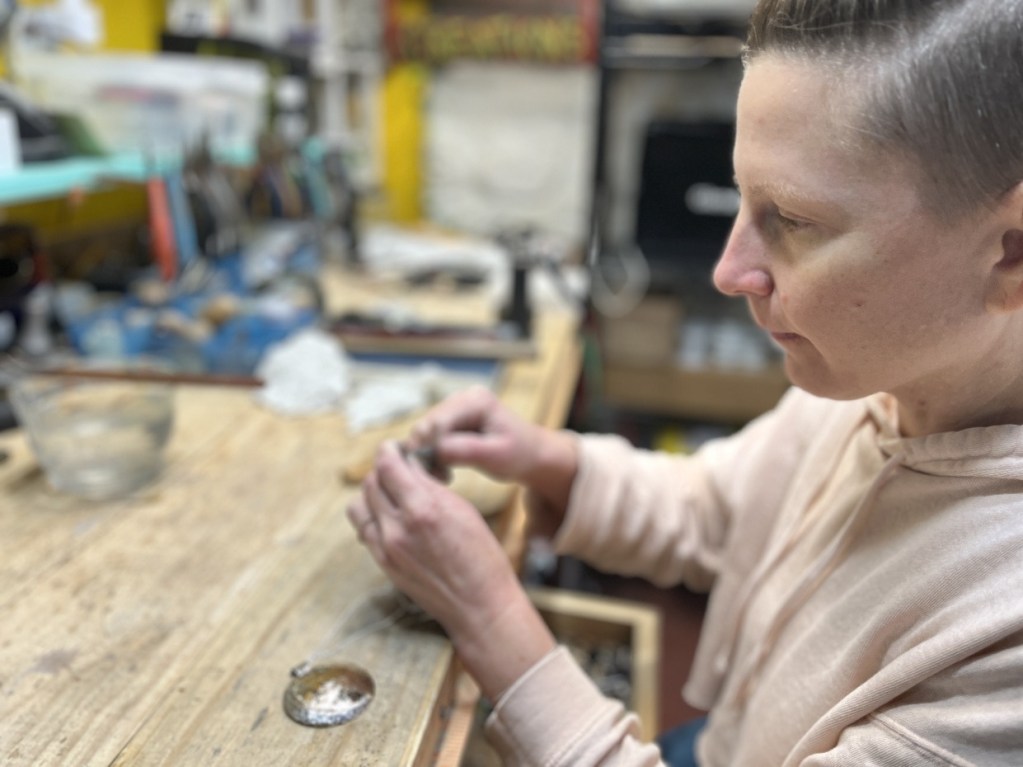
If you’ve been hanging out in our corner of the internet for a while, you probably know that Klee and I operate on a pretty simple philosophy. Whether we are slapping paint on a canvas, forging sterling silver jewelry, writing books, editing videos, making music, or just chatting with someone at an art night, we follow one non-negotiable golden rule:
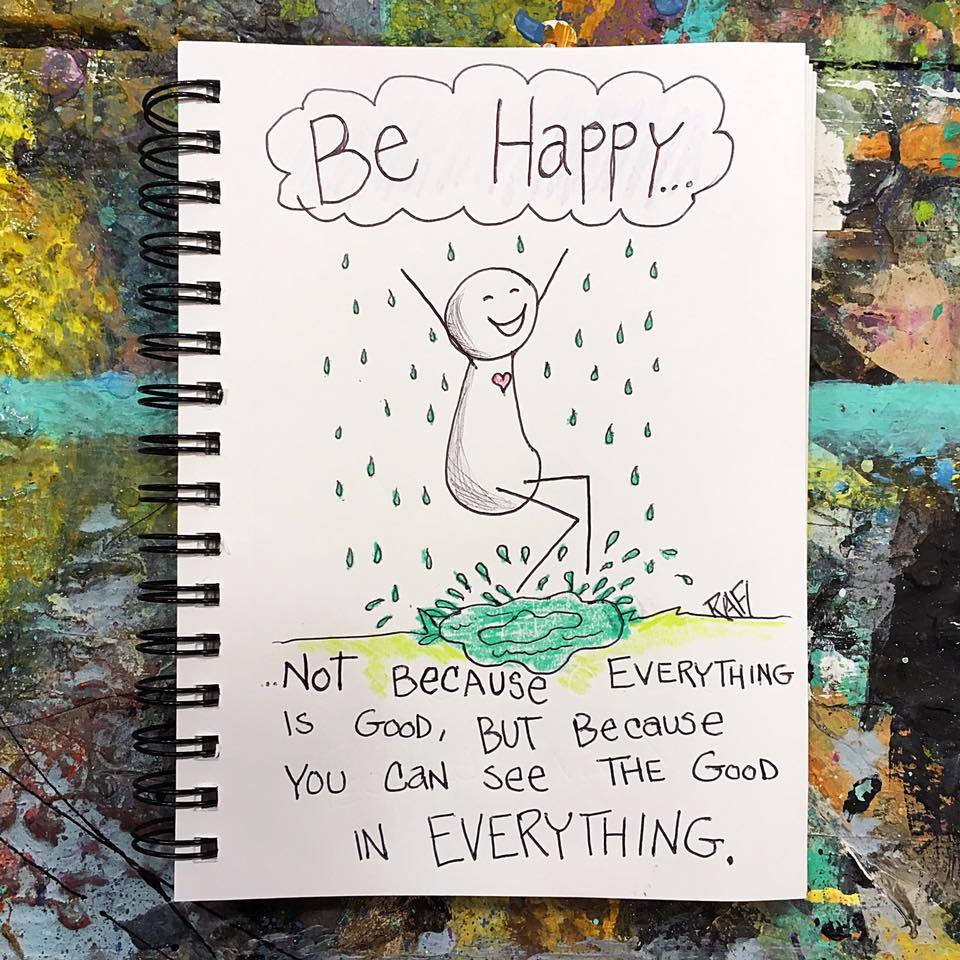
Put GOOD VIBES into the world.
It sounds simple, right? But let’s be honest for a second, everywhere you look right now, it can feel like the world is running on a steady diet of gloom, doom, and chaos. You open your phone for two seconds just to look at a picture of a cute dog, and suddenly you’re sucked into a vortex of existential dread.
So why do we double down on joy, hope, and good vibes when the world feels so discouraging?
The Outrage Machine: Popular, Exhausting, and Totally Fake
Now, I’m not saying that there aren’t crappy people or crappy things going on in the world. We’re not here to pretend everything is sunshine and rainbows 100% of the time, or that bad stuff doesn’t happen. Life can be tough, messy, and unfair.
But have you ever wondered why fear-mongering and rage bait seem to dominate every single feed?
Here’s the secret: anger and fear are cheap thrills for algorithms. Loud, scary headlines get clicks. Rage gets comments. Drama keeps people glued to screens. Whole industries are built around keeping you spiked on adrenaline and feeling like the sky is falling twenty-four hours a day. It makes a lot of money for said companies and individuals.
But here’s the truth that nobody in the outrage business wants you to realize, It’s a giant waste of your precious time, and it’s NOT as real as it seems.
The internet wants you to believe that everyone is at each other’s throats, that kindness is dead, and that everything is falling apart. But when you step away from the screen and walk out into the real world, you see a completely different story. You see neighbors helping neighbors, people making art just to share a smile, folks giggling at silly jokes, and humans being fundamentally good, warm, and creative.
Rage bait is a noisy illusion. Real life happens in the quiet, wonderful moments of connection, laughter, and creation.
Why Hope and Happiness Are Rebellious Powers
Choosing to be happy, hopeful, and kind isn’t about ignoring life’s problems or putting on rose-colored glasses. It’s an active, rebellious choice.
When you choose to broadcast good vibes, here’s what actually happens:
It Creates a Genuine Chain Reaction: Energy is contagious. When you share a heartfelt smile, create something with love, or offer a genuine compliment, you shift the energy of everyone around you. That person goes home and passes it on. You literally ripple positivity outward.
It Fuels Creativity and Resilience: Fear freezes you up; joy unlocks you. When you’re anchored in hope, you have the courage to try new things, make mistakes, build communities, and create art that lifts others up.
It Reminds People They Aren’t Alone: In a world that often feels cold, being a light for someone else is one of the most powerful things you can do.
That’s why every piece of art, every piece of jewelry, every book, and every video we create is infused with that exact energy. We want whatever leaves our hands to feel like a warm hug for your soul.
Keep Shining, You Beautiful Humans!
The world doesn’t need more noise, judgment, or doom-scrolling. It needs you, your unique light, your creative spark, your kindness, and your good vibes.
So next time the noise of the world tries to weigh you down, take a deep breath, shake off the bad energy, and go do something that brings you joy. Make art, dance in your kitchen, tell someone you appreciate them, or wear something that reminds you of how awesome life can be.
Thank you for being part of our journey and for helping us spread a little more light into the world. We love you guys! Now go out there and make today amazing!
Speaking of Good Vibes… Klee’s 6-Year Labor of Love is FINALLY Here!
We couldn’t be more excited to share something we’ve been keeping under wraps!
For over six years, Klee has been holding onto a dream. She wanted to create something deeply grounding, beautifully handcrafted, and overflowing with intentional positive energy, and after endless searching, planning, and waiting for the absolute perfect ethical suppliers, the moment has finally arrived!
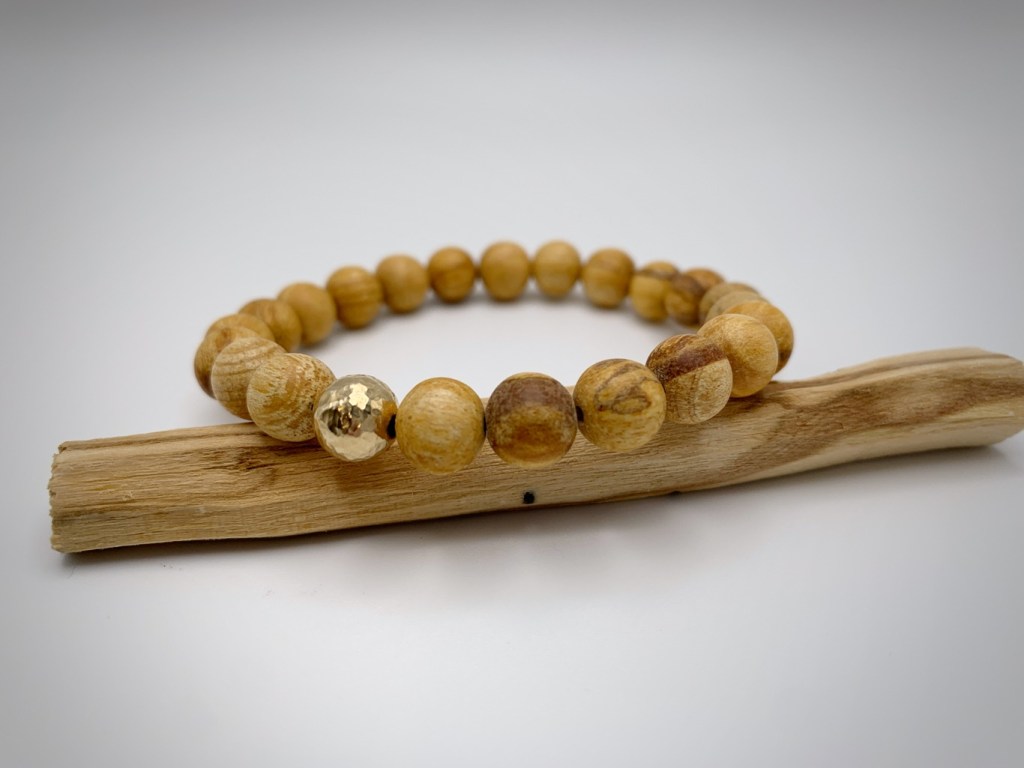
We are officially running our Good Vibes Sale, featuring Klee’s brand new Sacred Palo Santo Bracelets!
Even cooler? We set up special Pre-Order Bundles where you can grab a bracelet along with a limited-edition Giclée Fine Art Print from me (Rafi), plus a free Palo Santo stick to keep your space feeling fresh and light!
Get a Good Vibes Palo Santo Bracelet, and a free Palo Santo Stick (for burning away the bad vibes), and some Rafi Art To Brighten Your day. All of that for only $45 – $60. Patreon get’s an extra 15% discount starting tomorrow.
Hello from beneath a mountain of blankets, surrounded by a small fortress of crumpled tissues and half-empty cups of water.
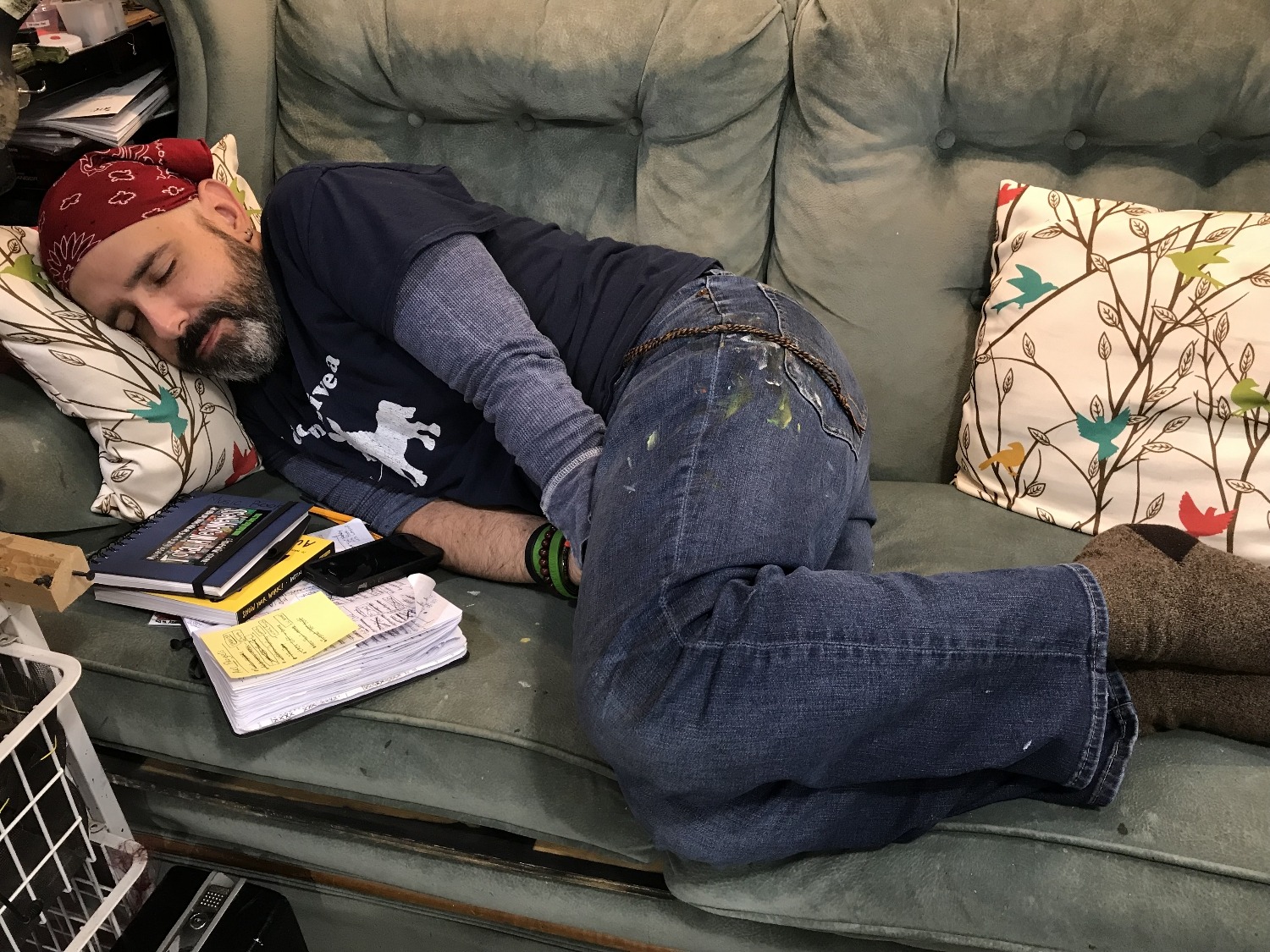
Currently, I feel like death is knocking at my door. Disclaimer: I am not actually dying. I’m just being incredibly dramatic because I feel like absolute crap. But being forced to pause and stare at the ceiling for hours on end does something funny to a person. When you physically cannot do anything, you’re forced to look at the way you live. And honestly? My fever dreams have been less terrifying than the realizations I’ve had about my daily life.
As I’ve been lying here, unable to do much without needing a 20-minute recovery nap, I started thinking about how we fill our time. I don’t know when “busy” became the norm, but I blame the 90s. In the late 1990s, society collectively decided that being busy was the ultimate badge of honor. The moment people started wearing Bluetooth headsets to the grocery store was the beginning of the end.
Not busy? Clearly, you are lazy, unmotivated, and probably still trying to figure out how to program your VCR.
Chronically busy? Wow, look at you! You’re a resounding success! You’re important!
Believe it or not, but creative people are notorious for doing this. We wear our burnout like a shiny medal. We compete in the Overwork Olympics: “Oh, you only slept five hours? Well, I slept three and survived entirely on espresso beans and panic!”
To help me cope with my forced stillness, I’ve been listening to an audiobook called “Do Nothing: How to Break Away from Overworking, Overdoing, and Underliving” by Celeste Headlee.
Let’s be real for a second. Even though I know I am sick, as I lay here, I have one part of my brain that is absolutely freaking out.
It’s screaming at me because I haven’t gotten into the studio. It’s yelling because the yard work is piling up. It’s panicking because I’m not responding to emails. According to that specific, loud-mouthed section of my mind, I am just laying here like a complete waste of space. Let’s call a spade a spade: that side of my brain is an asshole.
But it’s an asshole that has been running the show for a long time. According to the book, before the 24/7 hustle culture of the internet age, the roots of the “cult of busy” were planted way back during the Industrial Revolution and the rise of the Protestant work ethic (Idle hands are the devils work). Suddenly, human beings stopped living by the natural rhythms of the sun and seasons, and started living by the rigid tick of the factory clock.
We stopped measuring a good day by how connected, creative, or content we felt, and started measuring it by “output.” If you weren’t producing a tangible unit of work every hour, you were seen as a moral failure. Fast forward a few centuries, and that historical conditioning has mutated into a full-blown societal obsession.
It is a massive wake-up call. Headlee basically takes our modern work culture, flips it upside down, and shakes it. She explains how our obsession with efficiency and constant labor is actually a relatively new human invention (thanks, Industrial Revolution) and how it’s literally killing our creativity and well-being. It’s an educational slap in the face that reminds us that human beings are not machine parts. We are meant to live, not just produce.
Klee is not as bad as I am, but she gets the workaholic bug every once in a while.
Listening to that book has made me take a hard, uncomfortable look in the mirror. I am a self-diagnosed workaholic.
For a long time, I used that “busy-ness” as a badge of personal importance. If I’m working hard, I matter, right? But since I’ve had nothing but time to think, I dug up some of the underlying motivations for this. And brace yourselves, this might be a little TMI (Too Much Information), but we’re friends now, so here it is:
My drive to overwork stems from insecurity and a deep desire for people to like me.
Oof. It hurts to write that down. There are a lot of layers to it, but the ultimate symptom of this idea is that I turn things that are supposed to be fun into chores. I make things so much harder than they need to be. It’s like my brain says, “God forbid something is easy! If it’s easy, how will anyone respect the work you do? You have to suffer at least a little bit for it to count!”
Do I do this all the time? No. But I do it enough.
Because of this, I’m officially doing a deep dive into the motivations behind everything I do.
I’ve noticed that the initial spark, that beautiful, creative drive that makes me want to start a project in the first place can easily gets snuffed out the moment I label it as “work.” I have this toxic tendency sometimes to make things incredibly serious the second I think I need to take them seriously.
When we strip the joy out of our passions just to prove our worth to some imaginary audience, we lose the whole point of doing them.
Lying here, feeling like a deflated balloon, has given me a weirdly beautiful sense of clarity.
I don’t know how much time I have left on this mortal coil… hopefully a lot, assuming this cough doesn’t actually finish me off, but I do know this: I do not want to spend a single second of it taking myself, or anything else, so seriously that it sucks the joy out of life.
So, there you have it. These are my fevered thoughts that I wanted to share in a spurt of consciousness.
If you, too, are a recovering workaholic wearing a badge of busy-ness that is starting to feel incredibly heavy, consider this your permission slip to put it down. Let things be easy. Let things be fun.
Now, if you’ll excuse me, I have a date with a bottle of cough syrup and a completely unproductive nap.
What about you? Have you ever realized you were turning something you love into a chore? How do you protect your “spark” from the cult of busy?
Hey everyone, Rafi here. The story I’m about to share is not an example of what you should aspire to. In fact, I suggest not being like me at all. I’ve spent the last two weeks engaged in a wrestling match with a persistent, annoying cough that’s currently making the rounds. Apparently, this cough didn’t get the memo that I have things to do.
Last week, it finally sent me over the edge. The doctor handed me antibiotics, and in my infinite optimism, I thought, “Great! I’ll be back to 100% by lunch.” I did the responsible thing: I canceled my meetings, put my art projects on hold, and essentially transformed into a potato. I was pretty out of it for most of the week.
By Friday, I felt a glimmer of life. Klee and I drove down to Corry to judge an art show. The town is adorable, and the Corry Arts Guild is doing some truly incredible work. We had a blast meeting everyone and seeing the talent there… right up until my internal battery hit 0% and we had to high-tail it home.
Naturally, I took this “out of steam” feeling as a sign that I should rest. That’s what a sane person would do. However, on Saturday, I woke up, decided I was “better,” and headed into the yard to do much needed yard work. Pro tip: If you are on antibiotics, just rest. I ended up in a total physical shutdown. You might be thinking, that I realized my foul ways and decided that rest was a priority… nope.
Despite my body waving a white flag, the week kept moving because, apparently, I can’t say no:
The 80ft Mural: Met with the Southside Neighborhood Association about the “Laugh and Play” park. We’re working on a grant to repair that massive wall and bring a new mural to life. Fingers crossed!
The Elks Club: Another meeting, another mural, and another grant application. I’m basically a grant form-filler at this point.
The Classroom: Monday rolled around and I felt wrecked, but duty called. We spent the day making art with some awesome kids. It’s hard to feel sick when you’re surrounded by that much creative energy.
Mural Fest Chaos: In between coughing fits, I’ve been organizing Mural Fest. I’m currently neck-deep in sponsorship forms, artist applications, and drawing up plans to build the “Mural Monoliths.” It’s going to be massive, provided I stay upright long enough to see it through.
The Night Market: Met with Anna to finalize details for the Oil City Night Market application, logistics, and marketing. Night market is going to be awesome, but at this point, I need to step back.
Something interesting happened while being sick this long that I’ve never really faced before. Maybe it’s because I’m usually always on the move, but my insecurity started to flare up big time. I started thinking I was being boring or a total burden to Klee because I was sidelined. I felt like I was letting everyone down and that I’d somehow lost all my credibility because I couldn’t “do it all” right now.
Because we talk about everything, I brought this up to Klee. She looked at me and said, “No way. You are not a burden and you are definitely never boring.” Then she added something that hit me: “However, I do feel like you do A LOT. So, when you rest, I finally get to rest.”
Turns out, my forced pit stop was actually a breather for both of us.
By Tuesday afternoon, the cough returned with a vengeance while I worked on designs for a new art series I will debut in a September exhibition.
Mind you, I was still on the first round of antibiotics. I spent Wednesday meeting with a wonderful friend and collector who drove into town for a commission, then I pivoted back to the “Grant-Writing-Exhibition-Planning-September-Series-Designing” vortex. Oh, and I had to coordinate the closing for the exhibition at the Exchange.
Last night, my lungs decided they weren’t finished complaining. Back to the doctor I went, and I’ve now been leveled up to “Stronger Antibiotics: Phase 2.”
The moral? “I feel better” or “I’m fine” is a lie told by the part of your brain jar that just wants you to get off the couch so it can collapse in a more interesting location. When your body tells you to sit or lay down, it’s not a suggestion, it’s a mandate. You can’t pour from an empty cup, and you certainly can’t build a Mural Monolith if you’re hacking up a lung every three minutes.
My Advice to You (I need to start listening to myself)
Listen to your internal “check engine” light. If you try to power through a physical shutdown with work, projects, meetings, and grant writing, your body will eventually take the keys away and lock you in the bedroom. Rest isn’t “lost time,” it’s an investment so you don’t end up on the “Stronger Antibiotics” like I did.
The good news? The grants are moving forward, the Mural Fest plans are solidifying, and the September series is looking incredible in my congested head. I am officially surrendering to the couch for the rest of the week, armed with my new meds and a lot of hot soup. I’ll be back at the easel soon, fully recharged and hopefully cough-free.
Stay healthy out there, and for the love of art, if you get sick, just stay in bed.
We’ve all seen the movie version of an artist’s life. It’s usually depicted as a moody genius in a paint-splattered turtleneck, staring intensely at a canvas in a dimly lit studio while a single candle flickers. They don’t talk to people. They commune with the Muse.
That’s not at all what we do. Don’t get me wrong, we ARE hermits, but sometimes we do go out and “people”. Especially when it is important.
This week, my “communing” has mostly involved a calendar that looks like a game of Tetris.
If you think being an artist is just playing with paint and feelings, then you might be missing an important component. It’s actually 50% painting and 50% convincing the world that art is the secret sauce that makes a community worth living in and the world better. Here is a look at what “out of the studio” actually looks like for us.
Tonight, we are hauling gear and hanging dreams at The Exchange for the Emergent Petals show. The opening is next Wednesday, which in “Artist Time” means I have approximately six minutes to make sure nothing falls off the wall. We help curate this show and give our local artists more exposure. I think it is vital for artists and local businesses to work together… It’s a win win.
Meanwhile, I’ve traded my fine brushes for power tools this week. I’m currently building new walls for our first outdoor show in years for the First Friday event on May 1st. Because apparently, I didn’t have enough on my plate, I decided building a new show set up would be a cinch. It’s not, but I’m not going to tell myself that.
We love the studio. The studio is safe. But this week? The community called, and we answered:
Monday: We hit a 6:00 PM community meeting to talk Revitalization of our area. It turns out, when you ask a community what they want, they don’t just want pretty pictures, they want a soul. Artists need a voice at these tables because if we aren’t there, the “revitalization” might just be more grey parking lots. Don’t get me wrong, parking is important, but we also need color and intrigue in our lives.
Yesterday: We met with Ashley (who is AMAZING) at the Transit building. That place is a massive, gorgeous resource, full of artists, and we’re brainstorming ways to make it a hub where the community and artists can actually collide. We also discussed affordable rental of spaces for pop up art shows and fun artist lead events.
Arma Fest Meeting: September is coming, and so is the second year of a giant event in our town. We want to help make the artist section something epic and wonderous to behold. It’s going to be legendary.
Public Art Board:BIG NEWS! We secured the grant for the Mural Fest, which means Mural Fest is officially a GO!
Tomorrow: Meeting with the Makerspace. We have funding, we have momentum, and we’re about to get that sucker moving to full epicness.
Friday: We’re headed to City Hall. Klee and I are using our technical know-how to help City Council set up live streaming. Why? Because transparency is awesome. We are also going to discuss Mural Fest and get approvals. Then, we’re off to Pollen Nation in Franklin to talk art initiatives, art workshops, and whatever other fun art events we could think of.
In the middle of all this civic duty, I’m designing a new series of art for the 24 Minis show coming up this year at the Manos Gallery. I’m calling them “Cute Cryptids.” Think Mothman, but make him adorable enough to grab a coffee with. We also have the usual commissions and orders to fulfill, so we are in the studio every minute we can be.
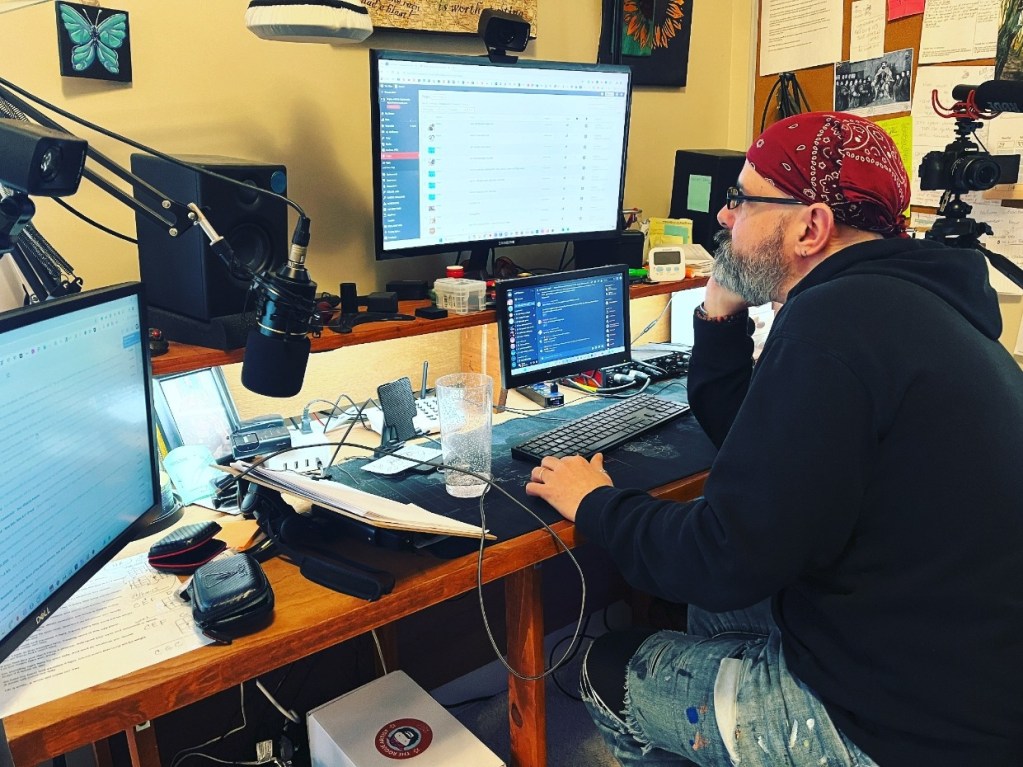
Of course, because it’s spring, we are also in Spring Cleaning Mode. As I type this, I am literally barricaded in by filming gear, microphones, and random art equipment because I am clearing out the media studio. It’s less “curated aesthetic” and more “hoarder-chic,” but we’re making progress!
Why Leave the Creative Cave?
I’m not suggesting you book this many meetings or go to that many public things. Honestly, this schedule is a little bit ridiculous and not the usual. We usually draw a hard line and limit our out of studio community time to two a week. But sometimes, there are things we don’t want to miss. Here is some food for thought:
“It’s not just about the artwork you put on a wall, it’s about who you are in the rooms where decisions are made.”
As artists, it’s easy to hide in our studios. But making an impact can mean getting out there and meeting the local business owners, the city council, and the neighbors. Whether you’re in a big city or a specific neighborhood, showing up to represent you matters.
After a week of being “Professional Community People,” we get to end it with our favorite part: hanging out with our awesome Rogues on Patreon for our live stream podcast recording on Sunday. It’s the perfect reminder of why we do all this, the connection.
Don’t just paint your community, help build it. Even if it means wearing “real clothes” five days in a row.
Right now, Klee and I should be in the studio. I should be wrestling with a canvas and she should be making something shiny and ancient-looking. Instead, we are currently buried under a mountain of receipts, spreadsheets, and what I like to call “other stuff.” You know the that vague, soul-sucking category of adult responsibilities and uninvited paperwork that seems to multiply in the dark like evil gremlins.
It is tax season, the time of year when the government asks, “So, exactly how many tubes of paint did you buy in July, and was that a ‘business expense’ or a cry for help?”
Just remember, even when you are stuck doing paperwork, you are still an artist. You don’t stop being a creator just because you’ve traded your paintbrush for a calculator. I’ve realized that it is entirely possible to have fun even when you are doing things that have absolutely nothing to do with your art. In fact, if you can make it fun, then it is not as much of a drag. Of course, the smart thing to do is just hire someone… but if you are anything like Klee and I, you will be tackling it yourselves because…
I don’t know why. Either way, here is what we do to make it fun.
1. Turn It Into A Game!
Listen, the first time we did our own taxes over 15 years ago, we cried. There was no fun and games. However, we have learned a lot over the years and are at a point where we can make the process fun. When Klee and I are tackling our taxes, we turn it into a weird sort of performance art. We make it a challenge. Who can find the best deduction? If you treat the mundane tasks like a scavenger hunt for your own life, the “boredom” starts to lose its power over you.
2. Put on the Financial Cape
As I’ve said before, you have to wear the financial hat to keep the art hat. But nobody said the financial hat has to be boring. I like to imagine I’m a high-stakes accountant for a rebel alliance. I’m not just “paying bills”, I’m funding a creative revolution. Keeping our overhead low and our budget strict is the only reason we get to keep doing the fun stuff. When you look at your taxes as the price of admission for your dream life, they get a little easier to stomach.
3. Staying True Through the Drama
Then there’s the “other stuff” that isn’t paperwork. The drama, the life surprises, the things that try to knock you off your North Star. It’s easy to get grumpy when you feel like your time is being stolen. But even in the middle of a “bad Tuesday,” you can choose your energy. I’ve found that if I approach the “other stuff” with the same curiosity I bring to a new painting, the drama doesn’t stick as much. I’m just an artist observing a very strange, very bureaucratic world. It’s all material to be shared one way or another.
4. The Celebration of the Small Wins
When we finally finish a batch of numbers, we take a break and celebrate. We high-five over the fact that we survived another round of being “responsible adults” before we dive into the next batch.
The secret to living the artist life isn’t about avoiding the mundane, it’s about refusing to let the mundane turn you into a drag of a person. You can bring beauty, love, and joy to just about anything. Okay, maybe not “everything” but you can definitely bring some self joy and a healthy dose of sarcasm.
If you’re stuck doing something today that feels like the opposite of creative, remember this: you are still the one holding the pen. Whether you’re signing a painting or a tax form, do it with your own flair. Don’t let the “shoulds” and the “must-dos” drain your battery.
Focus on who you are and keep your sense of humor intact. The studio will still be there when the paperwork is done, and you’ll be a lot more focused when you get there because you didn’t let the “other stuff” steal your spark.
Now, I’m going back to this spreadsheet. wish me luck!
I can’t even tell you how many times throughout my creative life I’ve heard this gem. We’ve all heard it. That one sentence that lands in your gut like a wet sandwich. It’s usually preceded by the deadliest three words in the English language: “No offense, but…”
During a recent meeting of the Organization that shall not be named, the person that is supposed to be in charge looked at the only two artists at the meeting and dropped this absolute gem:
“No offense, but as artists, you have more time than the other people here who have jobs.”
Cue the record scratch.
Now, I wasn’t at this specific meeting. To be honest, after the recent tsunami of high-school drama with these people, I needed some space for my own peace of mind. If I had been there, you can bet I would have had a few choice words about that statement. Luckily, we have several friends who go to these meetings who are creative advocates, and they told us the story.
Creating Art And Jewelry Doesn’t Just Magically Happen
Unfortunately, the comment wasn’t challenged by a single person there. Not one. Apparently, that kind of behavior is so normalized that no one really noticed it. It just hung there in the air like a bad smell that everyone decided to ignore. That being said, one of the artists at the meeting resigned the day after. That seems to be a common theme from the overwhelming amount of messages I have received from creative people in our area after reading about my own struggles. I think it is ignorant to tell ANY creative that their professional lives don’t actually exist.
Now, I know what you might be thinking, “Rafi, it’s not a big deal, is it?” to which I respond, “Oh yes it is, and here is why.”
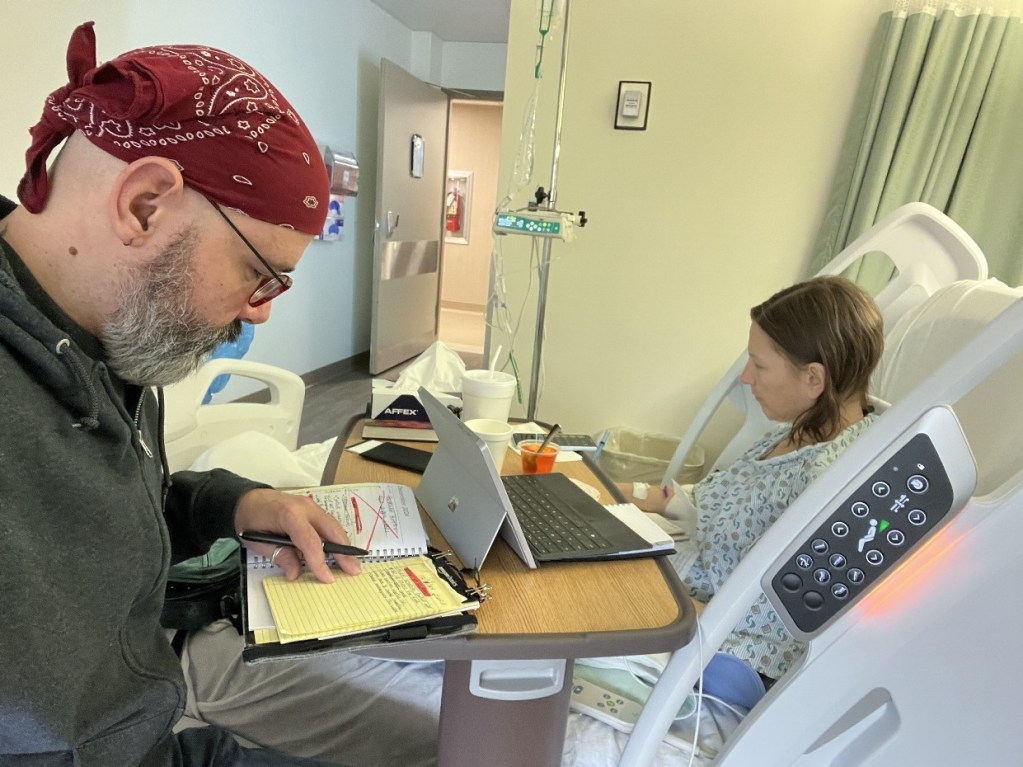
Even When Klee Was Sick In The Hospital We Had A Business To Run
Making a statement like this is just as ignorant as an artist looking at a person with a “real” job and saying:
“No offense, but you have a 9-5, which means you have way more time than I do. You get weekends off, your workday ends early, and you get vacation and holidays off. Not to mention, you have a guaranteed paycheck, so you clearly have a lot more free time.”
See how ridiculous that sounds? It’s absurd to generalize what someone else has going on, especially when you are completely ignorant of what their day-to-day reality actually looks like. Whether you’re in a studio or an office, everyone is juggling a life, a career, and a set of responsibilities that a “no offense” comment can’t begin to cover. Honestly, I love my career and what I do and put out there. Just because I don’t hate my job, doesn’t make it any less of a time commitment.
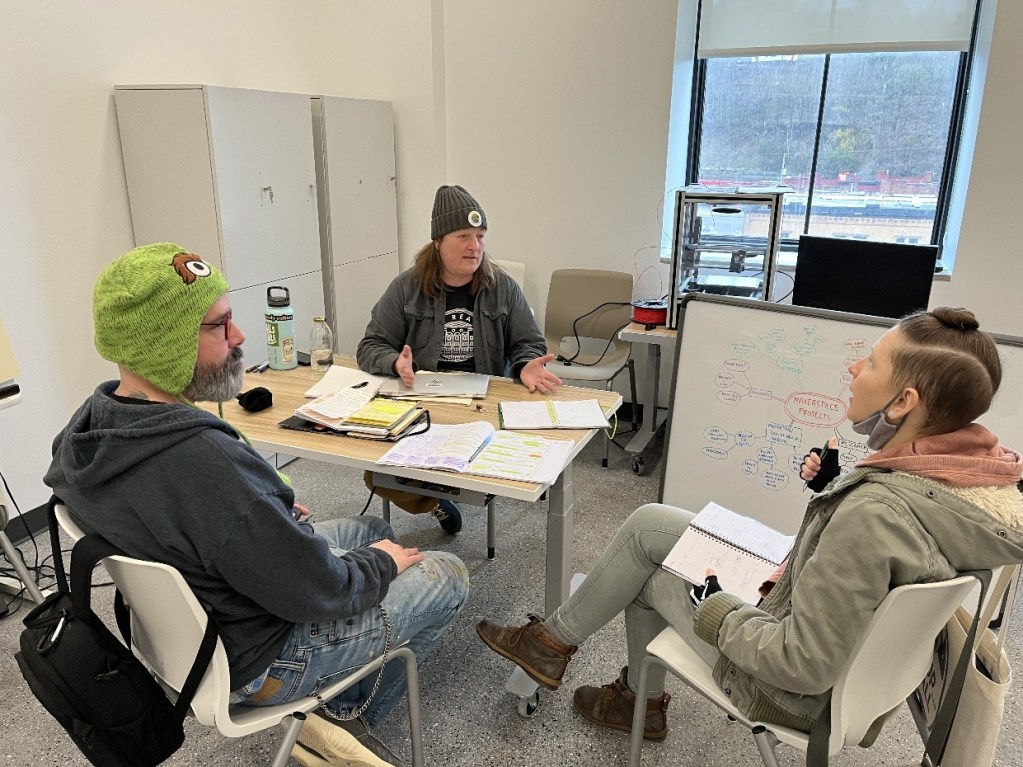
We Have Several Meetings A Month (at least one a week) With Several Boards And Committees Where We Are Helping Revitalize Our Area
This problem isn’t just isolated to the one organization or a person. It is a problem you see just about everywhere you look. Apparently, there is a widespread belief that being a professional artist is basically just frolicking through meadows, waiting for a “muse” to whisper sweet nothings into your ear while you wait for your sourdough starter to peak. I don’t think many people can actually conceptualize what we really do.
We Teach Artist Workshops
We Organize And Teach A Monthly Create And Sip
We Teach Kids Art Every Week
We curate and organize a monthly art exhibition for local artists
Here is why that comment is the Olympic Gold Medalist of Ignorance:
1. The “Job” is the Business
Being a professional artist isn’t just “making stuff.” It’s being a CEO, a Marketing Director, a Logistics Manager, and a Tax Accountant all at once. If an artist isn’t at their “desk,” they are probably:
Negotiating contracts.
Wrangling shipping logistics.
Promoting their business.
responding to emails.
planning projects, shows, and exhibitions.
Managing a social media presence.
And figuring out how to balance a creative career with all their other responsibilities.
There is a lot that happens behind the scenes. Websites, accounting, inventory, logistics, and much much more.
2. We Don’t Have “Off” Hours
When you have a “job,” you typically get to clock out. You go home, you watch Netflix, and you stop thinking about the quarterly spreadsheets. An artist? We are always on. Our “free time” is spent figuring out how to pay our bills and responding to client DMs at 11:00 PM because that’s when opportunity strikes.
Apply For And Develop Relationships With Galleries And Local Arts Organizations
3. The Lack of a Safety Net
“People with jobs” often have things like… oh, I don’t know… guaranteed salaries. Artists are the ultimate grinders. We don’t have “more time” we have more stakes. If we aren’t working, we aren’t eating. Every hour is a billable hour. Our bills don’t magically get paid because we are artists, we have to make things happen to pay our bills.
The funniest part of this whole saga from the beginning? Creative organizations literally cannot function without creative people. When you insult the creative people who are there to help, you’re essentially trying to fly a plane while insulting the engines. Good luck with the landing!
Home Repairs, Bills, And All The Other Life Stuff We Are Responsible For
To my fellow “jobless” creators who may have run into the same comment:
Your time is sacred.
Your business is valid.
Your “free time” is actually “unpaid labor that makes the world beautiful.”
If someone tries to pull the “no offense” card on you, just remember: they are projecting their own lack of imagination. Keep building your own foundation, keep charging what you’re worth, and keep “frolicking” your way to success.
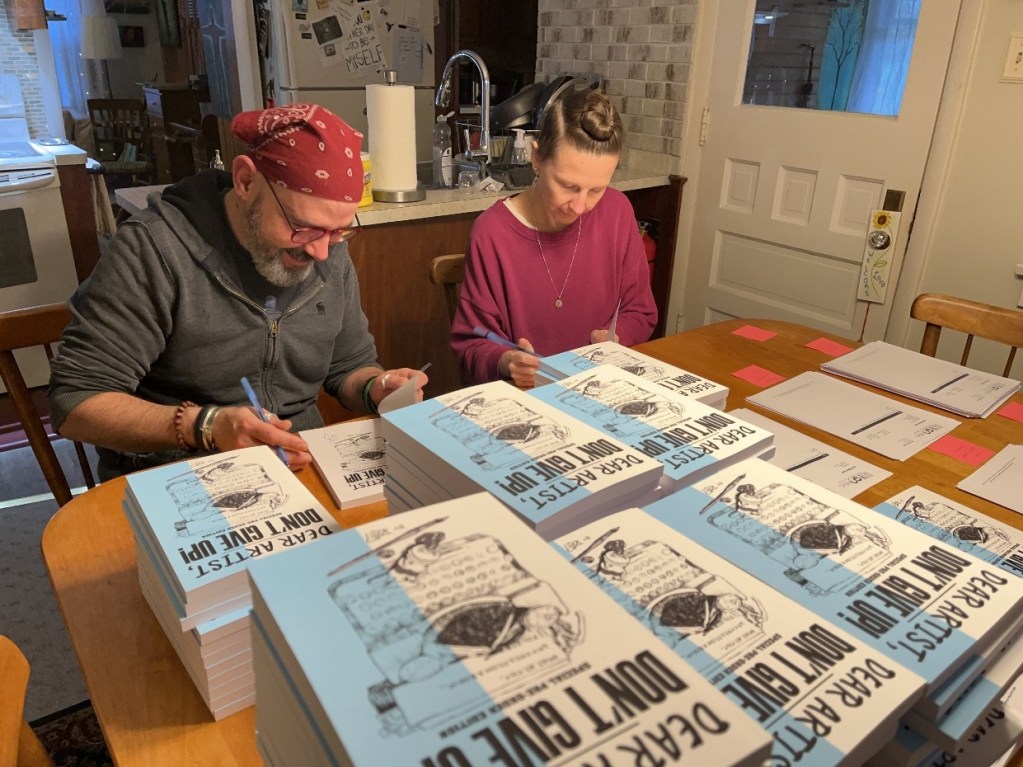
We Write, Edit, Format, Record, Publish, And Distribute Our Artist Books
We write, Record, Edit, And Distribute Our Own Music
To Everyone Who Reached Out About My Recent Experience
I want to thank you for reaching out with your experience in dealing with the same drama I dealt with recently. Whether it was online, or the many members of our community who showed their support. Thank you. I had recently pulled back from saying anything about the individuals in question on our public forum, because honestly, I was over it. And I still am. However, they don’t seem to be done with me. I think they are under the impression that no one tells us what is happening behind closed doors and what they are saying. It’s kind of stupid honestly. So, as far as I’m concerned, I’m done with it, and I am moving on. But if they come at me, I’ll be filling you in on the drama. The truth is, I just don’t care enough about them, but I won’t stay quiet when attacked. So, as long as they back off, we are good.
Listen up, creative weirdos. It’s that time of year again and we have some helpful tax tips to help you save some money. Every year, artists, writers, musicians, and independent creators unintentionally hand the IRS more money than they need to. Why? Because they overlook deductions they are completely entitled to claim.
When you’re running a creative business, your brain is usually focused on the canvas, the manuscript, or the melody…not the ever-shifting complexities of the tax code. But missing out on these deductions is literally leaving money on the table. Money that could be funding your next project, buying better gear, or just keeping the lights on.
This is your Rogue Guide to the key business deductions to look out for before you file. (And as always, work with a tax professional who actually understands the freelance landscape to make sure you get every penny you deserve.)
Here are the key deductions to keep your hard-earned money where it belongs.
We try and make tax time a game, so that we spend the day enjoying ourselves
Check these yearly because some rates change (such as mileage and food). This is not legal advice, it is just a helpful guide to writing off expenses for your creative business. Just about every expense you have to keep your business running is something you don’t have to pay taxes on. I know it’s a drag to keep track of, but it will save you a lot of money at the end of the year.
1. Materials & Supplies (Line 22)
Consumables: Paint, canvas, clay, ink, fabric, paper, and film. Materials you use to create your craft.
Tools: Brushes, palette knives, carving tools, and small hand tools. All your tools.
Safety Gear: Respirators, filters, gloves, aprons, and specialized footwear.
Finishing: Framing, glass, matting, and display hardware.
Shipping Materials: Crating, bubble wrap, tape, and boxes for artwork delivery.
2. Vehicle & Mileage (Line 9)
Business Mileage:72.5 cents per mile (2026 IRS Rate).
Includes: Trips to art supply stores, galleries, framing shops, art shows, and client meetings.
Incidental Auto: Parking fees and tolls for business-related travel.
3. Studio & Workspace (Line 20b or 30)
Choose either offsite, home office, or both if you rent a space and have a studio in your home.
Off-site Rent: Monthly rent for a commercial studio or storage unit.
Off-site Utilities: Electricity, water, and heat for a non-home studio.
Home Office Deduction:
Simplified: $5 per square foot (up to 300 sq. ft.).
Actual: Percentage of mortgage interest/rent, insurance, and utilities based on studio square footage.
4. Marketing & Advertising (Line 8)
Web Presence: Website hosting (your website), domain renewals, and SEO services. plugins for your website.
Digital Marketing: Social media ads (Instagram/Facebook) and email newsletter subscriptions.
Print: Business cards, portfolios, postcards, and printed catalogs.
Entry Fees: Application fees for juried shows, art fairs, and competitions.
5. Labor & Professional Services (Lines 10, 11, & 17)
Gallery Commissions: Fees kept by a gallery upon the sale of your work.
Contract Labor: Fees for studio assistants, models, or professional photographers.
Professional Fees: Payments to CPAs, tax preparers, bookkeepers, or legal counsel.
Filing Taxes Fee: What you paid last year to file your business taxes.
6. Office & Administrative (Line 18)
Software: Adobe Creative Cloud, QuickBooks, cloud storage, and office suites.
Office Supplies: Stationery, printer ink, stamps, and administrative folders.
Small Tech: Computers, tablets, or printers costing $2,500 or less (De Minimis Safe Harbor).
Shipping Costs: All business related shipping costs (including art).
7. Travel & Meals (Line 24a & 24b)
Travel: Airfare, lodging, and Uber/Lyft/Train for residencies, art fairs, or gallery openings.
Business Meals: 50% deductible for meetings with curators, collectors, or collaborators.
8. Professional Development (Line 27a)
Education: Workshops, masterclasses, and seminars.
Research: Museum memberships and gallery admission fees.
Subscriptions: Art magazines, trade journals, and professional organization dues.
Important Record-Keeping Note: The IRS requires documentation for all deductions. Always keep a digital or physical copy of your receipts and a detailed mileage log (including date, destination, and business purpose). We recommend you have one checking account dedicated to your business.
Non-Deductible Artist Expenses (The “No” List) You Cannot Write These Off.
1. Personal Clothing & Grooming
Everyday Clothes: You cannot deduct “work clothes” like jeans, shirts, or even a nice suit for an opening, as they are suitable for everyday wear.
Grooming: Haircuts, makeup, or manicures, even if you are attending your own gallery opening or doing a video interview, These are considered personal expenses.
Exception: Only specialized protective gear (welding masks) or theatrical costumes (performance clothing) not wearable on the street are deductible.
2. Commuting Costs
Home to Office: You cannot deduct the mileage or cost of traveling from your home to a regular, permanent studio or office. This is considered a “commute,” which the IRS deems a personal expense.
Exception: You can deduct travel between your first business stop (e.g., the art supply store) and your studio, or from your studio to a client.
3. Personal Meals & Groceries
Solo Meals: You cannot write off your lunch just because you worked through it at the studio.
Groceries: Standard groceries for your home are never deductible, even if you eat them while working.
Exception: Only meals shared with a business contact (client, curator, collaborator) for a clear business purpose are 50% deductible.
4. “Hobby” Expenses
Non-Profit Activities: If your art has not made a profit in at least 3 of the last 5 years, the IRS may classify it as a “hobby.” In this case, you cannot deduct any expenses that exceed your art income.
5. Fines & Penalties
Traffic Tickets: Parking tickets or speeding fines received while driving for business are not deductible.
Tax Penalties: Late filing fees or interest charged by the IRS/state.
6. Portions of “Dual-Use” Items
Personal Phone/Internet Use: You can only deduct the percentage of your cell phone or internet bill that is used specifically for business.
Unexclusive Home Office: You cannot deduct a home office if the space is also used as a guest bedroom, a TV room, or for any other personal purpose. It must be 100% exclusive to your art.
7. Health Insurance (on Schedule C)
Note: While self-employed health insurance is deductible, it usually goes on Form 1040 (Adjustments to Income) rather than Schedule C. It does not reduce your self-employment tax, only your income tax.
The Golden Rule: If you would have bought it or done it even if you weren’t an artist, it’s probably a personal expense. When in doubt, keep the receipt but flag it for your tax professional to make the final call! Download my notes below.
Recently, I had written a private blog about a bad experience I had with a local arts organization. That blog shot up to the top of google search when you looked up our town. Some folks felt concerned, because they felt that my blog made the town look bad. I decided at that moment, to let go and forget the issue. I took down the blog and carried on with my life. However, it has recently come to my attention that the people involved are still using my name in a derogatory way.
So, the updated story is going back up and I’m not keeping it private. I’ve changed some names so it wouldn’t pop up to the top of the search engines, but here’s the full story in all of it’s glory.
To all those people out there who are concerned about bad publicity, I’m sorry, but I’m simply sharing my experience and if you don’t want bad publicity, don’t let people who represent you act like a bunch of mean girls in high school.
How We Support Artists: Organized The First Of Many Exhibitions In Town
So, recently, I started A Local Art Syndicate, a collective of artists in our area. Our intent was to bridge the gap between artists, galleries, open calls, and arts organizations, and share resources. Simple. We wanted to build bridges and give artists a voice. Lately, I’ve discovered that some people prefer sitting on a pile of rocks in the middle of a river, screaming at anyone who tries to bring a shovel and build a bridge.
We reached out to our local arts organizations and received a warm embrace and excitement about what we were doing… except one. I should say, three people who head an organization (who all happen to be related) were the problem. Unfortunately for the other people in that organization (who are actually pretty awesome) my interactions have been with these three. It all started with a “stupid form” for an event that exposed a deep-seated culture of gatekeeping and high-school drama within the organization that we will call the “Boil Kitty Farts Council.”
Buckle up. It gets weird.
Our First Art Syndicate Meeting
It started with me trying to be helpful. (Mistake #1).
I added their upcoming event to our Art Syndicate calendar to promote it. Then, a friend and artist mentioned they were getting major pushback for questioning the application form and that no one had signed up because the form didn’t make sense. Then, more artists from the Syndicate started emailing me, asking, “Rafi, what is this form even for?”
Because we want to support local “Farts” organizations, we decided we would do the event and decided to look at it. I was like, WTF is this? It was a “Vendor Form” for an “Exhibition” where you couldn’t actually “Vend.” It was like being invited to a “Cooking Competition” where you aren’t allowed to turn on the stove. They wanted you to become a partner, but the benefits were vague and confusing. It was all over the place.
We’ve organized Many Art Festivals, Events, And Shows and thought our input could help.
I sent an email to get some clarity and ask if we could make some changes to the form. The response? A bunch of justifications, a vocabulary lesson on what the word EXPO meant, a weird reminder that the sender had a business degree, and a note that they were “born and raised here.”
Cool story. But… is there any plan to fix the form at some point?
I responded and thank them for their clarity (I was being polite) and told them that many of my concerns were not addressed. So, I mentioned that I would come to the meeting and address the board with my questions. No big deal, I just want to help.
The person in charge then emailed me and said I couldn’t address the board because I wasn’t on the agenda, which is a violation of how public boards actually work. I called this person on the phone to clear the air. She told me her daughter had taken my initial email personally. (Because nothing says “Professional Board Member” like letting your family’s feelings dictate public policy.) I told her: “I want the event to succeed!” We talked about budgets and how the city has their hands tied and whatnots. It was friendly enough. However, when I asked again to speak at the meeting. Suddenly, the wall went back up. “You’re not on the agenda.” I said, “Cool, we’ll come anyway as members of the public.”
The day of the meeting we walked into a room and the vibe was… icy. It was like a “Be On the Lookout” alert had been issued for us.
We have gone to several meetings in town and know a lot of people. We have never experienced people tensing up when we walk in a room.
During the meeting, I used the word “sketchy” to describe the form. I didn’t realize that in Boil Kitty, calling a form “sketchy” is apparently a declaration of war. I know there could have been better words I could have used, but in all honesty, it was sketchy and raised red flags. The form was a total misdirect. “Sign up to be a vendor at this expo! Well, no not really, you are actually signing up to be a partner… and no, you can’t vend… but you DO get a table.”
The next morning, the “Legacy” email went out. Apparently, my critique of a form had “tainted the 30-year legacy” of the Farts Town-full. I wasn’t mentioned by name but I’m the only one who said those words. She name dropped a bunch of people who have done awesome things for the arts community (she did this twice in our email exchanges) and associated her name with them. The funny thing is that we have also worked with those people and they would never behaved the way she was behaving.
Then the rumors started. Leadership was reportedly going to local shops asking, “Have you heard the drama about the form?” I hate gossip. It’s juvenile. So I wrote a blog laying out the truth. Transparency is the best disinfectant, right? Well, apparently, they prefer the dark alleys of hearsay. There were other things said about us that I will not share because I don’t want the people that came forward to get any backlash. Let’s just say, they were spreading lies about us.
I then sent a formal complaint to the full board before sending it to the City Manager. The response? Total silence. At this point, I realized this whole situation was consuming my peace. I didn’t want a war over a form for an event nobody was signing up for anyway. So, I took the high road. I retracted the complaint. I took down the blog. I offered to help as a guest. I thought being the “bigger person” would end it. Spoiler: I was very wrong.
Every time I interacted with them on any issue they made it a point to say they represent all the arts and all creatives. To which I was like, “who the heck do you think I’m talking about??”
Then our friend and artist on the board resigned. And how did the leadership handle it? They used my name to attack her in the response to her resignation.
They accused her of bringing her “friends” to the meeting to “secretly record” a public meeting (which is a legal right, by the way). They used my name as a weapon to bully a volunteer who was already emotionally tormented by the whole situation.
The truth is, from the beginning, these individuals have compartmentalized information, twisted the facts, and straight up lied to plead their case. I tried to organize a mediation, so we could address them and the board, and although they agreed to it, the idea of mediation just vanished.
We later found out they were adversarial before we even had our first Syndicate meeting. They saw us as a threat before we ever said a word. Recently, we’ve seen them at other meetings and events, and have experienced the cold shoulder and avoidance. It feels like high school drama. It’s pretty stupid.
So why am I sharing this story again? Because I’m done staying quiet about it. We were asked not to “make the town look bad” by talking about one of its organizations. But listen: I’m not making the town look bad. I’m just holding the flashlight. If the light shows a mess, don’t blame the light. So many people came out of the woodwork that had had similar experiences, yet nobody is talking about it. By avoiding the problem, no change happens.
So, what am I hoping to accomplish? Do I want them fired and take over the Farts Council? Although this is one of the rumors they spread, I have zero interest in taking over. I also don’t need anyone to step down or be fired, but there needs to be accountability. There needs to be a system where people of the community can give feedback without backlash. Honestly, it needs to be more professional. It should be a safe place where people can disagree and keep it from devolving into high school drama. And although I love and adore most of the board members, at no point in time did any of them reach out to address my concerns. Everyone just stayed quiet and avoided the drama that was escalating. How is that acceptable?
What are my plans moving forward? We have always had a very public presence when it comes to helping artists and showcasing what we do. You guys also know that I call it like I see it? So, I’m going to continue to do what I have always done, share my experiences with you. I am not however going to go head to head and make it personal. I’m not going to name names or be hateful in our videos, blogs, and other forms of expression, but you sure as shit know I’m going to use it as examples in my materials for artists. So, at the end of the day, their behavior will be used in videos, blogs, podcasts, and books, to share best practices with the creative community in dealing with people like this.
So there it is! That’s the full story up to now for full transparency. I may do a video in the future because I actually have footage of a lot of this. I was filming a week in the life when this weird situation took over my existence. But we’ll see.
Tips for My Fellow Artists Who Might Be Dealing With Something Similar
Don’t judge the whole Board: Most people are there to help. It’s usually just one or two bad actors poisoning the well.
Don’t get pulled into the drama: Keep your focus on your art. Speak your truth, but don’t gossip, it will make you just as bad as them. Most importantly, don’t get emotionally pulled into their drama and feel like a victim to them. You are not.
The Truth is the defense: If an organization looks bad because you told the truth, there are issues that need addressing.
Keep the receipts: Save every email. Documentation is the only cure for a rumor mill. I have all documentation and recordings of these interactions.
Know when to walk away: If they don’t respect your time, they don’t deserve your talent. You don’t need a seat at the table especially if the don’t respect you. Doesn’t mean you can’t share your experience with others.
The honest truth? Organizations like this run themselves into the ground. Creative organizations need creative people to function. If you run all the creatives off the board… you’re just a group of people sitting in a room talking about things you know nothing about.
Stay rebellious, stay creative, and don’t let the gatekeepers win.
I think it might actually be behind us… at least I hope so.
I wasn’t going to post an update about this because hopefully it is over, but many of you have reached out asking for an update. We’ve also had a lot of people in our community reaching out and rather than tell the story a hundred times, here is the update. Things are quiet now since I submitted a formal complaint. However, after I posted the full story about what happened online, things got a little crazy. Again, buckle up, it gets weird.
Shortly after the last blog went live, I began hearing from sources that the three that “shall not be named” on said board were absolutely outraged. Surprisingly, this outrage wasn’t because they had acted unprofessionally, but that we had recorded the public meeting we went to. Word on the street was that they were even trying to convince other board members that recording a public meeting was “illegal.”
Now, I wasn’t at this particular meeting because at this point, I’m not interested. However, some of what was told to me suggest that they were talking about the idea of taking some kind of action. I don’t know what action they would take, but I’m not concerned.
Quick Fact Check: Under the Pennsylvania Sunshine Act, I have an absolute right to record. You can’t write a bylaw that overrides state law anymore than you can write a bylaw that says the Earth is flat. It doesn’t work that way.
Honestly, I wasn’t bothered too much by any of what was said at the board meeting, it’s what happens behind the scenes that caused me to take action. I started getting messages from community members who were being bullied. one told me that within five minutes of commenting on my blog in support, they received a bullying email from you know who. To be honest, this has been my biggest problem with this entire situation. Since this all started, people have come forward with stories of some of the things they have said about us via text, phone call, email, or in person.
Some were told they needed to “cut off communication” with us or it would “hurt their reputation or business.” One person was even told that being associated with us was “dangerous” for their reputation because we can’t be “trusted”.
I was at a total loss. As far as I know, it’s a city run board, not the Sopranos. To use a leadership position to bully the local community and business owners into silence is, quite frankly, despicable.
At this point, I wrote a formal complaint and sent it to the board and the city manager. I’m done playing this childish game. It starts like this:
Dear Members of the “Dark” Council,
Although what is laid out in this email is the act of three individuals on your board, I am addressing the full board for the sake of transparency, and holding the organization accountable for actions taken by your leadership. For this, I am sorry. I love and respect most of you, but this behavior cannot continue and has gotten out of hand. At this point we are dealing with a smear campaign and people in our community are being bullied.
I didn’t actually write “dark” Council but again, I want to make sure this doesn’t go to the top of google.
We love this town, and honestly, EVERY organization and members of said organizations have ALWAYS been welcoming and receptive to us. This is the ONLY time we have experienced this type of behavior. So, you know, it’s not the town.
Where We Stand Now
So, that’s it. I sent that email last week and haven’t heard back. I also haven’t heard of any gossip spreading or rumors, so they have either stopped or are being more sneaky about it. Either way, as long as it doesn’t effect us or our friends, I don’t care. We are moving forward with the Art Syndicate, working with the many professional and transparent organizations in this town and other towns that actually care about artists. As for the Boil Kitty Farts Council? The light is on. The receipts are saved. And the “Legacy” they were so worried about? Well, they’re the ones writing the final chapters. Hopefully they’ll write some good ones from here on out.
Tips for Artists (Or Community Members): Dealing with “Gatekeeper” Organizations
If you find yourself in a situation where a local public organization feels more like a private club than a community resource, here are a few things I’ve learned through this process:
Know Your Local Laws: If an organization is appointed by the city or receives public funding, they are likely subject to transparency laws like the Sunshine Act and the Right-to-Know Law. They cannot legally ban you from recording a meeting or speaking during public comment.
Keep the Receipts: Never rely on “he-said, she-said.” If someone sends a weird email or a threatening text, save it immediately and ask the people involved to do the same. Screenshot everything. If you have a phone call that feels off, follow it up with an email: “Just to confirm what we discussed on the phone…” This creates a paper trail that is very hard for them to ignore later.
Don’t Let the “Legacy” Talk Intimidate You: Just because an organization has been around for 30 years doesn’t mean they are above reproach. A legacy is maintained through good behavior, not by silencing critics and name dropping people from the past in your emails. If your feedback is met with “But we’ve always done it this way,” it’s usually a sign that change is overdue.
Find Your “Syndicate”: There is strength in numbers. Gatekeepers thrive on isolating artists and community members and making them feel like they’ll be “blacklisted” if they speak up. When you stand together as a collective, that “blacklisting” threat loses its power.
Go Through Official Channels: If the board leadership is the problem, don’t just argue with them, go to their supervisors. For city-appointed boards, that means the City Manager or City Council. They are responsible for the people they appoint, and they generally don’t want the liability of unethical board members.
Protect Your Peace: You don’t have to win every argument to win the war. Sometimes the best move is to walk away, build your own table, and let the old guard realize they’re sitting in an empty room.
Thank you to everyone who has reached out about this, we appreciate you all so much. And to all our community members who showed their support, thank you for coming forward, I know it wasn’t easy. Like I said earlier, I’m hoping this is the last update I will share about this and that this whole issue is behind us. Fingers crossed!
Upcoming Public & Virtual Events:
Pumpkin Painting Create & Sip Party With Rafi And Klee October 21, 2026 at 6:00 pm – 8:00 pm
Go To Events Page To Find Out More.
When Things Get Spooky - PATREON Live Podcast Recording October 25, 2026 at 5:00 pm – 6:00 pm
Visit Our Calendar Page For More Details.
Opening Reception: Wild & Whimsical November 4, 2026 at 6:00 pm – 8:00 pm
Go To Events Page To Find Out More.
Opening Reception: Neon Nostalgia Art Exhibition November 4, 2026 at 6:00 pm – 8:00 pm
Visit Our Calendar Page For More Details.