
In this video, we discuss post-Artum depression. Have you experienced this before? It’s that feeling of emptiness that comes after the creation of something extraordinary!
In this video, we discuss post-Artum depression. Have you experienced this before? It’s that feeling of emptiness that comes after the creation of something extraordinary!

Self-care is a subject that is often overlooked, but it is essential for your physical, emotional, and mental well-being. It is something that I, as an artist, have been investigating deeply over the last couple of years, especially with the move and having experienced burnout and all kinds of other not-fun things. In today’s Monday Motivational Madness, I want to share some of my experiences with self-care and how it can be a vital part of your creative process.
Self-care is not just about taking care of your physical body; it is also about taking care of your mind and emotions. It is easy to get caught up in the hustle and bustle of life, but if you do not take time for yourself, you will quickly feel drained, uninspired, and lacking in creativity. It is essential to take that time to reset and relax, to be in a place where you can let your creativity flow freely.
Stress has a way of compounding on itself if it is left unchecked. One of the best things you can do for yourself is to put a hard pause on everything. That means taking time out where you’re not thinking about anything, turning off your phone, and just being in the moment. If there is any part of you that is saying, “I can’t do that, I have to be on all the time,” then that’s something you need to question because it will lead to burnout.
If you cannot take three hours to stop everything, you must reevaluate your priorities. It sounds selfish, but it is not. You cannot give to anyone else or the things you want unless you take care of yourself and give to yourself first. So, take that pause for yourself and take care of yourself because you deserve it.
As artists, we often feel like we need to keep working all the time, but that is not sustainable. I am a recovering workaholic and know the dangers of putting too much pressure on yourself. You have to find a balance that works for you. That means taking time for yourself and being kind to yourself.
One of the things I find helpful is to schedule time for self-care. I put it on my calendar like any other appointment or task. It is a non-negotiable part of my day, and I stick to it. This could mean taking a walk, practicing meditation, or doing something creative that is not related to my work. Doing something that brings you joy and that you enjoy doing is essential.
Another thing I find helpful is to be mindful of what I eat and drink. Eating a balanced diet and staying hydrated can significantly impact your mental and emotional well-being. When you eat well, you feel well; when you feel well, you are more creative.
Exercise is also essential for self-care. It not only helps keep you physically healthy but also has a positive impact on your mental and emotional health. Exercise is a great way to release stress and tension and to clear your mind. It can be as simple as walking, running, or doing some strength training.
Sleep is also critical for self-care. Getting enough sleep is essential for your physical, emotional, and mental well-being. If you do not get enough sleep, you will quickly feel drained and lacking in creativity. Get enough sleep and create a nighttime routine that helps you relax and wind down.
In conclusion, self-care is essential for your physical, emotional, and mental well-being. It is essential to take time for yourself and be kind to yourself. This means scheduling time for self-care, being mindful of what you are feeling, and being willing to say no to others.
It’s important to remember that self-care is not just a one-time thing. It should be incorporated into your daily routine. Take small breaks throughout the day to stretch, take a walk outside, or sit and breathe. Incorporate healthy habits into your lifestyle, such as eating well, getting enough sleep, and exercising regularly. It’s all about finding balance and caring for yourself in every way possible. Remember, you are worth it, and taking care of yourself is not selfish, it’s necessary. So prioritize self-care and watch how it positively impacts your life and creativity.

Hello, amazing artists! Today, I want to talk about something personal, something that’s fresh in my mind. I haven’t been feeling well for about two weeks now, and this week, I started to feel overwhelmed and went into a downward spiral.
Pursuing an art career and feeling like nothing is coming from it can lead to overwhelming roadblocks and obstacles. I want to talk about what I did in that place and share it with you, hoping it will help you out.
Emotions and feelings are the most important things to look at and face when pursuing an art career. Discouragement and going into a downward spiral can kill your art career because it causes you to decide to stop.
Let me share with you what happened to me. Everything was on track with the art business, and the studio was finally open, but a big storm hit on the day we were ready to go. A giant tree in our yard was swaying, and a big branch fell off that tree, just missing our house. Looking at the tree during the storm, I knew it had to come down, but our finances have been stretched thin after the move and the studio being shut down for so long. We’re still recovering. The idea of paying for the project was daunting because we have more debt than I’m comfortable with.
So, I devised a plan for taking the tree down that involves creating art from it. In the meantime, I ordered a printer and invested a fair amount of money that we didn’t have into it. I decided to rerelease my prints, something that’s easy for me to do, and it’s not very expensive as far as price goes, with a good profit margin. I released my prints, but nothing happened, which is typical. That’s how it works. However, I discovered that I was focused on the lack of money because of the tree, and other things I didn’t realize were brewing in my mind.
I immediately found myself in a downward spiral, feeling hopeless and not wanting to do anything. I knew I had to snap out of it, so I started to do something about it. I decided to focus on what I could control: creating art. I started planning the artwork with the tree and the fallen branch. I also decided to share my experience with you, hoping that it could help someone out there who is going through something similar.
The first step is to acknowledge your feelings and emotions. Don’t deny them, but don’t let them take over you. The second step is to focus on what you can control. Create art, write, read, or do something that makes you happy. The third step is to change your mindset. Don’t focus on the lack of money or the things you can’t do. Focus on what you can do and the opportunities that come your way.
It’s essential to surround yourself with a community of people who are supportive of your art and your journey. Join a group, attend art shows, or reach out to someone who inspires you. It’s also important to take care of yourself physically and mentally.
Pursuing an art career can be challenging, and it’s okay to feel discouraged and overwhelmed. But it’s essential to acknowledge your feelings, focus on what you can control, and change your mindset. Remember that you are not alone, and there is always a way forward. Keep creating and keep going.
In life, there are moments when things don’t go as planned, and it’s easy to fall into negative thinking patterns. You start to downward spiral, and before you know it, you’re consumed by worries and regrets.
Challenging negative thoughts is a powerful step to breaking free from the downward spiral.
These thoughts are often patterns we have developed over time, and it’s essential to identify them and challenge them by asking ourselves, “Is this really true?” Look for evidence that contradicts your negative thoughts. For example, if you think you will never succeed in something, look for examples of people who started from scratch and succeeded.
Another powerful technique is mindfulness. When we’re in the midst of a downward spiral, we’re often thinking about something that hasn’t even happened yet, and we’re worrying about things we can’t control. Mindfulness is about staying in the present and focusing on what’s happening right now. When we’re mindful, we’re not distracted by worries and regrets, and we’re better able to deal with the challenges we face.
Taking a break from everything is also essential. Sometimes, it may be necessary to take a day or two off to regain our balance and find our center. It’s crucial to remember that our emotions are important, and we need to take care of ourselves.
If you’re struggling with negative thoughts and finding it difficult to break free, seek help. Talk to someone who can offer you guidance and support. Sometimes, we need to lean on others to help us get through challenging times.
We all experience moments of negative thinking and downward spirals, but we have the power to break free from them. By challenging negative thoughts, practicing mindfulness, and seeking support when needed, we can overcome any obstacle and find our way back to a place of peace and happiness. Remember, your thoughts and emotions matter, and you have the power to shape your reality.
Hi Rogues! Happy Monday! Today, I want to talk about something that is meant to keep you going, keep you inspired, and help you stay on track with your creative pursuits. I’m sure most of us have felt like giving up on our creative passions at some point, especially when we’re not getting the validation we need, or not making any money yet. That’s when we need to remind ourselves why we started in the first place.
I didn’t start drawing or painting or doing any creative projects because I thought I would make a fortune doing it. I started because I had a passion for creating. And that passion is what has kept me going all these years. It’s important to remember why we started in the first place, why we feel that burn, and that passion for creating art.
One of the most common mistakes people make is chasing money. It’s easy to get caught up in the idea that once we start making money, we’ll be successful. But if that’s all we’re focused on, we’ll likely get discouraged. Remembering why we started in the first place helps keep us focused on our passion for creating.
For me, creating art was always a way to express myself. I was a quiet kid who spoke little, so I found self-expression through art. And that’s still true for me today. I create art for myself, not for other people. I think that’s something that’s gotten lost in today’s culture of hustle and sell. We must remember that creating art is about self-expression and self-discovery, not just about making money.
It’s essential to keep this in mind as we pursue our creative passions. It’s easy to get caught up in the idea of making money or getting validation from others. But ultimately, those things are just side effects of creating great art. The rest will fall into place if we focus on our passion and joy for creating.
So, my message for today’s Monday motivational madness is to remember the passion and joy that drove you to pick up a paintbrush or a pencil or to play an instrument, or do anything creative. Let that be the thing that motivates you to keep going. You’re a creative, which means you get to create stuff. And that in itself is the motivation to keep going.
When we create something, we get to see it through to the end. We get to see our ideas come to life. That feeling of accomplishment is incredibly rewarding. And then, we get to move on to the next project, reveling in the challenge and loving the problem-solving. That momentum and inspiration will continue if we stay focused on our passion for creating.
It’s a mindset, a way of looking at our creative pursuits with a positive and motivated outlook. It’s about remembering why we started in the first place, and letting that passion and joy guide us to keep going. So, keep creating, experimenting, putting yourself out there, and let your passion and joy be your motivation to keep going. Thanks for reading, and I’ll see you the next Monday!

I want to talk about the myth of the starving artist. Many people have tried to discourage aspiring artists from pursuing a career in the arts, especially because art is often seen as insignificant in the financial world. However, the fact is that art is all around us, and being an artist is one of the most significant things that you could be.
One of the most common myths is that you won’t make any money until after death. This is simply not true. Many successful artists have achieved great financial success; my wife and I are examples of this. We make a living with our art; while we’re not millionaires, we make enough to pay our bills and live life the way we want.
Another myth is that you have to wait around to be discovered. The truth is that every successful artist, both historically and currently, put themselves out there in a way where they could be found. They didn’t wait to be discovered. They made a living with their art by putting themselves out there and managing their finances smartly. If you’re not making money, it’s time to figure out ways to make money with your creativity. Many artists supplement their income with other work, such as teaching, freelance design, or selling merchandise related to their work. It’s not about suffering for your art. It’s about being determined and doing whatever it takes to keep creating.
We live in a digital media world, and artists have many opportunities to earn money. You can sell your prints, license your work, use it in advertising, or put it on various products. With the internet, you have a much greater reach and audience than ever. You can invent your methods of putting yourself out there, whether finding a different town or pushing yourself online.
At the end of the day, it’s all about being determined and not making excuses. If you’re passionate about your art, you’ll find a way to make it work.
Yes, it’s not the easiest path, but it’s a path that is filled with passion, creativity, and fulfillment. And yes, you may have to supplement your income with other work, but that doesn’t mean you can’t make a living with your art. You have to be smart about it and explore different avenues.
Also, don’t believe in the myth of the starving artist. It’s just that, a myth. Many successful artists out there are making a great living with their art. It’s just a matter of putting in the work and being persistent. The key is not to give up and keep pushing forward.
Another essential thing to remember is not to compare yourself to other artists. Your journey is unique, and you have your own voice and style. It’s important to embrace that and not try to fit into a mold that doesn’t feel authentic. Stay true to yourself and your vision.
And finally, always remember why you started creating art in the first place. It’s easy to get caught up in the financial aspect and lose sight of the joy and passion that brought you to this path. Keep that passion alive and let it guide you through the ups and downs.
In conclusion, being an artist is a journey that requires dedication, hard work, and persistence. But it’s also a journey that is filled with beauty, creativity, and fulfillment. So, don’t let anyone discourage you from pursuing your dreams, and always remember to stay true to yourself and your vision. Happy creating!

Hi, creative geniuses! Welcome to Monday Motivation Madness! Today, I want to talk about something that I believe is crucial for our growth as artists – Experimentation.
As artists, we are always in our creative spaces, playing with our materials and tools. It’s easy to get stuck in our comfort zones, doing things that we already know work. But, to truly challenge ourselves, we need to step out of our comfort zones and try new things.
I love the thrill of getting a new tool or a new set of materials or taking on something that’s slightly out of my wheelhouse. It’s one of the reasons that I love our colab lab challenge and taking on commissions. They usually present a challenge as well. However, I want to emphasize that there’s a healthy way to take on challenges and an unhealthy way. When you embrace a challenge, you must set parameters for yourself, such as doing something for the first time and enjoying the entire process.
One of the biggest mistakes that artists make is overthinking their work. Overthinking takes you out of the flow and makes it harder for you to experiment with something new. So, instead of overthinking, throw caution to the wind and play around. All it takes is practice, and you will get better at it. You need to get out of your head and step into the flow.
This week, I want you to experiment, push out of your comfort zone, enjoy the process, have fun, and try not to focus on the negative things. Understand that every step that doesn’t work leads to something that does work for you. When you’re experimenting, you get to create your techniques and play around, which is fantastic. I enjoy owning the methods that I use in my art because, most of the time, I don’t know what I’m doing.
So, my fellow artists, embrace experimentation, push through those comfort zones, and reach out for the stars. Allow yourself to play and experiment in your studio or workspace. Remember to enjoy the process and have fun. Don’t be afraid to make mistakes because they lead to growth.
I hope this Monday Motivation Madness has inspired you to experiment with new tools, new materials, or new techniques. Remember to focus on the process and have fun. Experiment vigorously and step out of your comfort zone.
Enjoy your week, my fellow artists, and I’ll see you next week. Adios!
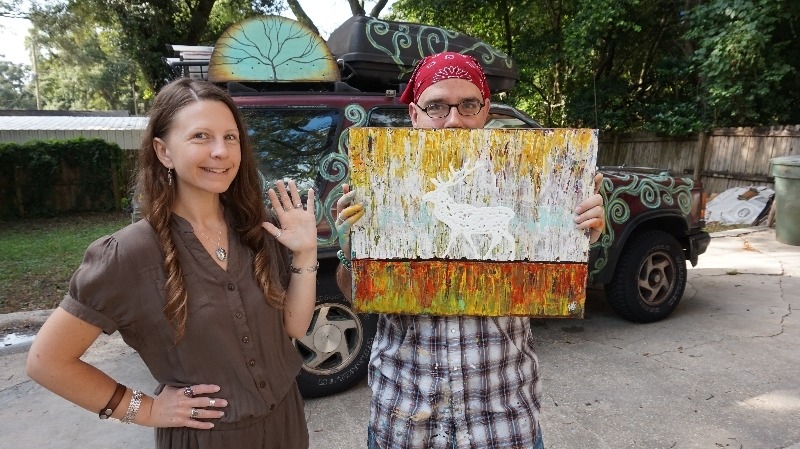
This week’s topic is perfectionism. We discuss how many artists struggle to achieve the perfect outcome. We all have different ideas and definitions of perfection, which can be challenging. But as I’ve learned through my own experiences, there is no such thing as perfection. The key to enjoying the creative process is to focus on each step of the way and embrace every challenge that comes our way.
As artists, we tend to get lost in the idea that our work needs to be perfect. But thinking about the end result can take us out of the flow when we’re still in the “ugly stages” of our work. Instead, we must enjoy the journey and not worry much about the final destination.
Every single step in the creative process brings its challenges and wins. Experimentation is healthy for any artist, and it’s okay to make mistakes and course-correct along the way. I’ve learned that every painting I create is a series of tweaks and minor course corrections. I don’t always know what the final product will look like, but that makes it exciting.
In my experience, it’s better to collaborate with our art instead of trying to force it into something it doesn’t want to be. We need to let go of the idea that we are in complete control of our art and allow it to take on a life of its own. Perfectionism can often hinder our creativity and make the process unenjoyable.
Let go of perfectionism and enjoy the creative process. It takes practice to let go of the need to be perfect, but it’s worth it in the end. Collaboration with our art can push us outside of our comfort zones and allow us to create things we never thought possible.

As artists, we are constantly evolving, not just in our creative practice, but also as human beings. The art world has constantly been evolving and embracing new technologies, materials, and ideas. Even if they don’t advertise it outright. Personally, as we embrace these changes, we create something that nobody has ever seen before.
We often hear people say that everything has been created, and there is nothing new under the sun. However, I disagree with this statement. Art is an ever-evolving field, and new styles and ways of expression keep emerging. Think about the Renaissance-style paintings, the Impressionists, the surrealist movement, or the evolving style of Picasso. These artists created something that was groundbreaking and new, and yet, some critics didn’t consider it good art. This is because many people in the art world discourage new things that they don’t fully understand… especially if they have nothing to compare it to.
Labels and categories are a significant part of the art world. People tend to categorize everything and try to make sense of the world through these labels. We feel good when we can tell ourselves that we are a portrait artist who works in a particular style or an abstract artist who works in a different manner. However, it’s dangerous to fall into anything rigid, especially regarding creativity. Creativity is ever-expanding, and we cannot hold it back unless we put it in a box.
Children represent the purest form of creativity. They create without worrying about whether it is good art or bad art. They concern themselves with what they are creating. As children get introduced to new materials and ideas, they can create some really amazing things that are a representation of the way they see the world.
However, as we grow older, we get introduced to what art is supposed to be, and we start worrying about whether our work is fine art. The art world becomes more complicated, and we start to wonder whether our work is a craft or a hobby or something else entirely. We need to stop worrying about these labels and focus on creating what we want to create. Art is not just about producing something that looks good or has a particular value. Art is about expressing ourselves and creating something that represents who we are.
In conclusion, as artists, we must embrace change, new ideas, and new ways of expressing ourselves. We need to let go of labels and focus on creating what we want to create. We need to remember that art is a representation of who we are. So, let’s keep growing, evolving, and creating something that nobody has ever seen before… by not worrying about the rules.
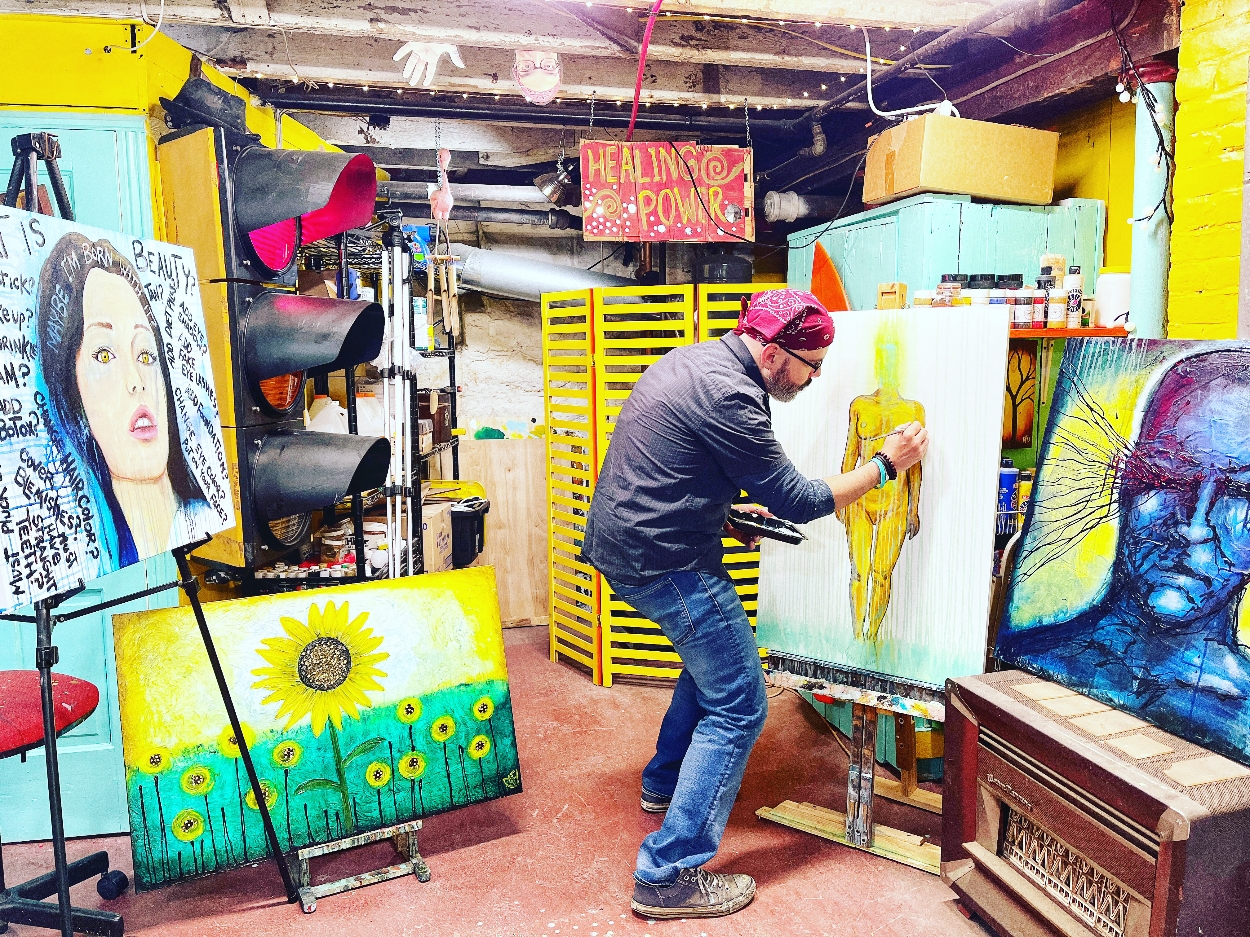
In this podcast, I wanted to share some tips for dealing with artist’s block and perfectionism. As an artist, I understand how frustrating it can be when you’re working on a project and it’s not turning out how you want it to. It’s easy to become overcritical of your work and feel discouraged.
One of the factors that can contribute to this is planned stubbornness. Sometimes we get so stuck in our ways that we struggle to work with new mediums or techniques. We become fixated on achieving a particular outcome, and when it doesn’t work out, we feel like we’re not good enough.
But the truth is, encountering roadblocks is a natural part of the creative process. It’s important to remember that every work of art is a journey, and there will be challenges along the way. The key is to stay solution-oriented and not give in to negative self-talk.
One helpful tip is to take breaks and step away from your work when you’re feeling stuck. This can give you a fresh perspective and allow you to approach the project with renewed energy. It’s also important to remember that mistakes and imperfections are a normal part of the creative process. Embrace them, learn from them, and don’t be afraid to experiment and try new things.
So, the next time you’re feeling discouraged or stuck in your work, take a step back, be kind to yourself, and remember that every great work of art results from trial and error. Keep pushing forward, and you’ll be amazed at what you can create.

In this podcast, Klee and I discuss never giving up as an artist and why persisting is so essential. We also discuss our journey and what matters when pursuing an art career. Find out more about us at http://www.rafiandklee.com