Category: PRESS RELEASES From Rafi And Klee Studios
Welcome to the official blog for Rafi and Klee Studios press releases! Here, you’ll find all the latest updates, announcements, and behind-the-scenes stories directly from our studio. Stay tuned for exclusive insights into our new projects, upcoming events, and special collaborations that continue to push the boundaries of creativity. This blog is your go-to source for all things Rafi and Klee, providing you with firsthand information from the heart of our artistic endeavors. Join us on our journey and be the first to know what’s happening at Rafi and Klee Studios!
We are stupid excited right now. There is something fun and strange in the neighborhood for February. Our little town never ceases to amaze us especially when it comes to having fun.
Look, if you would have told us a few years ago that we’d be helping prep an event in Oil City that is part of a a full-blown Mardi Gras celebration on Seneca Street, we probably would have laughed and then immediately asked where to sign up.
Honestly, we are so incredibly stoked about this. There is something so special about watching this town wake up and start doing cool, vibrant stuff like this. It’s exactly the kind of energy we dreamed of when we joined Art Night At The Exchange. Seeing the community come together not just for a drink, but for a shared experience is why we love being here.
So, What’s the Big Deal with Mardi Gras?
If you aren’t from New Orleans, you might just think it’s an excuse to wear plastic beads and eat cake. And, I mean, it is. But at its heart, Mardi Gras (or “Fat Tuesday”) is the ultimate “last hurrah.” It’s that one day where you’re supposed to live it up, eat the rich food, dance in the street, and be as loud and colorful as possible before the quiet of the spring season kicks in. Also, the season of Lent begins. Historically, Lent is a forty day period of fasting, reflection, and giving things up, so this is the last party for a while.
It’s all about the phrase Laissez les bons temps rouler which means let the good times roll. It’s a reminder to stop taking life so seriously for a night and just enjoy the people around you.
The Seneca Street Takeover
The fact that we’re doing a Mardi Gras Crawl right here in Oil City on Tuesday, February 17th is just perfect. We’ve got this epic lineup: Billy’s, Cork n Screw, Double Play, McNerney’s, and us at The Exchange. The goal? Hit every spot, grab a festive snack or a drink, and collect a different colored bead at every door. By the end of the night, the goal is to be draped in beads and high on good vibes.
We Don’t Do “Basic” Disguises
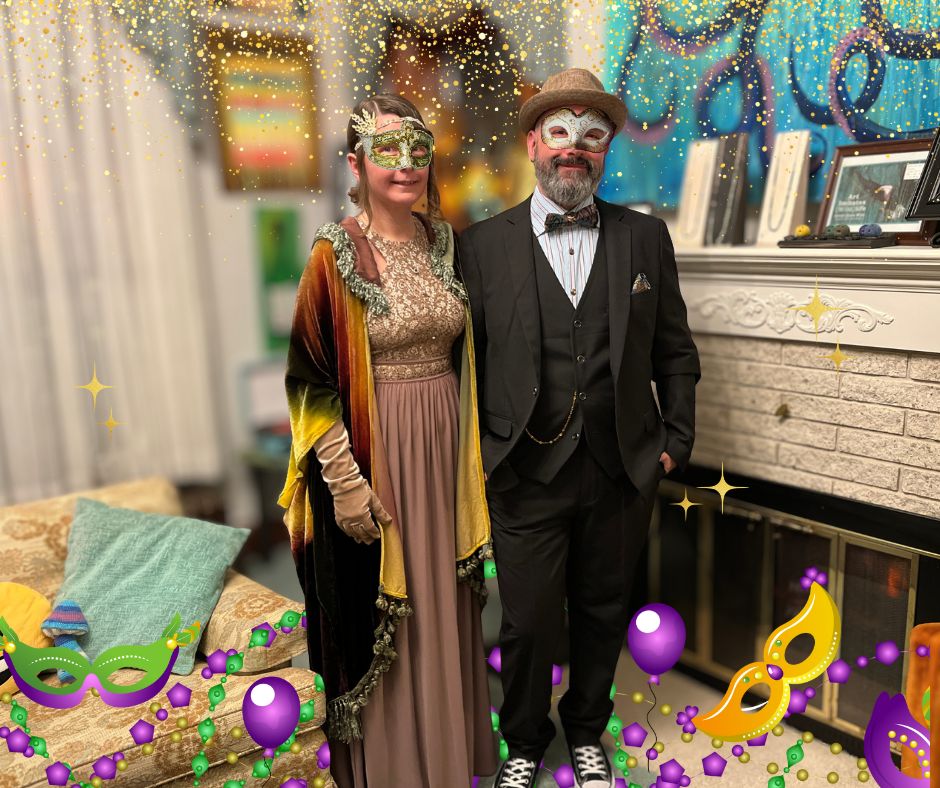
Klee and I were talking, and we realized: if we’re going to do a crawl, we can’t just show up in our everyday hoodies. We need to look the part.
So, on Wednesday, February 11th, we’re doing a Mardi Gras Mask Making night at the exchange. We’re skipping the cheap plastic stuff. We’re going to get into the feathers, the sequins, and the bold paints to help you make something that actually feels like a piece of art. We’ll have two craft cocktails ready for you, some good music playing, and we’re just going to hang out and create.
Hey, you. Yeah, you! The one with paint under your fingernails, a half-finished manuscript on your laptop, or a melody stuck in your head that you just have to get out. You know that feeling, right? That little hum that says, “I’m a creative, I’m a little weird, and where are all the other weirdos?”
We are starting something in our region as a project we can eventually share with others who may want to do the same thing in their own region. That is the big vision. But before we can hand out the map, we have to build the territory. Right now, we are wrangling all the brilliant, wild, and slightly unhinged creative energy bubbling up in our local area to see what happens when we stop working in isolation.
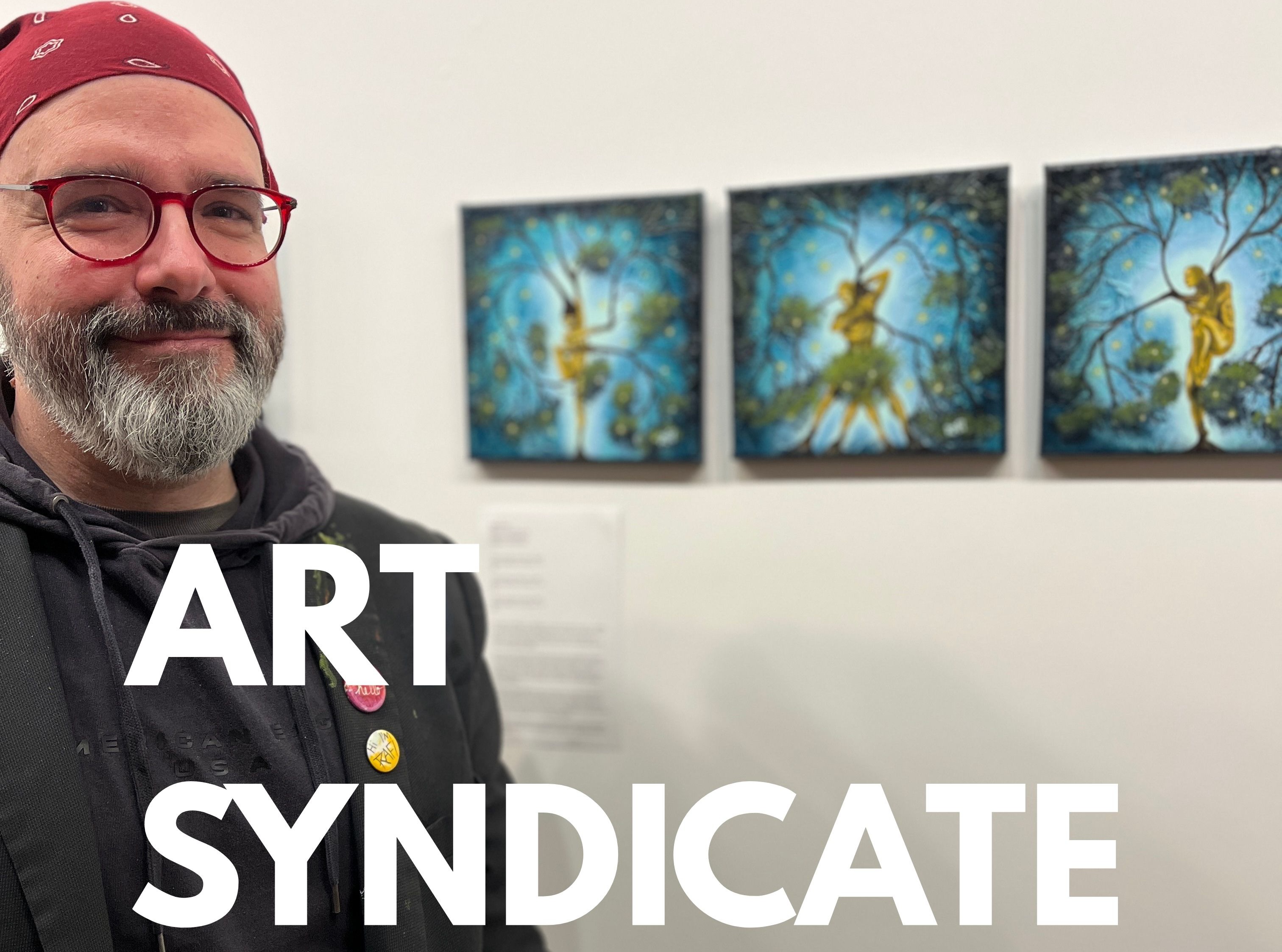
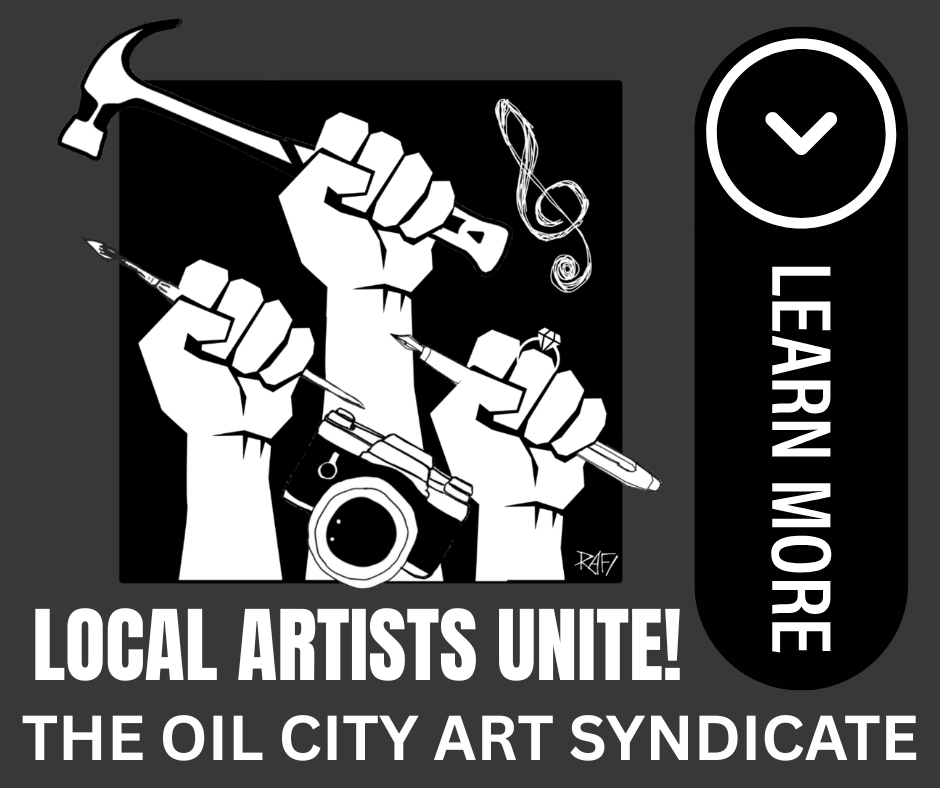
Welcome, friends, to the official (but still a work in progress) launch of the Oil City Art Syndicate!
What Even Is This Thing?
Think of the Syndicate as our attempt to wrangle all the brilliant, wild, and creative energy bubbling up in our region. We’re talking artists, writers, musicians, performers, designers, crafters… if you make things, if you love things, or if you just want to see more creative things, you’re in.
Our Big, Hairy, Audacious Goal
For too long, it feels like we’ve all been operating in our own little creative silos. You know, drawing amazing things alone in your studio, writing heart-wrenching poetry to an audience of dust bunnies, or composing a symphony that only your dog truly appreciates.
That’s where the Syndicate comes in. We’re attempting to connect the creators in our region so we can work together and build something that didn’t exist yesterday. Think of this as a pilot program. We are starting this in our region as a project we can eventually share with others who might want to do the same thing in their own towns. We’re building the blueprint as we go. This is by artists and for artists.
What Can You Expect?
Right now, we’re building the foundation brick by beautiful, slightly askew brick. Here’s what we’ve got brewing:
The Monthly Dispatch (aka, This Newsletter!): Your personal creative intel brief. We’ll be sending out monthly emails packed with local opportunities, grants, calls for shows, and updates on Syndicate business.
The Discord Den (aka, Our Digital Hangout Spot): This is our virtual studio and brainstorming room. It’s where you can connect with other local artists in real-time.
The Monthly Muster (aka, Real-Life Human Contact!): Yes, actual in-person meetings! We’re organizing a recurring space where we can sit down and discuss collaborative exhibitions and local events. Details on the first meeting are coming soon.
If you’re reading this, and you are located within driving distance of Oil City PA check it out.
Honestly? Who knows! This whole thing could grow into an unstoppable creative force, or it could crash and burn in a spectacular blaze of glory. But here’s the unshakeable truth: When creative people gather, magic happens. It just does. We’ve seen it, we’ve felt it, and we are absolutely certain that this journey will be a magical one.
Let’s stop creating in isolation. Let’s find our people. Let’s make some serious magic.
I recently received a piece of mail that made me laugh, then get angry, then consider moving my entire studio to a different planet. It was a letter from Blick Art Materials informing me that the Pennsylvania Department of Revenue has decided that the production of artwork (you know, the thing we do with our lives) does not qualify as “exempt manufacturing” under some dusty statute called 72 P.S. 7201 (c).
Basically, some pencil-pusher in a cubicle somewhere has decided that when we take raw materials and transform them into something entirely new, we aren’t actually making anything. We’re apparently just… having an expensive hobby? This may have just happened to us, but at this point I’m assuming we are not the only ones dealing with this.
How Does The Sales Tax Exemption Work (The Boring-but-Vital Part)
In case you’re unaware of how the grown-up business world is supposed to work: when you are a registered business that manufactures goods, you get a tax break. It’s called a Sales Tax Exemption.
Here’s the deal: If I buy a hunk of clay, paint, canvas, or a gallon of resin to make a sculpture that I then sell, I’m not supposed to pay sales tax on those materials. Why? Because the state gets its cut when the final customer buys the finished piece. If I pay tax on the materials, and the customer pays tax on the statue, the state is double-dipping.
To get this, you usually fill out a form (the REV-1220) and give it to your suppliers (like Blick). It’s a standard system designed to help small businesses actually, you know, stay in business.
Apparently, Art Supplies Are Not “Raw Material”
We’ve been in business for a while, and I’ve never run into this issue. According to Pennsylvania Department of Revenue, the state doesn’t think art is “manufacturing.” Apparently, they think we just wave a magic wand and the artwork appears. They don’t see the process of creation, or the physical labor of turning a blank canvas into a product. To them, we aren’t “producing goods.”
The core of the problem is that this statute is fundamentally outdated. The lingo used in the current law is written to benefit specific large-scale industries while leaving the door open for interpretations that exclude small businesses and independent makers.
This decision is, to use a technical term, dumb. It directly impacts how I order my materials and how much it costs to keep the lights on in my studio.
Standing Up to the Pencil-Pushers
I’m not taking this lying down. I am currently in the process of fighting this at the state level. As artists who run small businesses, we’re often treated like we’re playing pretend. We have to fight twice as hard just to get established systems to recognize our rights as legitimate businesses.
I’m now in communication with my local state representative to make them aware that the Department of Revenue is effectively penalizing the creative economy of Pennsylvania.
Here is my “Rogue Challenge” for you: Whether you use this tax exemption or not, this is about the principle. If the state decides our work isn’t “manufacturing,” they are deciding our work doesn’t have value.
Check your orders. If you’re a registered business, see if you’re being charged tax on your raw supplies.
Contact your State Rep. Seriously. Send a polite but firm email. Tell them that art is manufacturing, that we are businesses, and that this ruling is a blow to local makers.
We have a bit of a road ahead of us to get the “powers that be” to see us as the economic engine we actually are. Sometimes, the only way to get a seat at the table is to stand up and start making some noise.
If you live in PA, here is an example letter you can copy, paste and rewrite to suit you:
Subject: URGENT: PA Dept. of Revenue Ruling on Sales Tax Exemption for Artists (Statute 72 P.S. 7201 (c))
Dear Representative [Name],
I am writing to you as a constituent and a small business owner in our region to bring a concerning matter to your attention regarding a recent shift in the Pennsylvania Department of Revenue’s interpretation of tax law.
Recently, the Department has been contacting major art supply vendors (such as Blick Art Materials) to state that the production of artwork no longer qualifies as “exempt manufacturing” under Statute 72 P.S. 7201 (c).
The manufacturing exemption is a standard business practice designed to prevent “double-taxation” by allowing businesses to purchase raw materials—which are then transformed into a new, finished product—without paying sales tax at the point of purchase.
The core of the problem is that this statute is fundamentally outdated. The lingo used in the current law is written to benefit specific large-scale industries while leaving the door open for interpretations that exclude small businesses and independent makers. By ruling that artists are not “manufacturers,” the Department of Revenue is effectively:
Invalidating our status as legitimate businesses: It suggests that the physical transformation of raw materials into a finished good only “counts” if it happens in a traditional factory setting.
Creating a Double Standard: It allows large corporations to enjoy tax breaks on production while penalizing the small, local studios that make up the backbone of the creative economy in regions like ours in PA.
Increasing Overhead Costs: This interpretation forces double-taxation on our materials, making it even harder for local makers to remain competitive.
The process of creating a sculpture, a piece of jewelry, or a painting is a physical transformation of raw materials into a manufactured good. I ask for your support in advocating for a modernized interpretation of this statute—one that recognizes the reality of 21st-century small business and ensures that “manufacturing” isn’t a term reserved only for big industry.
We are taxpayers, business owners, and vital contributors to the economic and cultural vitality of this district. I look forward to hearing your thoughts on how we can resolve this issue.
Sincerely,
[Your Name][Your Business Name][Your Address][Your Phone Number]
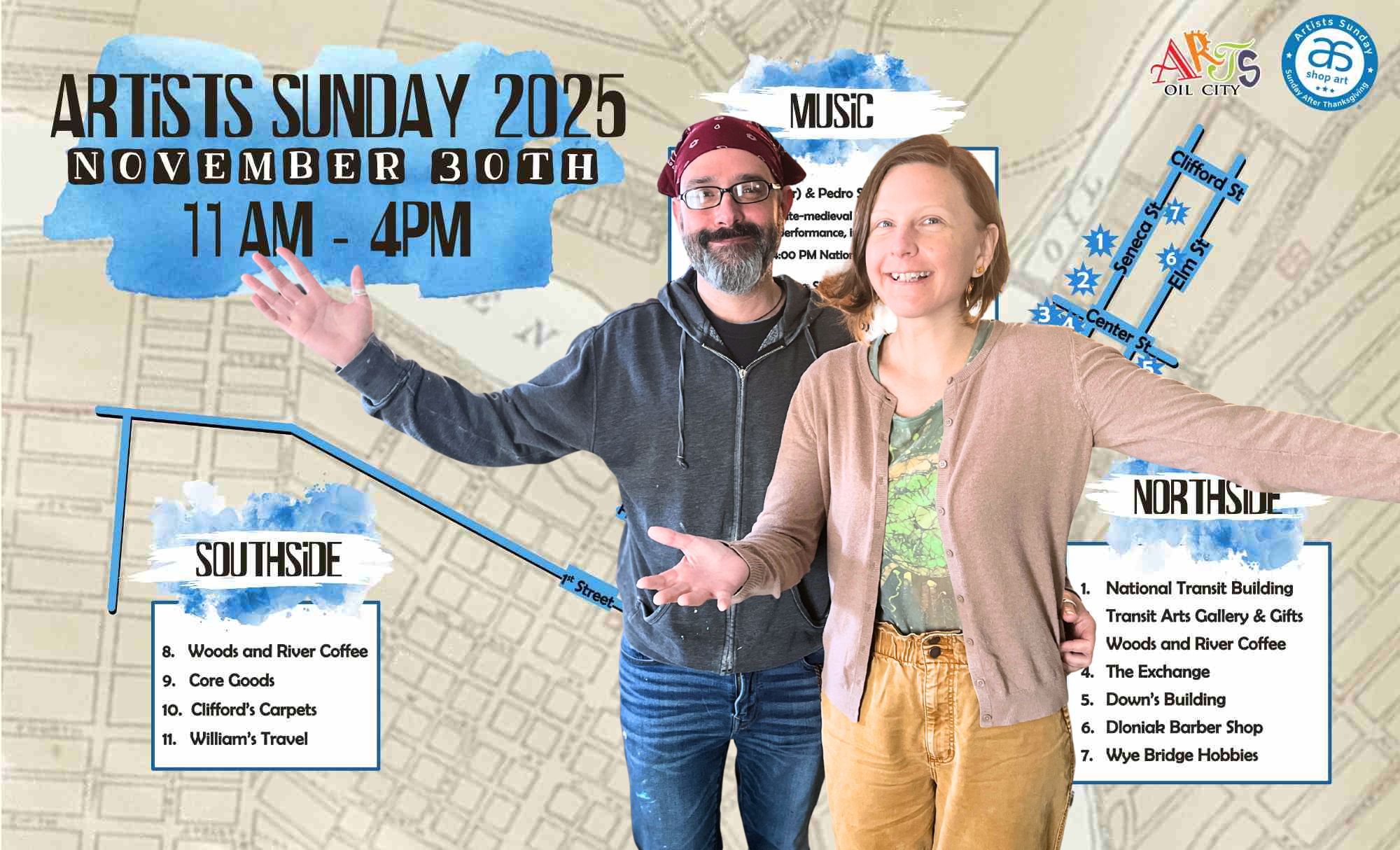
Artist Sunday in Oil City is basically the Super Bowl of local creativity minus the football, plus with more artsy, handmade things, and zero risk of being hit in the face with a cheese covered nacho. It is the cozy finale of the Thanksgiving weekend trifecta, and this year Oil City is showing up big.
The whole town turns into a walkable, art filled extravaganza with musicians, makers, demonstrations, book signings, ornament painting wizards, alpaca fiber geniuses, and of course your favorite rogue creative humans. That is us.
If you are wondering “Hey Rafi, where do I find you and Klee?” then keep reading, because we have the scoop.
Where You Can Find Us. Clifford’s Carpets (Southside)
Location 10 at 19 E 1st Street
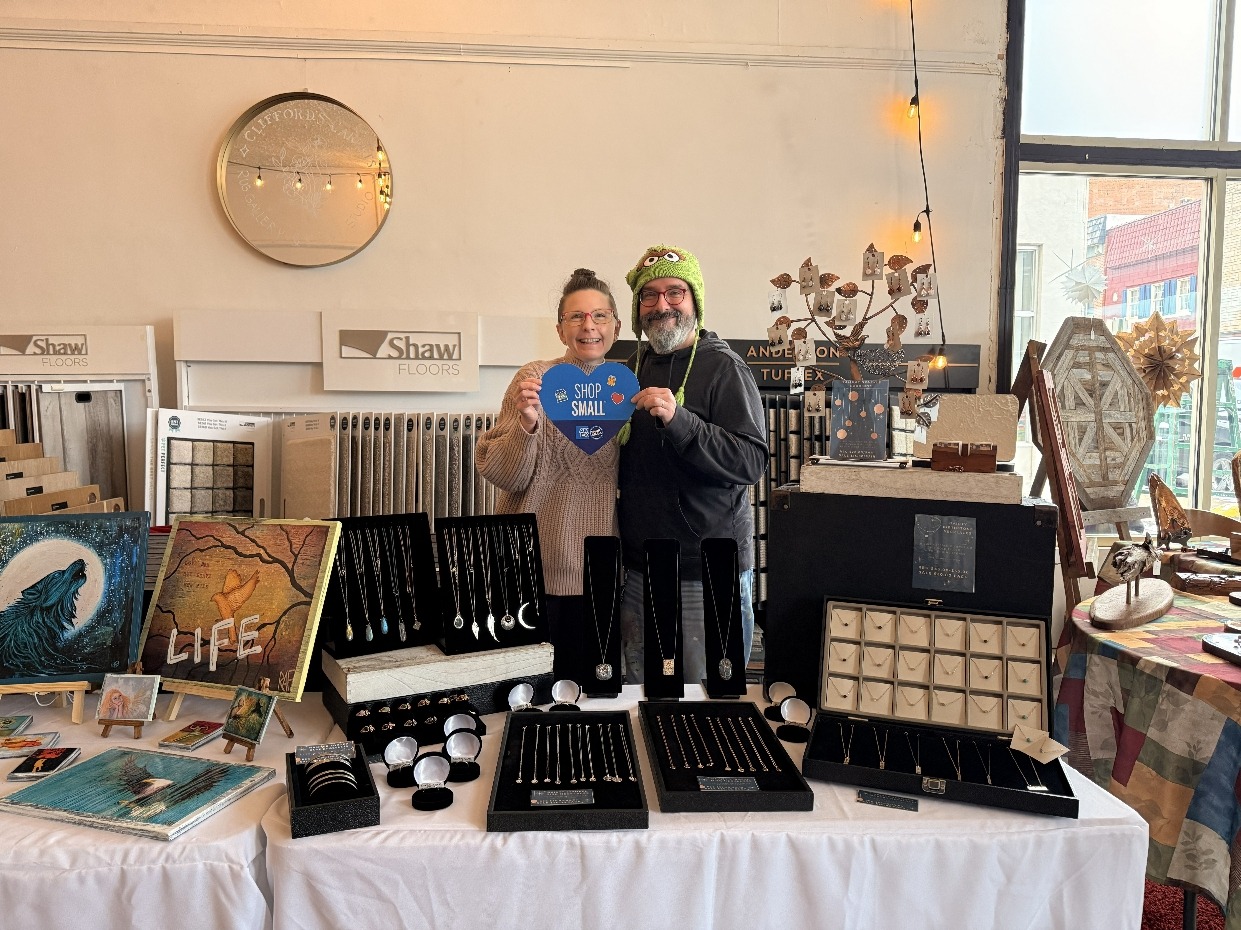
This place transforms into one of the quirkiest, most unexpectedly perfect spots for artists to set up. We will be there with original art, jewelry, books, sculptures, prints, maybe a few wildcards, and generally being our usual creative, sleep deprived but happy selves.
And we remembered the calendars this time. Ok… technically we forgot to bring them on Saturday, but they are absolutely coming with us because I put a note on my phone, a note on my sketchbook, and a note taped to my face.
If you want to say hi, chat art, or watch me try not to spill coffee on anything, come hang out at location 10.
What’s Happening Around Town. Northside!
Just hop across the Veterans Memorial Bridge and you will find a whole cluster of creative action.
National Transit Building
Handmade instruments, woodworking, encaustic painting, illustration, demos, textile art, book illustrations, wax melts, stickers, ceramics. It is basically an indoor labyrinth of artists and creative chaos. You can also catch live medieval instruments and a Q and A with Daniel Yost and Pedro Sperb from 11 to 4.
Transit Arts Gallery and Gifts
Local and regional artists in all mediums. Think of it as a mini art marketplace with big gallery energy.
Woods and River Coffee (Northside)
Watercolor and mixed media paintings plus warm caffeinated beverages to keep your art hopping energy levels high.
The Exchange
Mixed media, collages, ornaments, stickers, digital work, and probably the best spot to people watch creative humans in the wild.
Downs Building
Edinboro art students, prints, potions, handcrafted goods, natural body care, oddities. A whole vibe.
Dlonak Barber Shop
Illustration plus vintage garage character.
Wye Bridge Hobbies
Crafty creations, shirts, tumblers, and children’s books.
Southside! This is where we will be hanging!
If you wander the Southside loop, you will encounter:
Woods and River Coffee (Southside)
More art plus the eternal promise of caffeine.
Core Goods
Ceramics, digital art, pins, stickers, jewelry, open mic readings, and handmade goods. A whole creative ecosystem.
Clifford’s Carpets
Home of Rafi and Klee for the day, plus other AMAZING creatives!
William’s Travel
Stained glass jewelry and unique finds.
Why Artist Sunday Matters
Artist Sunday is like a giant creative thank you note from the town. It celebrates the makers, musicians, dreamers, creators, and wonderfully weird humans who choose to spend their lives making things that add beauty to the world.
It is also a chance for you to:
Meet artists face to face
Support handmade work
Discover something you didn’t know you needed
Join in the community vibe
Wander around a walkable art map like you are on a side quest
And honestly, it is just a great way to spend a Sunday full of color, creativity, and connection.
Come Find Us
We will be at Clifford’s Carpets, location 10, from 11 AM to 4 PM with art, jewelry, books, calendars, and our usual creative chaos. If you are in the area, stop by, say hi, and hang out with us. We love seeing familiar faces, meeting new creative humans, and being part of the buzzing, artsy energy of this awesome town.
Same bat place, same bat channel. See you on Artist Sunday.
Small Business Saturday started exactly the way all heroic adventures begin. With an alarm going off at 6:30 am.
Now, in theory, I set the alarm the night before. In practice, the noise that came out of my phone at 6:30 caused me to wonder why the heck would someone ever set an alarm that early. Klee and I sat up, bleary-eyed, attempting to understand the meaning of life, the universe, and why our bodies felt like we had been training for a marathon in our sleep.
This was our test set up at home. It had been a while since we’ve done a pop-up and wanted to see if we still had the chops to pull it off.
Step one: coffee and tea. Because without caffeine, we would still be face-down on the floor wondering what day it is.
Once the magic bean potion kicked in, it was time for that classic pop-up scramble… grabbing all the last minute stuff we definitely didn’t forget about (but obviously forgot about). You know, the essentials:
Price tags
Tape
Zip ties
More zip ties
Even more zip ties Because you just never know when you’re going to need to fasten something to something in a way that makes no sense but absolutely works.
Then came the loading of the car: art, jewelry, displays, our traveling walls, and enough supplies to impress NASA. Klee stayed home for a bit to take care of a few things while I drove the first load over to Clifford’s.
Anna, the owner of Clifford’s, is a legend. She had everything prepped, spots ready, energy high, and made the whole setup process actually feel doable at a time when no one should have to speak to another human without a second cup of coffee.
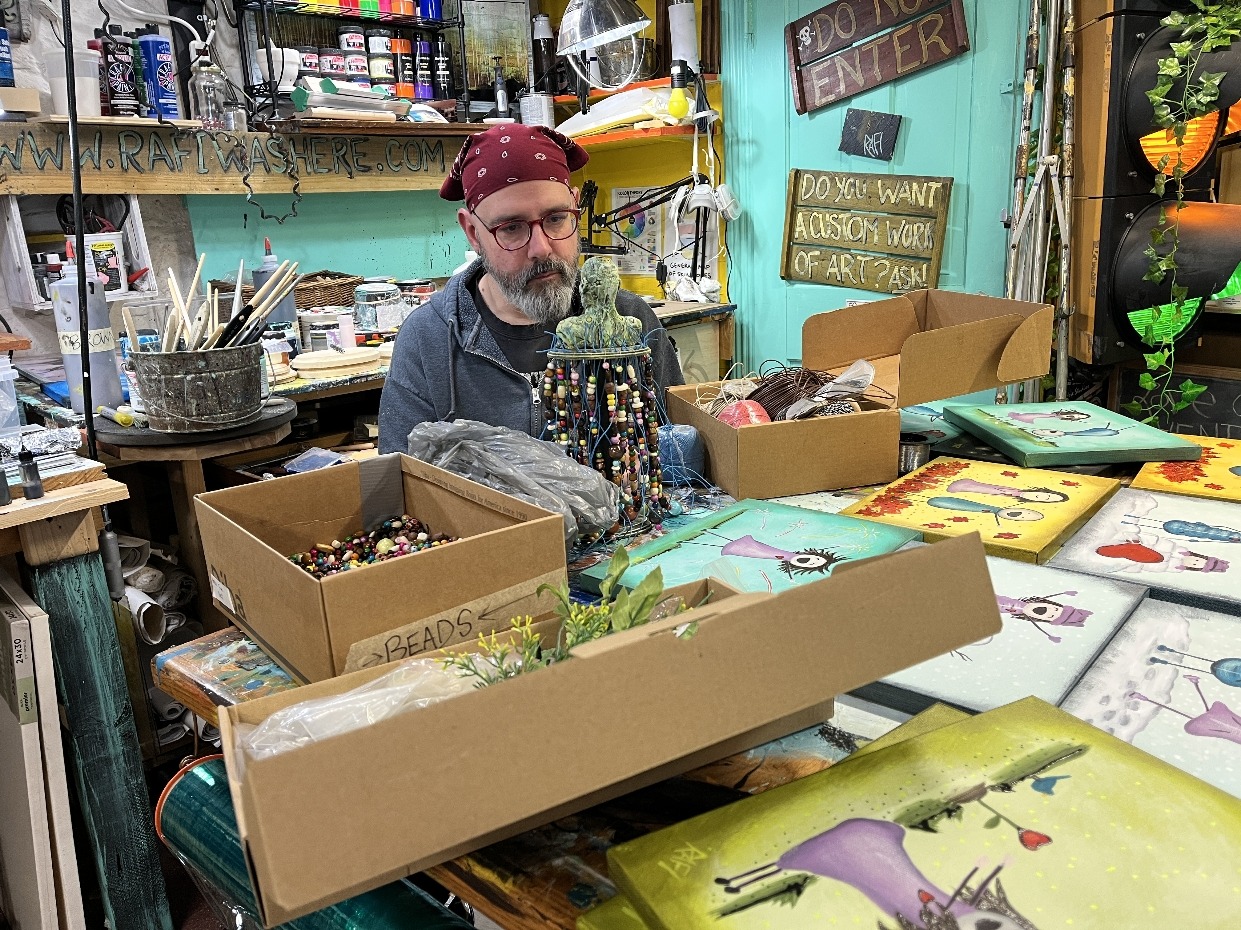
I unloaded, started building my walls (a workout that should absolutely count as CrossFit), and got our table started. Now, this is the part of being an artist most people never see… the lifting, hauling, balancing, troubleshooting, and trying not to stab yourself with a rogue hook. It’s a whole adventure. But if you don’t have fun with this part, you will quickly lose your mind, so I choose fun… mostly.
Once I grabbed Klee, we tag-teamed the finishing touches. Transforming a blank space into a mini art world is honestly one of my favorite things. It’s like a creative puzzle, except all the pieces are shaped weird and occasionally sharp. Then I noticed something.
I forgot the calendars. I only have 10 left… and I left them at home (face palm). Yep. The calendars I literally made a whole collection for… sitting at home. And while we’re at it, a bunch of tags for the art didn’t make it into the bags either.
Classic show day energy.
But that’s show life. Something always gets left behind, misplaced, or mysteriously disappears into the void. The trick is to roll with it, and luckily, Sunday is round two, which means I get redemption. And calendars.
And then… the show began.
So. Many. Incredible. Artists. Seriously, the level of talent in that room was ridiculous in the best way possible.
Our awesome creative friends were set up right across from us!
People started trickling in, and every single person was amazing. Great conversations, great energy, great support. We met so many awesome humans who connected with the work, shared their stories, laughed with us, and took home art and jewelry that now gets to go and live its best life.
There’s something magical about watching your creations leave with someone who truly loves them. It’s one of those moments where you’re reminded why you do this whole wild artist-life thing in the first place.
By the end of the day, we were tired, happy, and full of gratitude for every person who came out, every artist who showed up with their heart and creativity, and everyone who supported this fun little pop-up that became a whole community moment.
I totally forgot to take pictures while the event was happening because it got so busy, but here is an awkward picture of Klee caught mid sentence to give you an idea of how awesome this event was.
And guess what? We’re doing it all again tomorrow for Artist Sunday!
Yup. Same bat place, same bat channel.
If you’re in the area, come out and say HI!
Artist Sunday Pop-Up at Clifford’s
November 30, 2025 11:00 AM – 4:00 PM Clifford’s, 19 E 1st St, Oil City, PA 16301
Shop art, jewelry, and gifts, sip something tasty, and hang out with your favorite creative humans.
We’ll be there. Walls rebuilt. Coffee consumed. Zip ties ready.
There’s a chill in the air, the leaves are crunching under our boots, and you can practically smell the pumpkin spice from that one candle you light every year to feel festive. That can only mean one thing: it’s November, and we’re gearing up for the holiday season.
Before we all get buried under wrapping paper and peppermint hot chocolate, I just want to say we’re grateful to be back at it with events. It’s been a while since we were this busy, and it feels amazing to connect with you creative humans again in person and online.
So many things happened in October… it was a whirlwind of awesome. We started teaching art to the wonderful children of St. Stephen’s School, had our gallery opening at The Red Brick Gallery, released our newest book, and even hosted a couple of pumpkin painting parties (where, yes, some brushes were sacrificed in the name of creativity).
And now that we’ve caught our breath (sort of), we’re gearing up to return to YouTube this month or next with new videos, fun updates, and a healthy dose of rogue wisdom, humor, and chaos. It’s been a while since we’ve had the cameras rolling, but we’re excited to get back to sharing our thoughts, art, and random philosophical tangents with you.
Check out EVENTS page to stay updated on any changes or events we may add to the roster. We are crazy like that sometimes.
November 5 | Art Night at The Exchange: Exquisite Corpse (Yesterday) We had an absolute blast at our Exquisite Corpse Night at The Exchange! The room was filled with laughter, creativity, and some truly bizarre artistic collaborations, exactly the kind of chaos we love. Watching everyone add their own twist to a drawing without knowing what came before was pure magic (and sometimes pure madness). From elegant anatomy gone wrong to hilariously strange creatures, every finished piece was a masterpiece of imagination. We can’t wait to do it again!
November Events Lineup
November 9 | “Interwoven” Closing Reception at Red Brick Gallery The final celebration of our Interwoven exhibition. Come mingle, enjoy the art, soak in some live music, and raise a glass with us before we take down the show. Location: Red Brick Gallery, 17 Main St, Foxburg, PA Time: 4:00 PM to 6:00 PM Info: https://rafiandklee.com/getting-ready-for-our-red-brick-gallery-exhibition/
November 12 | “Self Expression” Opening Reception at Hatch Hollow Join us for an inspiring night of creativity and connection as we kick off Self Expression in Meadville. Meet fellow creatives, enjoy refreshments, and celebrate showing up as yourself. Location: 945 Market St, Meadville, PA Time: 5:00 PM to 8:00 PM
November 16 | (Patreon Only) Artist Group Hangout: Getting Involved Our private artist meet up on Google Meet. We will chat, share updates, and brainstorm ways to stay active and connected in our creative worlds. Time: 4:00 PM to 6:00 PM Join: https://www.patreon.com/Rafiwashere
November 23 | (Patreon Only) Live Podcast: Comparison and Imposter Syndrome A real, raw, and rogue conversation about how comparison and self doubt sneak up on artists, and how to kick them to the curb. Hang out with us live and be part of the discussion. Time: 5:00 PM to 6:00 PM Join: https://www.patreon.com/c/rafiwashere
November 28 | 2026 Calendar Release Party, Public Livestream Grab a drink and join us online as we reveal our brand new 2026 art calendar. We will share behind the scenes stories, sneak peeks, and probably a few accidental tangents. Time: 5:00 PM to 6:00 PM Watch: https://www.youtube.com/live/yEGZ_4qj8CQ
November 29 | Small Business Saturday Pop Up at Clifford’s Support local art and check a few gifts off your list. We will have art, jewelry, and all kinds of goodies ready for you. Location: Clifford’s, 19 E 1st St, Oil City, PA Time: 11:00 AM to 4:00 PM
November 30 | Artist Sunday Pop Up at Clifford’s Round out your weekend of supporting small and artsy with another day of fun, shopping, and creative shenanigans. Location: Clifford’s, 19 E 1st St, Oil City, PA Time: 11:00 AM to 4:00 PM
Bundle up, grab your favorite scarf, and let’s make some creative memories before the snow starts flying. November is shaping up to be a whirlwind of art, laughter, and gratitude. We cannot wait to share it with you.
It’s party dayI Tonight we’re celebrating the release of Dear Artist: Don’t Give Up with a cozy, rowdy, joy-filled live stream that includes stories, readings, behind-the-scenes bits, and a whole lot of gratitude for this wild journey.
When: Tonight at 5:00pm Eastern Where: Live on our YouTube channel (open to everyone)https://rafiandklee.com/shop/live/ Who: You, me, Klee, and our glorious Rogue Artist community
What’s happening
Hang out with us and have some fun!
A live reading of a few favorite letters from Dear Artist!
Real talk about fear, persistence, and making art when life gets chaotic!
Q&A so bring your curiosities about the book, process, publishing, or the “why” behind it!
Giveaway winner announcement during the stream!
Original drawings and posters from the book illustrations: I’m organizing them, and some will be available for purchase at the release party!
A tiny pep talk for the part of you that sometimes wants to quit!
Why this book matters
Dear Artist is a conversation between creative humans. It’s the reminder I wish I had when doubt screamed the loudest. If you’ve ever second-guessed your work, stalled out on a project, or felt like an outsider in the art world, these pages are a flashlight in the dark. No gatekeepers. No permission slips. Just honesty, humor, and momentum.
How to join
Grab your favorite beverage and a comfy seat
Hop on the live stream at 5:00pm Eastern
Say hello in the chat so we know you’re there
If you want a signed copy, I’ll share details during the stream
Thank you
To everyone who believed in this book, pre-ordered, shared encouragement, or just kept showing up with your creative spirit, thank you. You are the heartbeat of this community. Tonight we celebrate you as much as the book.
See you at 5. Let’s make this release party a moment we look back on and say, yep, that was the night we reminded ourselves why we create.
It feels surreal to even type these words: we are getting ready for our exhibition at the Red Brick Gallery. This will be our first large exhibition since Klee was hospitalized last year, and for us, it marks an official comeback.
We were actually invited to exhibit last year—before the chaos, before hospital visits, before murals, before everything turned upside down. At the time, we thought, “Great, we have a whole year to prepare.” You can probably guess how that turned out. Between studio downtime, hospital visits, and the marathon mural project, time has a way of vanishing.
But here’s the thing—we’re no strangers to crunch time. When the studio calls, we roll up our sleeves, fire up the creativity, and get to work. And as always, we’re not just working—we’re aiming to blow people away.
The Space & The Town
If you haven’t been, the Red Brick Gallery is stunning. We went out to measure and walk the space, and let me just say, it’s one of those rare gallery settings that makes you stop and breathe for a minute. Light, history, charm—it’s all there.
We took a tour of the Red Brick gallery and it is a large space
It is perfect for a combined exhibition with both of us
And the town of Foxburg? Straight out of a postcard. I honestly can’t wait to see it when the leaves are changing—golden, red, and glowing against the river. It feels like the perfect backdrop for an exhibition that means so much to us.
We felt like we were standing in a Hallmark Card
Behind the gallery is a secret garden, I thought it would be perfect for an out door event in the future
Klee is always identifying plants wherever we go lol
The Work
Klee has been at her jewelry bench, working with a spark I haven’t seen in months. Watching her create again has been one of the most uplifting things in this whole journey. Meanwhile, I’ve been flinging paint with reckless abandon (okay, maybe a little less reckless, but you get the picture).
We’ve set some aggressive goals for the amount of work we want to show, because this isn’t just about filling walls—it’s about filling the space with life, energy, and soul. There will be paintings, jewelry, sculptures, and some surprises we’re saving for the receptions.
This makes me SO HAPPY!
I have several paintings I am trying to finish for the show
The Schedule
Soft Opening: Friday, October 3rd, 2–5 PM
Official Opening Reception: Sunday, October 12th, 4–6 PM
Closing Reception: Sunday, November 9th, 4–6 PM
I’ll Be Posting More Information For Each Reception!
The exhibition runs from October 3rd to November 9th, and one thing we’re doing differently this time is continuing to create during the run of the show. That means the exhibition will evolve—new pieces will show up, and by the closing reception, you’ll see fresh work alongside the originals.
Both the October 12th and November 9th receptions will be preceded by ARCA concerts, which makes the day a double celebration of music and art. I’ll be posting more about that awesomeness!
📍 Red Brick Gallery 17 Main Street Foxburg, PA 16036
Why This Matters
We’re excited for a thousand reasons:
Klee is feeling better and back at her bench.
We have new, never-before-seen creations ready to debut.
The location is gorgeous and inspiring.
We’re back in the studio, working with renewed energy.
This show feels like a celebration of resilience, creativity, and the beautiful weirdness of life.
We are so excited about this show!
At the end of the day, life throws curveballs none of us can plan for—but the antidote is always the same: inspiration and love. Those two things are the best medicine for life’s little surprises, and we’re grateful to be creating from that space again.
For Our Distant Friends
We know not everyone can make it out to Foxburg, so we’re planning to release a video so you can share in the exhibition from wherever you are.
For now—save the dates, mark your calendars, and if you’re nearby, come out and celebrate with us.
Lately, my hands have been full—like, covered in paint full. I’ve been working on a mural for a new brewery opening in town, and it’s been equal parts exhausting and energizing. There’s something kind of magical about working on location, immersed in the environment, knowing this big, colorful piece of art will be part of a space where people gather, laugh, and raise a glass.
I’m actually smiling in this picture…. not sure what happened there.
Because of that, I’ve backed off from posting. Not just social media and YouTube, but blogs too. I’ve been laser-focused on the mural and, honestly, it’s been good for me. After taking such a long break from painting, it feels really good to be knee-deep in creativity again. However, a group of amazing people have been working really hard to support us, and I need to share this.
On top of that, Klee is on the mend—thankfully. We’ve still got some healing to go, but things are looking up, and we’re slowly finding our way back into the rhythm of creating together. Emphasis on slowly. We’re not rushing anything this time.
Klee feels awkward wearing a mask when we go places, but her system is Immunocompromised due to the medications.
It might still be a while before I’m regularly posting again. I might share more about that in a future blog, but let’s just say this: having a large audience is an incredible thing, and I’m endlessly grateful for the love and support we receive. But sometimes, when you’re not in the strongest emotional place, even one small comment can knock the wind out of you. Let’s just say, we weren’t getting back to normal fast enough for this person.
Honestly, we thought we’d bounce back quicker than we did. We kept telling ourselves, “Just a couple more days, maybe a week,” but life had its own timeline. Sometimes the road back is more of a slow, awkward shuffle than a triumphant sprint. I have no apologies to give. It is what it is.
In the meantime, our creative friends and supporters are hosting a fundraiser for us. So, I’m feeling awkward about writing this… but there are a lot of amazing people I want to say thank you to.
If you know me (and Klee), you know we’re not exactly great at being on the receiving end of support. We create, we teach, we encourage, we lift up. That’s our comfort zone. We’re used to showing up for the creative community, not having the creative community show up for us. To be honest, we are pretty hard headed and stubborn about it to our own detriment sometimes.
As a lot of you already know, last December, Klee was hospitalized and we had to cancel our holiday show. It hit us hard. People have shown up. In the most beautiful, humbling ways. A lot of you reading this are those people, and words cannot express how loved and grateful we feel.
She is such an inspiration in how she’s handled this whole thing.
Artists, friends, local galleries, people in other states and countries, even people we’ve never met in person… they’ve reached out, offered help, and reminded us that we’re not alone. Our friend Jamie (a powerhouse of kindness and organization) told us a while back that a fundraiser was being put together for us. Her words: “You’re not allowed to say no—we already started.”
Cue me and Klee standing there with wide eyes, stunned, awkwardly grateful, and honestly on the verge of tears.
At one point, when I was telling her I wasn’t comfortable with it, she asked, “Would you be part of a fundraiser to help artists going through what you guys are going through?” Without hesitation, I said, “Absolutely.” And she just looked at me and said, “See? Let them do this for you. They love you guys.”
And that’s when it hit me. It’s about love, community, and the beautiful messiness of being human together. Being vulnerable, appreciative, and accepting the love.
And now it’s actually happening. The “Me and It” Paint N Sip fundraiser are happening in a few weeks. You get to paint your own little quirky monster, sip on something tasty, hang out with incredible humans, and support this crazy creative life we’re trying to keep afloat.
It feels vulnerable and strange. But we have some serious thank yous to give.
This is my exhibition at the Manos gallery, Ernesto put this together because he is awesome!
To Ernesto at The Manos Gallery – thank you for being such a force for art and for saying yes to every idea that helps lift people up. To Jamie – our extraordinary friend and gentle bulldozer of good intentions. You never let us hide. To Rachel – local artist, mega-talent, and literal sunshine in human form. You make everything brighter. To every artist donating their time, energy, and art – thank you for believing in us. For being willing to lift us up when we needed it, even though we were too awkward to ask. There are so many to name… We are astonished. And to our Patreon Community – oh my goodness. Thank you for sticking by us through this entire rollercoaster ride. Through the pauses, the chaos, the raw moments, and the quiet in-betweens—you’ve been there. Your support has kept us going when things got really, really hard. We don’t take that for granted, not even for a second.
We still feel awkward. We still feel like we don’t deserve it. But we’re trying—trying to receive with open hands and full hearts.
Klee is finally starting to feel better. The new treatment seems to be working (she’s been off steroids for three days, and so far, so good!). I’m back on mural duty. We’re slowly finding our way back to our creative rhythm. And in the middle of all that, we get this gift—a reminder that we are seen, loved, and supported.
I don’t have fancy words for it. Just… thank you.
— Rafi (and Klee)
Here is more info on the events
🎨 Paint & Sip at The Manos Gallery (Tarentum, PA) 🗓️ Thursday, July 25th at 6:30PM 📍 The Manos Gallery Come hang with us in the gallery space and create your very own “Me and It” monster with paint, good vibes, and a splash of BYOB magic.
🎨 Paint & Sip at Core Goods (Oil City, PA) 🗓️ Saturday, July 27th from 2–4:30PM 📍 Core Goods This one includes snacks, laughter, and a Chinese auction with art donated by local legends. Tickets are available at Woods and River Coffee.
Let me set the scene for you. The place? Our beloved Oil City Library, which just so happens to be one of the reasons Klee and I fell head over heels for this town. It was like a magnet for our creative souls, and when Marcy—my awesome friend, phenomenal artist, and co-owner of the local gem Woods and River—approached me with a mural project for this very library, how could I say no? Spoiler alert: I didn’t. I was all in, armed with brushes and enthusiasm!
Now, before we dive into the nitty-gritty of this adventure, let me just address something that every artist reading this knows all too well: Imposter Syndrome. Yes, it’s a thing. No, it doesn’t magically disappear when you’ve been doing this art thing for years. And yes, it showed up like an uninvited guest at the mural party. Despite having done murals before, this was one of those rare times where I’d be working with a team of talented artists, and boom—there it was, Imposter Syndrome, making me question if I’d forgotten how to hold a paintbrush. You’d think I was about to go on American Idol. But hey, that’s the artist’s life: confidence is a moving target, and we just push through it and re-establish our awesomeness!
So, after a few days of prepping (because you can’t just waltz into a mural project without a plan,) and some great brainstorming sessions with the local community, we were ready. I have to give major props to the community for their ideas. From book themes to children’s book animals, everyone had thoughts, and believe me, there were enough to fill the library shelves. It was like a crowd-sourced creative explosion.
Fast-forward to mural time. It’s a mix of excitement, nerves, and just enough coffee to power a small country (thank you, Woods And River). As we started, I remembered something: murals are problem-solving on steroids. You can plan all you want, but the moment your brush touches that wall, the surface has its own agenda. It’s like the wall is silently laughing, saying, “Nice try, pal. Let’s see what you’re really made of.”
Three days. That’s how long it took for the magic to really unfold. I watched all these artists, including myself, evolve throughout the process. What started as “Oh my gosh, what am I doing?” turned into “Oh yeah, we’re doing this!”. It’s amazing how teamwork and creativity combine to bring out everyone’s best. And the mural? It’s a beauty.
For those of you who have never had the joy (and mild terror) of working on a mural, it’s basically like herding artistic geese. Paint goes here, no wait—there. Can we move this section up? Is this color too bright? And what about the sun, is it drying this paint faster than we can work? The mural becomes this living, breathing thing, and you’re just along for the ride. The magic happens when you let go of control and start solving problems with a little bit of paint and a lot of heart.
When it was all said and done, I couldn’t have been prouder. Not just of the mural itself (which, if you find yourself at the library, you better take a glance and throw up a heart symbol to it), but of the artists who showed up, put their fears aside, and gave it their all. A huge shout-out to the Oil City Library and Erie Arts and Culture for making this project possible. You guys are awesome!
In other exciting news—because there’s always more brewing around here—we’ve got a meeting tonight (9/19/24) for the upcoming Venango County Makerspace! If you’re an artist, maker, creative soul, or a breathing human, you need to be there. It’s happening at 100 Seneca St (5th floor, baby!), and we want your input. Think tools, resources, classes—this space is going to be a creative haven, and we want YOU to be a part of shaping it. So come share your ideas, and let’s make some magic happen together!
Until next time, keep laughing, keep creating, and always, always embrace the chaos—because that’s where the real magic lives.
See you at the Makerspace! —Rafi
Upcoming Public & Virtual Events:
Palette Knife Paint & Sip With Rafi & Klee (ART NIGHT) March 11, 2026 at 6:00 pm – 8:00 pm
Go To Events Page To Find Out More.
OPENING RECEPTION - Exposed Cerulean Affair Exhibition At The Manos Gallery March 14, 2026 at 4:00 pm – 8:00 pm
Go To Events Page To Find Out More.
PATREON ONLY - Artist Group Hangout - The "Real Job" Police March 15, 2026 at 4:00 pm – 6:00 pm
Check Our Events Page For More Details.
PATREON ONLY - Making It Up As You Go - Live Podcast Recording March 22, 2026 at 5:00 pm – 6:00 pm
Check Our Events Page For More Details.