Posted on 8 Comments

Victory for the Artists! (But the War Isn’t Over)

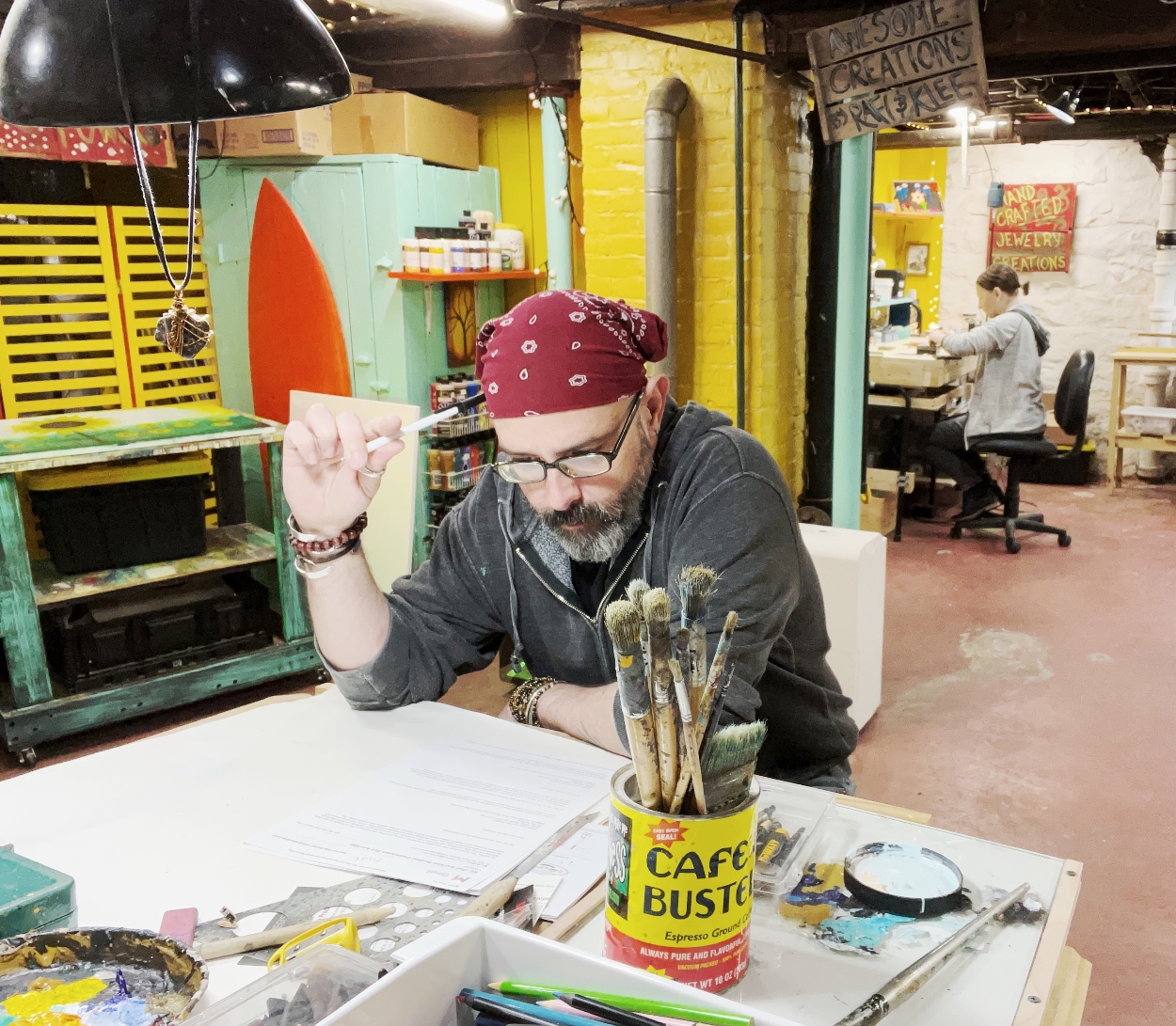
I’m doing a literal happy dance in the studio today. If you’ve been following my recent (yesterday) saga with the “Tax Man,” I have some fantastic news: I got my tax exemption back with Blick Art Materials!

As it turns out, my gut instinct was right. A “pencil pusher” at the PA Department of Revenue interpreted the laws incorrectly during an audit. They tried to tell Blick that artists aren’t eligible for the resale exemption.

Spoiler alert: That was what we call an “erroneous opinion,” which is the fancy, polite way of saying they were flat-out wrong. Blick Art Materials were also not taking this lying down, and thus there was a battle on two fronts to support the PA artists!

A cartoon character with a bandana and cape, confidently holding a candle while facing a dark, shadowy creature.
My friend Cassie did this illustration of me, I like to get inspired by it when I go to battle.

You might be thinking, “Wait, you just told us about this yesterday! How did you win so quickly?” Well, let me pull back the curtain: I’ve actually been fighting this battle since the end of November. Anyone who knows me knows that when I set my mind on something, I’m like a dog with a bone. I’m incredibly persistent. My strategy is simple: Do at least one thing every single day.

  • Send an email. (A lot of unanswered emails.)
  • Make a phone call. (A lot of long wait times that ended in nothing.)
  • I may or may not have even “ambushed” our local Representative at a New Year’s Eve party. (Hey, if you’re in the neighborhood, you’re fair game!)

So no, this didn’t happen overnight. It was a slow, steady grind of refusing to take “no” for an answer.

A person with short hair is focused on a workbench, using tools and materials for a creative project, surrounded by various art supplies and equipment.
Would you look at that, looks like Klee is “Manufacturing” jewelry.

Upon further review, it was confirmed that artists and creative businesses absolutely can claim the Manufacturing Exemption. Because, hello? We take raw materials and physically transform them into something entirely new. That is the literal definition of manufacturing!

The problem? Our state tax laws are covered in about fifty years of dust. The current “lingo” was written for massive factories with smokestacks, not for the modern wave of small businesses, creatives, and gig workers.

An artist painting a black crow on a colorful canvas while holding a palette with various paint colors in a studio.
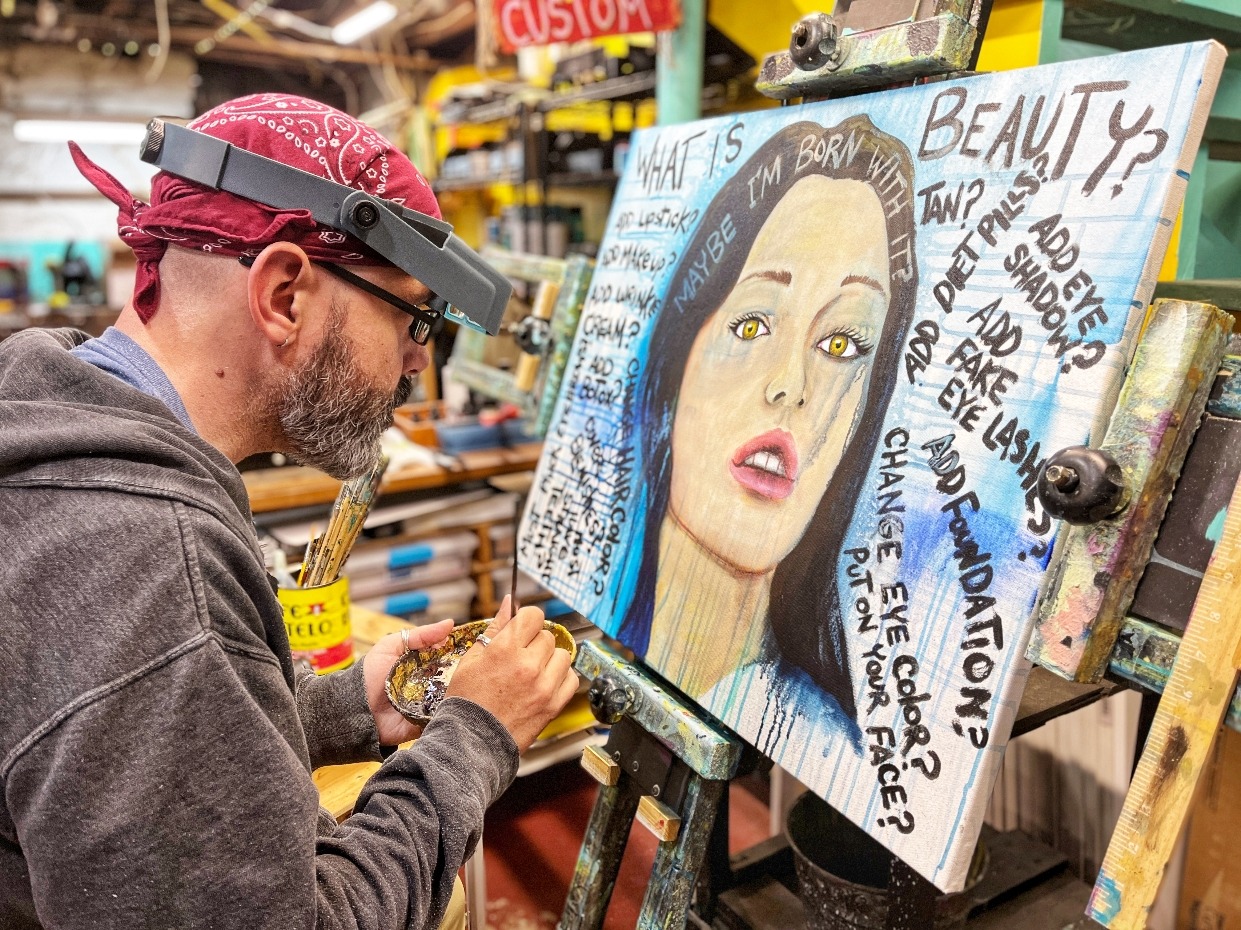
Can it be? Am I “actually” creating something new from the materials I buy?

Why I’m Still Fighting

While I won this specific battle, I’m not hanging up my boxing gloves just yet. It shouldn’t take a “war room” corkboard and three months of hounding officials for a creative business to avoid being double-taxed.

I’m going to continue pushing our Representative so that the laws actually reflect the modern market. We need clear guidelines so the next time a pencil pusher feels like making a flippant decision, the law is there to stop them.

Before I go back to making art, I have to say: Thank you to everyone that sent us a comment of support! Seriously, you guys are incredible.

I’ll keep you guys updated. The battle for the “little guy” continues!

Posted on 9 Comments

The “Art Isn’t Real” Tax Fiasco: A Love Letter to the PA Dept. of Revenue

I recently received a piece of mail that made me laugh, then get angry, then consider moving my entire studio to a different planet. It was a letter from Blick Art Materials informing me that the Pennsylvania Department of Revenue has decided that the production of artwork (you know, the thing we do with our lives) does not qualify as “exempt manufacturing” under some dusty statute called 72 P.S. 7201 (c).

UPDATE: WE WON! Read About It Here: https://rafiandklee.com/victory-for-the-artists-but-the-war-isnt-over/

Basically, some pencil-pusher in a cubicle somewhere has decided that when we take raw materials and transform them into something entirely new, we aren’t actually making anything. We’re apparently just… having an expensive hobby? This may have just happened to us, but at this point I’m assuming we are not the only ones dealing with this.

An artist working in a colorful studio filled with art supplies and tools.

How Does The Sales Tax Exemption Work (The Boring-but-Vital Part)

In case you’re unaware of how the grown-up business world is supposed to work: when you are a registered business that manufactures goods, you get a tax break. It’s called a Sales Tax Exemption.

Here’s the deal: If I buy a hunk of clay, paint, canvas, or a gallon of resin to make a sculpture that I then sell, I’m not supposed to pay sales tax on those materials. Why? Because the state gets its cut when the final customer buys the finished piece. If I pay tax on the materials, and the customer pays tax on the statue, the state is double-dipping.

To get this, you usually fill out a form (the REV-1220) and give it to your suppliers (like Blick). It’s a standard system designed to help small businesses actually, you know, stay in business.

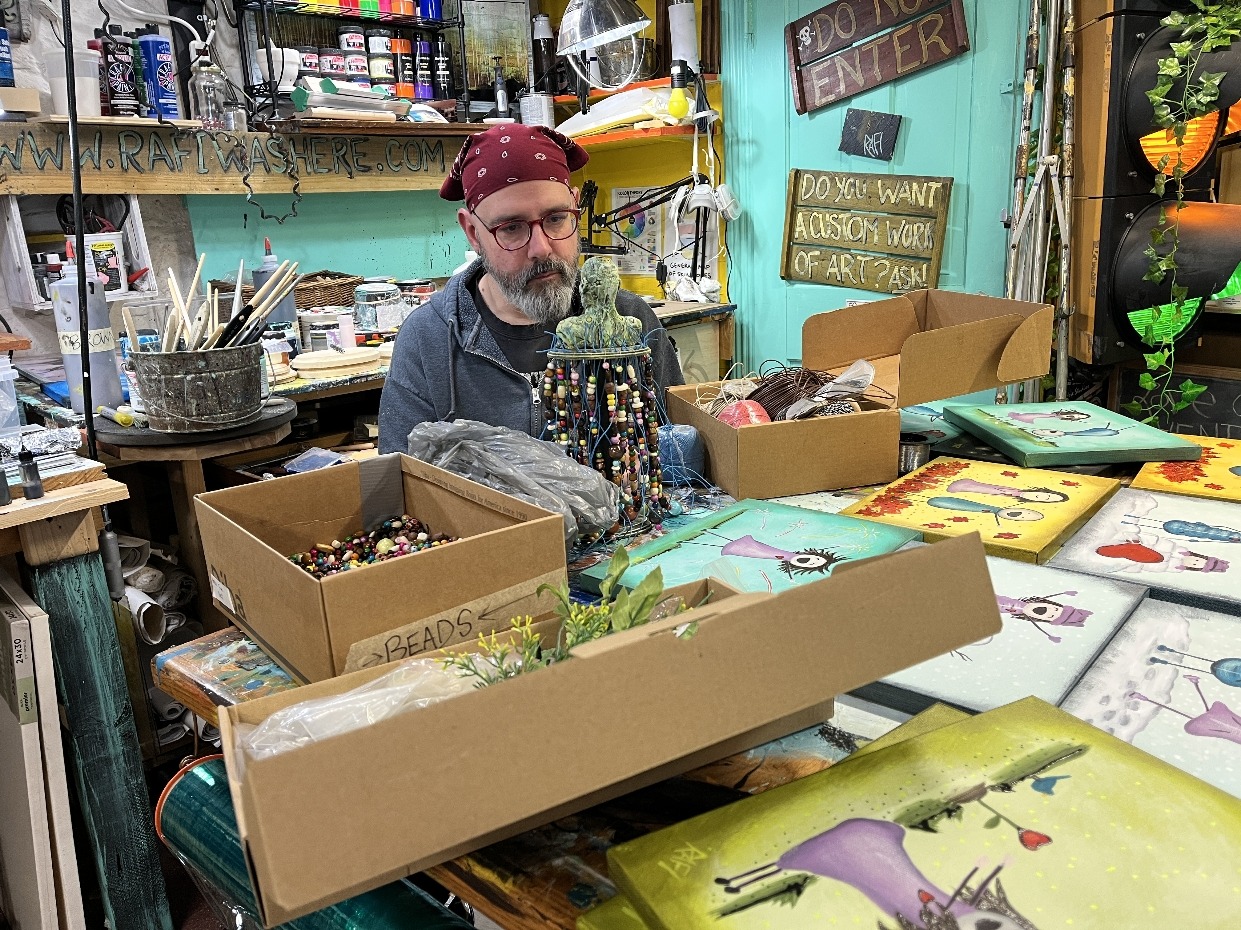
An artist sitting at a cluttered studio workspace filled with art supplies, painted canvases, and boxes labeled 'BEADS' and other crafting materials.

Apparently, Art Supplies Are Not “Raw Material”

We’ve been in business for a while, and I’ve never run into this issue. According to Pennsylvania Department of Revenue, the state doesn’t think art is “manufacturing.” Apparently, they think we just wave a magic wand and the artwork appears. They don’t see the process of creation, or the physical labor of turning a blank canvas into a product. To them, we aren’t “producing goods.”

The core of the problem is that this statute is fundamentally outdated. The lingo used in the current law is written to benefit specific large-scale industries while leaving the door open for interpretations that exclude small businesses and independent makers.

This decision is, to use a technical term, dumb. It directly impacts how I order my materials and how much it costs to keep the lights on in my studio.

A woman stands in an art gallery, looking thoughtfully at the artwork displayed on the walls. She wears a red shirt and beige pants, with a backpack slung over her shoulder.

Standing Up to the Pencil-Pushers

I’m not taking this lying down. I am currently in the process of fighting this at the state level. As artists who run small businesses, we’re often treated like we’re playing pretend. We have to fight twice as hard just to get established systems to recognize our rights as legitimate businesses.

I’m now in communication with my local state representative to make them aware that the Department of Revenue is effectively penalizing the creative economy of Pennsylvania.

Here is my “Rogue Challenge” for you: Whether you use this tax exemption or not, this is about the principle. If the state decides our work isn’t “manufacturing,” they are deciding our work doesn’t have value.

  1. Check your orders. If you’re a registered business, see if you’re being charged tax on your raw supplies.
  2. Contact your State Rep. Seriously. Send a polite but firm email. Tell them that art is manufacturing, that we are businesses, and that this ruling is a blow to local makers.

We have a bit of a road ahead of us to get the “powers that be” to see us as the economic engine we actually are. Sometimes, the only way to get a seat at the table is to stand up and start making some noise.

Banner promoting a local project for artists in Northwest Pennsylvania, featuring playful graphics and the text "ARE YOU A NORTHWEST PA ARTIST? JOIN OUR NEW LOCAL PROJECT FOR ARTISTS IN OUR REGION."

If you live in PA, here is an example letter you can copy, paste and rewrite to suit you:

Subject: URGENT: PA Dept. of Revenue Ruling on Sales Tax Exemption for Artists (Statute 72 P.S. 7201 (c))

Dear Representative [Name],

I am writing to you as a constituent and a small business owner in our region to bring a concerning matter to your attention regarding a recent shift in the Pennsylvania Department of Revenue’s interpretation of tax law.

Recently, the Department has been contacting major art supply vendors (such as Blick Art Materials) to state that the production of artwork no longer qualifies as “exempt manufacturing” under Statute 72 P.S. 7201 (c).

The manufacturing exemption is a standard business practice designed to prevent “double-taxation” by allowing businesses to purchase raw materials—which are then transformed into a new, finished product—without paying sales tax at the point of purchase.

The core of the problem is that this statute is fundamentally outdated. The lingo used in the current law is written to benefit specific large-scale industries while leaving the door open for interpretations that exclude small businesses and independent makers. By ruling that artists are not “manufacturers,” the Department of Revenue is effectively:

  • Invalidating our status as legitimate businesses: It suggests that the physical transformation of raw materials into a finished good only “counts” if it happens in a traditional factory setting.
  • Creating a Double Standard: It allows large corporations to enjoy tax breaks on production while penalizing the small, local studios that make up the backbone of the creative economy in regions like ours in PA.
  • Increasing Overhead Costs: This interpretation forces double-taxation on our materials, making it even harder for local makers to remain competitive.

The process of creating a sculpture, a piece of jewelry, or a painting is a physical transformation of raw materials into a manufactured good. I ask for your support in advocating for a modernized interpretation of this statute—one that recognizes the reality of 21st-century small business and ensures that “manufacturing” isn’t a term reserved only for big industry.

We are taxpayers, business owners, and vital contributors to the economic and cultural vitality of this district. I look forward to hearing your thoughts on how we can resolve this issue.

Sincerely,

[Your Name] [Your Business Name] [Your Address] [Your Phone Number]

Posted on Leave a comment

The Guide to Realizing You’re Already Perfect

Early 2025 decided to take a giant swing at us when Klee got sick, and for a while there, I just couldn’t handle sharing my thoughts anymore. Luckily, she’s feeling much better, not quite at 100% yet, but enough for me to bore you all with what I think are life lessons. Honestly, taking that forced break was a blessing in disguise because it helped us get our priorities straight as artists and as humans. It made me realize that, without even noticing it, I’d fallen back into the trap of perfectionism.

I’m not talking about having high personal standards, I’m talking about that sneaky need to stay “impressive” for other people. Somewhere along the way, as our popularity grew, I became an uptight stick in the mud trying to keep up. I was jumping through invisible hoops, worried that if I wasn’t constantly “upping my game,” people would see what a miserable impostor I am. I think it happens to all of us at some point. You have more eyes on you and you think, “things were simpler when no one was paying attention”.

An artist painting on a canvas in a workshop, wearing a red bandana and glasses, with colorful bracelets on one wrist.

The funniest thing about trying to be perfect for the world is that people will still find something weird to say. We’ve had hecklers in every area of creation. They will say your art, jewelry, books, videos, or podcasts suck and no one likes you. No matter what you do, someone out there will hate it. At some point you realize how futile it is to try and control their perceptions. You have zero control over whether someone is “astonished” by your work or think it is a pile of garbage. The only thing you can actually control is whether or not you like what you’re creating.

If I’ve learned anything from this year, it’s that perfection is a total lie. You are inherently perfect just doing your personal best with whatever bandwidth you have today. Some days your best is a masterpiece, and other days your best is just putting on pants.

So, go out there and do your best today, no matter what that entails. It will be perfect.

Watch The Video We Made On This Subject

Posted on 9 Comments

What No One Tells You About Becoming an Artist

Welcome to the “I wish I knew” club. Population: Every artist ever.

When we first pick up a microphone, torch, stylus, or a brush, we all have this vision of ourselves: sitting in a sun-drenched loft, effortlessly sweeping a charcoal stick across a canvas while wearing an oversized sweater that stays inexplicably clean.

The reality? You’re hunched over a desk like a gargoyle, your neck is making sounds like a gravel driveway, and you’ve just spent three hours drawing a single left hand that still looks like a bunch of overcooked sausages.

Since I can’t go back in time to save past us, here is the survival guide for every baby artist just starting their journey.

A painting of a woman cradling a sleeping baby, set against a bright yellow background, displayed in an artist's workspace.

1. The “Ugly Phase” is Mandatory

Every piece of art goes through a middle stage where it looks like it was cursed by a swamp hag. In the beginning, we think this means we’re failing. It doesn’t. It’s just the awkward teenage years of your painting.

The Lesson: Just keep pushing until the swamp hag leaves.

2. Failure is a Myth (But Giving Up is a Nap)

Here is the big secret: There is no such thing as failure. There are only “learning sketches” and “incidents where the paint won.” The only way to actually fail is to stop entirely.

And even then? Giving up is usually just temporary. You might throw your sketchbook in a drawer and vow to become a goat farmer, but three weeks later, you’ll see a cool sunset or a well-drawn elbow, and bam you’re back at the desk. You can’t escape the “Art Itch.” It’s a lifelong condition. Accept the breaks, but know that creative inspiration always has your house keys.

An artist in a creative workspace, wearing a bandana and glasses, concentrating on notes while surrounded by art supplies and colorful walls.

3. You Will Become a Hand-Hiding Ninja

At some point, you will realize hands are the final boss of art. You will become an expert at drawing:

  • Characters with their hands in their pockets.
  • Characters standing behind large bushes.
  • Characters who mysteriously had their hands replaced by hooks.

The Pro Tip: Just bite the bullet and draw the hands. Draw them all the time. Trust me, you’ll get really good at it. Use your own hand as a reference. Yes, you will look weird taking 40 photos of your left hand in a “holding an energy ball” pose. Do it anyway. You’ll thank me later.

4. Reference is Not Cheating

There is this weird myth that “real” artists pull everything from their brains. Unless your brain is a high-definition 8K camera with 100% recall, use a reference. Using a photo of a toaster to draw a toaster isn’t cheating, it’s just making sure your toaster doesn’t look like a mailbox.

An artist carefully uses a torch to heat a metal ring on a workbench, surrounded by various tools and materials for crafting.

5. Your Workspace Needs Hazard Signs

You will eventually:

  • Dip your paintbrush into your coffee and drink it. Recently, a friend said it happened with their tea.
  • Wonder why your lower back feels like it’s on fire after being hunched over a painting all day.
  • Realize you have a streak of Cobalt Blue on your forehead that has been there since Tuesday.
  • Gas yourself with Flex Seal in an enclosed area until you lose your voice… oh, just me?

Just be careful. Yes, you cam probably withstand a lot when you are younger, but form better habits now, so you don’t regret it later. And, Buy a better chair. Your spine will thank you in ten years.

6. The Most Important Rule: Comparison is a Liar

You’re going to scroll through social media and see a 14-year-old who paints like Rembrandt. Your heart will sink. Stop that. That person’s Chapter 20 has nothing to do with your Chapter 1. The only person you need to be better than is the version of you that didn’t draw anything yesterday.

These are the six I’m sharing today, but there are many, many more. Have an awesome and creatively beautiful year!

Posted on 12 Comments

Our Ritual for Not Imploding in January

Every year on January 1st, Klee and I go through this weird, collective limbo. It’s like we wake up and suddenly forget how to be human. We just meander around the house, staring at walls, wondering if anything we’re doing actually matters or if we should be, I don’t know, learning to farm alpacas or something.

I think we get so geared up for “The New Year” and all those shiny opportunities that when we actually arrive, we just stand there like, “Now what?”

A woman with a playful smile wearing a turquoise shirt with a ruler graphic and the text 'YOU ROCK' stands next to a man with glasses and a red bandana, wearing a black t-shirt that reads 'ARTROVERTS.' They are in an artistic environment with colorful paintings in the background.

Luckily, the “what” usually involves a massive amount of brain-vomit.

To get our bearings back, we sit down and do a total brain dump. Every idea, every project we’re already doing, and every “maybe one day” dream gets written down until it’s tangible. Then, we spend about ten minutes feeling completely overwhelmed by how long the list is before we start the glorious process of cutting things out.

We only keep the stuff that actually makes us feel excited.

A lot of people set financial goals in the beginning of the year, we set FEELING goals. I think setting strictly financial goals for the year is kind of silly. Sure, you can say you want to make $X amount, but if you aren’t having fun and you’re bored out of your mind, it’s not sustainable. You’ll quit by March. We gravitate toward what gets us fired up. If the excitement is there, the work happens, and the money usually follows the work. At least, that’s what we believe.

A person kneeling on a carpet, organizing a variety of index cards spread out in rows on the floor, while surrounded by furniture.

Once the list is pruned, we tackle the physical disaster area. Everyone knows that when you’re in the middle of a project, the studio (and the house) looks like a creative tornado hit it. Cleaning up the clutter isn’t just about finding the floor again; it’s about making space for new opportunities. You can’t look forward if you’re tripping over a half-baked project from last July.

But the biggest thing we do is a “Superman Check.”

It’s easy to plan for the future and pretend you’re a superhero who doesn’t need sleep. But are you giving yourself breaks? Are you giving yourself time to actually enjoy the journey? Are you giving yourself time to just… think?

A cozy indoor setting featuring two individuals engaged in discussion. One person is seated on a stool, while the other sits on a chair, holding a book. The room is decorated with musical instruments, a calendar, and various notes on the walls, creating an artistic and creative atmosphere.

Here are a few other things we’ve added to the ritual to keep us from burning out:

  • The “Let It Die” List: This is the opposite of a to-do list. We identify the projects or habits that are draining us and officially give ourselves permission to kill them off. If it doesn’t serve the soul, it’s gotta go.
  • The Energy Audit: Instead of a schedule, we look at our energy. When are we most creative? When are we most “introvert-fried”? We try to build our days around how we actually function, not some corporate 9-to-5 dream.
  • Small Wins First: We pick one tiny, easy thing to finish in the first week. It breaks the “limbo” spell and reminds us that we actually know how to get stuff done.
A person playing a xylophone in a music studio filled with various instruments, including guitars and puppets in the background.

Our New Year ritual might sound a bit touchy-feely. It’s all about emotions and how we feel. But let’s be honest: your feelings are the driving force of your business. If you don’t care for them, you’re going to burn out, and a burned-out artist doesn’t make much art.

So, here’s to being awkward, clearing the clutter, and only doing the stuff that makes us feel alive.

Stay brave, stay weird, and let’s make some cool stuff this year.

Rafi

Posted on 6 Comments

A CREATIVE PSA: Don’t Be Dumb Like Me

I wanted to share a little warning with all of you today.
A friendly, heartfelt, “learn from my mistakes” kind of post.

Or, more accurately…

A don’t be dumb like me post.

A couple of days ago, Klee and I were deep in the mad holiday rush. Orders were flying out the door, the studio looked like a creative tornado had touched down, and we were prepping for our last winter show, the Holiday Makers Market at Clifford’s.

The show itself? Amazing.
The community showed up, we got to hang out with incredible local artists, and it reminded us (again) why we love doing what we do.

A smiling couple stands at their booth filled with handmade jewelry and colorful artwork at a craft fair.

The problem happened before the show.

The day before, while juggling a million things, my brain did that thing it does sometimes. You know the thing. I’m fully focused on one task, and then suddenly my brain goes:

“HEY. YOU SHOULD FIX THAT RANDOM THING RIGHT NOW.”

This time, it was a crack in our studio utility sink.

Perfect timing, right?

So naturally, instead of saying “maybe after the holidays” or “this can wait,” I decided this would be a great thing to squeeze into an already packed schedule.

Brilliant.

A cluttered artist studio sink area with various paintbrushes hanging on a rack, a utility sink showing signs of use, and a yellow painted base.

I caulked the cracks in the sink and then thought, “You know what would really seal this up? Flex Seal.”
I had a spray can left from when I worked on our gutters. Easy. Quick. Done in five minutes.

Except… not really.

It’s winter.
The studio has limited ventilation this time of year.
And even though I own masks and wear them regularly when I spray paint…

I decided (in the heat of the moment) that I didn’t need one.

“It’ll be quick,” I said to myself.
“It’s fine,” I said to myself.
“Future Rafi can deal with it,” I implied.

So I sprayed the sink.

Then another layer.

Then another.

Then… I emptied the entire can.

A close-up view of a utility sink with fresh white flex seal coating applied, showing uneven patches and a drain at the bottom.

If you’ve ever sprayed something inside a basin, you already know where this is going.
That spray doesn’t politely stay where you put it.
It bounces.
It comes back out.
And it hits you directly in the face.

Since I wasn’t wearing a mask, I basically inhaled those vapors like they were fresh mountain air.

Then (because apparently I hadn’t learned anything yet) I just went on with my day.

That night and into the next day, my lungs were not happy.
I was coughing up stuff, felt that deep chest irritation, and realized something was very wrong.

At the show, I couldn’t stay the whole time. I had to step out and go home a few times just to breathe and recover a bit. Klee just looked at me with a serious look and said, I’m worried about you. Never do that again. I nodded.

That evening, I did some steaming, focused on clearing my breathing, and thankfully things improved.

This morning, I woke up feeling better overall…
but with absolutely no voice.

None.
Gone.
Vanished.

Which brings me to the point of this whole post.

A cluttered studio space filled with art supplies, boxes, and unfinished artwork, showcasing a creative environment in disarray.

The PSA Part

Do not be dumb like me.

Seriously.

Here’s why this was a bad idea (in case my missing voice wasn’t convincing enough):

  • Cold weather + poor ventilation = bad combo
  • Spray sealants are not harmless
  • If you’re spraying inside a confined space, it will come back at you
  • “It’ll be quick” is a lie your brain tells you
  • Masks exist for a reason
  • Rushing + repairs = mistakes
A snowy backyard scene featuring a house, steps leading up to it, and a firepit, with snowfall creating a serene winter atmosphere.

What You Should Always Have on Hand

  • A proper mask or respirator for fumes
  • Ventilation (fans, open windows when possible)
  • Gloves and basic safety gear
  • The ability to say “this can wait”

So there it is.
My public service announcement for the day.

For anyone wondering, I’m feeling much better. Other than not being able to speak, I actually feel pretty good. Lungs are calming down, breathing is easier, and lesson very much learned.

If this post saves even one of you from doing something similar while rushing around your studio, garage, or workspace…

Then at least my poor decision wasn’t completely wasted.

Stay safe out there.
And wear the damn mask.

Posted on 6 Comments

Why Being an Artist Is Both Amazing and Absolutely Terrifying

This morning as I was spraying sealant on the studio sink (in an enclosed area with no ventilation so this message might be weird) I was thinking about something. I thought about the beautiful, ridiculous roller coaster that is being an artist. We have a pop up tomorrow at Clifford’s in Oil City and I find myself rushing around at the last minute trying to get everything ready for it. People often imagine that the life of a creative human is a serene, mystical experience filled with gentle inspiration, endless cups of perfectly brewed coffee, and large sunlit studios where inspiration strikes at the perfect moment.

Yeah… no.

Being an artist is one of the most amazing experiences you can have as a human, and one of the most terrifying things you can sign up for. It’s like having a dragon for a pet. It sounds awesome. It’s magical, powerful, life-changing, and occasionally it wants to set your hair on fire or eat your friends.

Let me explain.

A person holding a colorful painting in front of a vibrant mural depicting diverse scenes and characters, showcasing engagement and creativity in an artistic environment.

You Get to Create Worlds… Which Is Amazing.

You Also Have No Map… Which Is Terrifying.

Every time you sit down to create, you are literally pulling something out of thin air. That’s incredible. You get to build something that never existed before you walked into the room. Everything you do as an artist is uniquely yours. But, there’s no roadmap for creating something new, including an art career. Every attempt to succeed, every blank canvas, lump of clay, sheet of paper, or hunk of metal has the audacity to look you dead in the eye and say,

“So… you got a plan? Yeah right.”

And then the internal panic kicks in. That’s usually when many people quit. We talk ourselves out of that project or idea. This is where persistence comes in. Not only persistence, but the willingness to being unreasonably optimistic about what things will look like in the future. Every day, as an artist, I have to convince myself to put one foot in front of the other and keep going.

A person wearing a magnifying headset works on jewelry at a wooden workbench surrounded by various tools and materials in a colorful studio.

You Chase Passion… Which Is Amazing.

You Also Chase It Off a Cliff Sometimes… Which Is Terrifying.

Art comes from the heart. You follow gut feelings, wild ideas, and emotional lightning bolts. This is the stuff that makes life feel alive. But then there are days when your passion and optimism abandons you. You think, “I didn’t sign up for this chaos”. And you’re left standing in the studio thinking:

“Cool, so now what? Should I quit? Should I paint a potato? Should I take a nap? Should I panic? All of the above?”

Yet if you persist, your passion and optimism will always return… eventually. You’ll think, “Hey, I’ve got an idea…”
and suddenly you’re back in the game.

An artist sitting at a cluttered studio table surrounded by various art supplies, finished paintings, and open boxes labeled with craft materials.

You’re Vulnerable… Which Is Amazing.

You’re Also Too Vulnerable… Which Is Terrifying.

Every time you put yourself out there, every piece of art you make is basically you stripping off your armor.
You pour your thoughts, emotions, stories, and weird little quirks into everything you do. People don’t realize that when they look at your art, they’re basically looking at your guts in an artform.

This is why showing your work feels like saying, “Here is my soul, hope you like it, no pressure.”

But that vulnerability is also what connects you to other humans. It’s what makes someone walk up to your art, pause, breathe, and whisper, “That’s exactly how I feel.”

That moment? Worth every ounce of terror.

Three individuals stand outdoors by a calm lake, smiling and interacting with each other. The background features a lush green forest and houses. The person in the center has glasses and a colorful hat, while the others are dressed in casual and semi-formal attire.

Creative Freedom… Which Is Amazing.

Financial Uncertainty… Which Is Terrifying.

Ah yes, the glamorous life of a professional artist. You get freedom, adventure, new ideas, and the ability to build your entire life from scratch. And also anxiety. Lots of anxiety. A healthy sprinkling of “Will this sell?” A dash of “Do I need to become a barista?” (By the way, there is nothing wrong with that.) And a generous scoop of “Why does everything cost so much? Who decided this?”

But the truth is, the freedom you get as an artist is priceless. Yes, you are in uncharted waters and every learning curve feels like a disaster, but being an artist is all about being comfortable in the discomfort. It’s not for everyone (although it could be). The willingness to pick yourself up and keep moving forward through uncertainty is a superpower we develop the longer we do this. It’s not easy, but it is life changing. It’s terrifying, yes, but unbelievably empowering.

An art teacher demonstrating perspective drawing on a chalkboard, with students attentively engaged in the classroom.

Growth Is Amazing… But Growth Is Also Terrifying.

As an artist, you are always growing, evolving, pushing boundaries, and stepping outside comfort zones. That’s what makes the journey rich. But stepping outside comfort zones is basically code for, “I’m going to scare myself a little today.”

Every new project asks you to be braver than yesterday. Every big idea asks you to trust yourself more than feels reasonable. And every new creation or outreach teaches you something, usually the hard way because artists are stubborn creatures.

But oh, the feeling when it all comes together eventually. When you have a successful showing. When someone connects with your art. When the piece is finished. When your heart feels full. When you can step back and say,
“I did that. Me. My hands. My chaos. My creativity.”

That’s the moment that makes every fear worth facing.

A man wearing a green dragon onesie and a woman in a silver dress sit together in a cozy living room, surrounded by colorful artwork and soft lighting, with video recording equipment in front of them.

So Why Do We Do It?

Because art is the place where the terrifying becomes transformative. Because we get to take all our messy human feelings and turn them into something beautiful, weird, powerful, joyful, emotional, colorful, meaningful. Because we get to connect with people in ways words alone can’t touch. Because creating is freedom, and true freedom (even with its fear) is one of the most exhilarating experiences we get in this life.

Being an artist is wild.
It’s unpredictable.
It’s emotional.
It’s overwhelming.
It’s magical.
It’s terrifying.
It’s amazing.

And honestly, I wouldn’t trade it for anything.

Love,
Rafi And Klee

CONGRATULATIONS TO ERICA!

Posted on Leave a comment

Facing Fear Is Basically the Job Description of an Artist

I wanted to share something with you that’s been bouncing around in my head since our ride home last night from the Hatch Hollow exhibition. That was such a cool show. The art was beautiful, the space felt alive, and we met some awesome humans… and yet, the entire time, Klee and I were our usual awkwardly-introverted selves trying to look like we knew what we were doing.

Which brings me to the thing I keep thinking about.

Being an artist means living in a constant rotation of “oh cool… I’m terrified again.”
Every single thing we do is a push out of a comfort zone.

We put ourselves out there.
We show our art.
We share our weird ideas.
We get rejected.
We face crickets.
We push through doubt.
We get asked weird questions about how we look (especially by kids in school lol).
We get looked at like we’re strange for daring to do something many people don’t understand.

Two artists sorting through art supplies in a classroom, one wearing glasses and a blue sweater, the other with a bandana and beard, reflecting a creative and collaborative environment.

And somehow… we keep going.
Honestly, if you’re here reading this, you’re a freakin’ badass. Full stop.

People talk about bravery like it’s a singular moment, but as artists, bravery is the entire lifestyle. You wake up, you make something from your insides, and then you release it into the world knowing full well that someone might not get it, might not like it, or might straight-up ignore it. And you still do it. That’s not just brave… that’s wild, powerful, rogue-level bad-assery.

A Little Food for Thought

Last night reminded me that fear doesn’t go away just because we’ve been doing this for years. It just shows up wearing different outfits. Sometimes it’s a group gallery opening. Sometimes it’s launching something new. Sometimes it’s just saying hello to someone when your introvert circuits are fried.

All of it counts.
All of it is part of the ride.
All of it shapes who we are as creative humans.

Group of people at an art gallery exhibition, with a focus on three individuals in the foreground smiling at the camera. The background features artworks on display and attendees mingling.

How We Push Through Comfort Zones

Just a little something I’ve learned the hard, awkward way:

Acknowledge the fear, but don’t let it drive. Let it sit in the passenger seat and complain, but keep your hands on the wheel.
Take the small step, not the perfect step. Fear loves perfection. We don’t.
Celebrate the weird victories. Did you talk to one human today? Did you post that thing that made you sweaty? Did you show up? Victory.
Remember why you do this. Not for approval, not for permission, not for the algorithm. You do this because you have something inside you that won’t shut up until you create it… and you might as well share it with the world.

We are all out here stumbling forward together, pushing boundaries, and doing the uncomfortable, magical work of making something from nothing.

You’re not alone. You’re not strange. You’re not behind.
You’re an artist, which means you’re braver than you think, more capable than you realize, and part of a community of rogues who refuse to give up.

Love you awesome humans. Keep stepping outside that comfort zone, even if it’s just one wobbly step at a time.

-Rafi

A colorful banner promoting a Patreon page for artists, featuring two smiling individuals, Rafi and Klee, inviting viewers to join for tips and special offerings.
Posted on Leave a comment

Why Connecting Matters (Especially as an Artist)

This year, Klee and I had a lot of downtime. Life kind of hit the pause button for us, and we had to step back from doing the things we normally do in the community. And you know what? I learned something important about being a creative human.

As artists, we love our hermit mode. There’s nothing quite like disappearing into the studio, spending hours creating, or just sitting quietly with our thoughts. It’s a beautiful part of the process, but if your only connection to the outside world becomes social media, you might be in trouble.

A group of people gathered in a bright, cozy room, engaging in conversation and activities, with two individuals taking a selfie in the foreground.
Klee and I connecting with amazing artists at the Creative Conference

When Klee got sick and we had to slow down, we made a rule: get off the screens. Disconnect from the endless scroll, the opinions, the algorithms, the illusion of connection. What I noticed during that time was how dark my perception of the world started to get. I was losing track of what really mattered, connecting one-on-one with people.

Listen, we have built a large online community of awesome people over the years, and we love connecting with you, but there’s a reason we communicate mostly through our blogs, YouTube, and Patreon. People have to actively be interested, and it doesn’t leave room for trolls or the unnecessary bull. It feels more real, more intentional, and closer to what true community is supposed to be. But, you can still feel isolated if you don’t get out there every once in a while.

A woman working on a project at a table in a creative workspace, surrounded by others engaged in various activities. She is holding a pen and focusing on her work while a box of materials sits nearby.
Hanging out with creative humans at the Makerspace

Over the years, I’ve probably repeated the same words in my videos, blogs, and anywhere else someone might listen:

  1. Create the art you want to create.
  2. Put yourself and your art out there in whatever way you can.
  3. Persist through the bullshit (from your mind and the outside world).

Rinse and repeat.

Recently, I came back to that simple doctrine. Somewhere along the way, I complicated things with too many steps, too many goals, and too many checklists. I was trying too hard, and I forgot that the most beautiful thing about being an artist is how organic it can be. Your art career can grow naturally when you allow it to.

A group of people participating in a painting class, seated at tables with easels and art supplies, engaged in creative expression.
Connecting with awesome people at a paint and sip we lead at The Exchange

Of course, the hardest step is always “persist through the bullshit.” You’ll face rejection, insecurity, fear, and some emotions that don’t even have labels. But if you keep going, it always leads you somewhere meaningful.

I’m so happy we’re out there in the community again, surrounded by creative humans and humans who support the arts. Sure, just like online, there might be some a-holes floating around, but our paths rarely cross when we’re doing awesome things with awesome people.

That’s why we’re really looking forward to our closing reception at The Red Brick Gallery. The opening reception was amazing. We met and talked to so many incredible people while surrounded by our art and Klee’s jewelry. Those moments, where we get to connect face-to-face with others and share what we love, are some of our favorites.

Four adults smiling together at an art exhibition, with colorful artwork displayed in the background and a warm, inviting atmosphere.
So many awesome humans at our opening reception (Redbrick Gallery)

Tomorrow, we’re taking a friend who’s visiting from out of town to see the exhibition, and then we’ll be back for the closing reception on Sunday, November 9th, from 4–6 PM. It’ll be the last day of the show before we pack everything up. If you are curious about what other events we are a part of, check out our EVENTS page.

Promotional image for the 'Interwoven' art exhibition at the Red Brick Gallery, featuring various artworks, jewelry, and sculptures by Rafi & Klee, with details of the closing reception on November 9th from 4-6 PM.

Right before the reception, ARCA is hosting a truly magical performance titled Rich and Wondrous Sounds: The Wurlitzer Theatre Organ Experience featuring Jonas Nordwall at 2 PM in Lincoln Hall. The newly restored 1928 McKissick Mighty Wurlitzer organ will fill the room with incredible sound: strings, winds, brass, and percussion all rolled into one magnificent experience.

Four individuals engaged in a creative art session, drawing and coloring with various art supplies, including colored pencils, on a table filled with papers and drinks. Pumpkins are displayed in the background, adding a seasonal touch.
The Exquisite Corpse game brings a lot of laughter and connection!

If you’re local, come out, enjoy the music, see some art, and connect with good people. And if you’re not nearby, I encourage you to do the same wherever you are. Go see a show, talk to the artists, laugh with strangers, and remember that real human connection is what keeps the creative spark alive.

Because at the end of the day, art is meant to be shared, and community is where it truly comes to life.

A man and a woman stand by a serene riverbank, gazing thoughtfully at the water surrounded by lush green hills under a partly cloudy sky.
Connecting to nature counts as well
Posted on 3 Comments

How I’m Still Winging It After Four Books?

So… I released a book! YAY!
And we had a Book Release Party Stream, and holy heck, it was awesome. Seeing all of you awesome humans pop in, chat, laugh, and celebrate with us! That moment was pure gold. I may or may not have ugly-cried off-camera (don’t judge).

There’s something incredible about spending months (okay, years) sweating over words, punctuation, and coffee stains, only to finally see the book out in the world. It’s like raising a kid who finally moves out… except the kid is made of paper and crippling self-doubt. It’s amazing seeing the thing you wrestled into existence finally out there. You spend months hunched over a laptop, muttering at Word documents and threatening your spell checker, and then one day… boom ! It’s a real book!

A person holding a page from a book titled 'Dear Artist' with text discussing creative block, accompanied by an illustration of a character debating whether to push through or take a break.

Let’s be honest, I feel like I have a handle on creating art and sculpture. Paint? Metal? Wood? No problem. Writing? Pfft. Total mystery. I’ve published four books now, and I still have no idea what I’m doing.

Like, I’ll sit there thinking, “Ah yes, I’ll write a profound paragraph that will move humanity.”
Three hours later: “Why does every sentence sound like I’m trying to explain taxes to a squirrel?”

The learning curve for me has looked like this:

  • Book 1: “What’s a copyright?”
  • Book 2: “Wait, I have to format this myself?”
  • Book 3: “Why do I hate every word I’ve ever written?”
  • Book 4: “Okay, maybe I’m getting the hang of this?” (Narrator: he is not.)
A cartoon depicting a character in an art studio painting a dog on an easel. The text reads: 'IF YOU WAIT UNTIL IT'S PERFECT, YOU'LL BE WAITING FOREVER. Just paint the damn thing.'

Let me paint a picture of my writing process so you understand where I’m coming from and how I’ve come to grips with writing:

  1. Stage One: Confidence. “I’ve got this. I’m an author now.”
  2. Stage Two: Doubt. “Wait… why does this sound like a grocery list?”
  3. Stage Three: Despair. “I’ve made a huge mistake.”
  4. Stage Four: Delusion. “Actually, this might be genius!”
  5. Stage Five: Editing. “Who wrote this garbage?? Oh right, me.”

It happens every time. It’s funny when I think about it. This pretty much describes my creative process. For example, in book writing adventures, here’s what I’ve experienced:

  • I once spent two days trying to decide whether “artist’s” or “artists’” had the right number of apostrophes.
  • I re-read entire chapters out loud just to realize I’d used the word actually 27 times.
  • My inner critic doesn’t even whisper anymore… it shows up in a bathrobe, eating chips, and says, “You sure this isn’t just word salad with feelings?”
  • Half my first drafts read like I’m trying to win an argument with myself.
  • Don’t even get me started on formatting. Every time I export a file for print, it’s like opening a book report full of red marks.
An artist reviews a stack of books at a cluttered workbench, surrounded by various art supplies and artworks in progress.

That being said, I started to notice something familiar in the chaos. The insecurity, the trial and error, the weird joy when something finally clicks. Writing a book isn’t that different from creating art.

When I paint or sculpt, there’s that ugly middle stage. You know, when everything looks wrong and you question your life choices. Writing has that too. You stare at the screen thinking, This makes no sense. I’m a fraud. I should go sell fruit baskets by the highway.

Then, just like in art, you keep showing up. You move things around. You trust that eventually, the mess will start making sense. It’s that same mix of doubt and wonder that keeps you going, the same muscle that turns chaos into creation.

At this point, I’m convinced writing a book is 20 percent inspiration and 80 percent figuring out what you did wrong after you hit publish. One of the biggest issues I ran into after publishing my book is ISBNs.

Two individuals seated at a table, each signing copies of the book titled 'DEAR ARTIST: DON'T GIVE UP!' surrounded by stacks of the book.

Oh, the glamorous world of ISBNs. You know those little numbers on the back of books? Yeah, those. They come from a company called Bowker, and they’ve been running the ISBN racket since the late 1800s.

It started with a guy named Frederick Leypoldt, a publisher who apparently thought, “You know what would make books more fun? Numbers!” Then R. R. Bowker took over and turned it into a business. And not just any business, a business that has been charging authors for numbers for over 145 years. I’m not saying it’s a monopoly, but… okay, it’s totally a monopoly.

Here’s how it works:

  • 1 ISBN = $125
  • 10 ISBNs = $295
  • 100 ISBNs = $575

It’s like a Costco membership for book numbers that make no sense. Buy in bulk, or pay the “I only need one” sucker price. And you need a separate ISBN for every format: paperback, hardcover, e-book, audiobook, second edition, third edition, even that “slightly-different-cover-because-I-changed-my-mind” edition. Each one needs a different ISBN.

A person with a bandana and tattoos is working at a bulletin board filled with small notes, while a sign above reads 'The Rogue Artist's: Survival Guide, written by Rafi.'

This is where I’m running into my next conundrum. The audiobook and e-book for Dear Artist is done and ready to go, but I don’t have any ISBNs to publish them under.

Honestly, it’s wild. I feel like Bowker could release a board game: “Guess how many ISBNs you forgot to buy!” Winner gets anxiety and a lighter wallet.

So yeah, I released the soft cover during the Book Release Party (woohoo!) and now I’m running a little fundraiser sale to raise money for the next batch of ISBNs. The goal? Get 100 of them so I don’t run out before I die or write another four books that I “accidentally” format wrong. The sale works like this, buy an original book drawing, poster, or signed copy of the dear artist book and we set that aside for a new batch of ISBNs. Everything is on sale to make it more irresistible.

An original drawing featuring a character holding signs that say 'Support Local Artists,' 'Will Paint 4 Support,' and 'Open Commissions,' alongside the book 'Dear Artist, Don't Give Up!'

We’re 42 percent of the way there (which feels like the perfect “Hitchhiker’s Guide to the Galaxy” number).

If you want to help us get there:
Buy an original drawing, poster, or signed book.
Every purchase helps me avoid future ISBN shortages, artistic meltdowns, and potential caffeine overdoses.

To everyone who tuned in to the book release stream. thank you. You made the whole thing unforgettable. I can’t tell you how good it felt to share that moment with you instead of just screaming triumphantly alone in my studio (though, to be fair, that has also happened).

You guys make this crazy ride worth it. You remind me why I keep writing, even when I feel like I’m wrestling with grammar and losing.

So here’s to doing it wrong, learning as we go, and celebrating every weird, wonderful victory along the way. I may still be winging it, but I’m winging it with style.

— Rafi