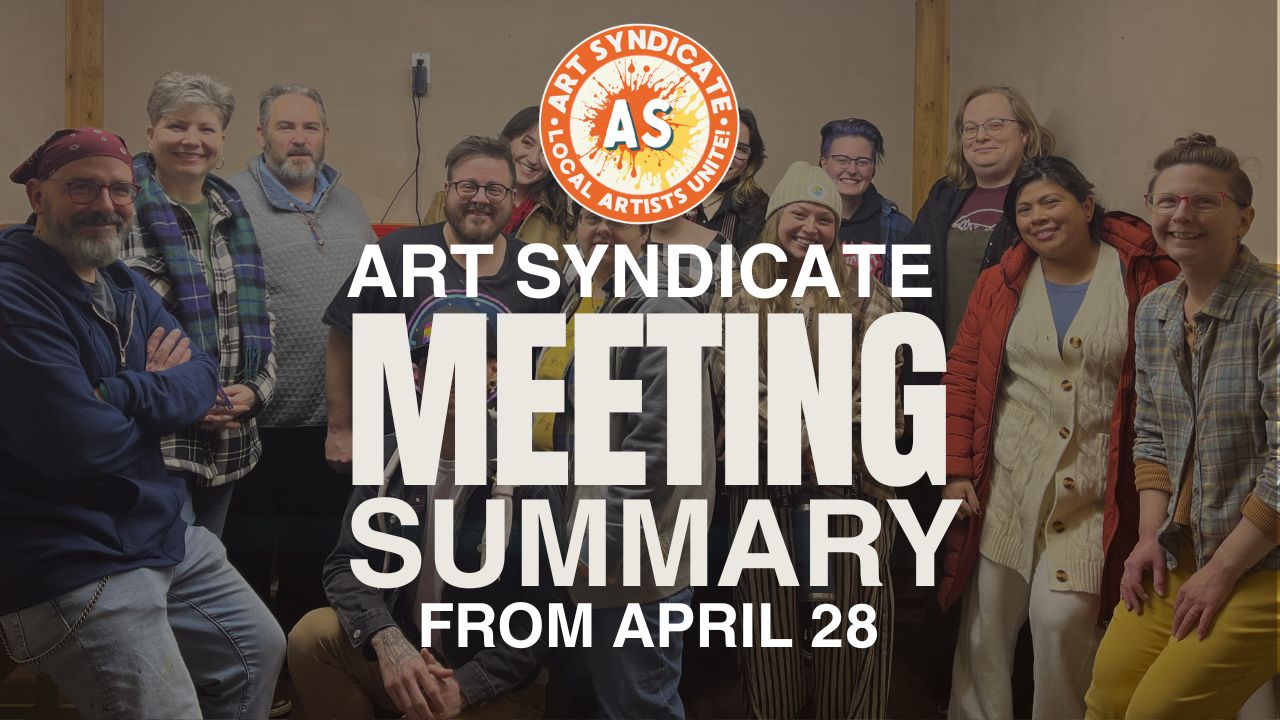
A massive thank you to all the incredible creatives who joined us at The Fallen Shoppe this past Wednesday, April 28th! The energy in the room was electric, and the vision for our community is clearer than ever. Here is the breakdown of the big moves we discussed and what’s coming next for the Art Syndicate.
1. The Makerspace: A Third Space for Your Craft?
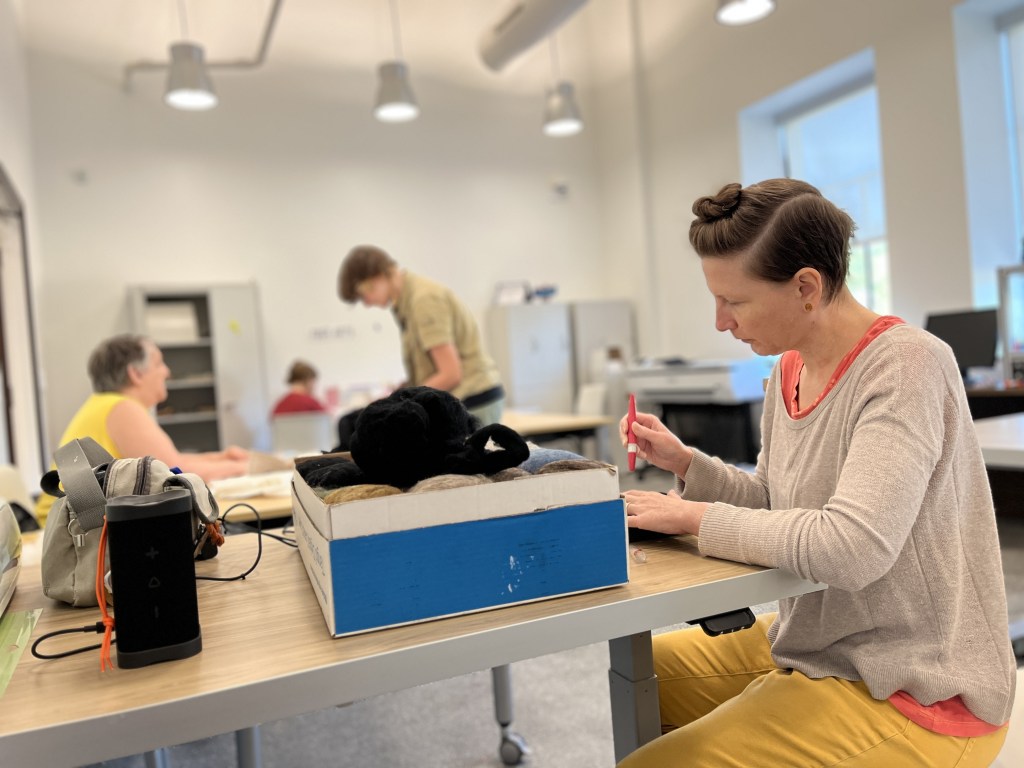
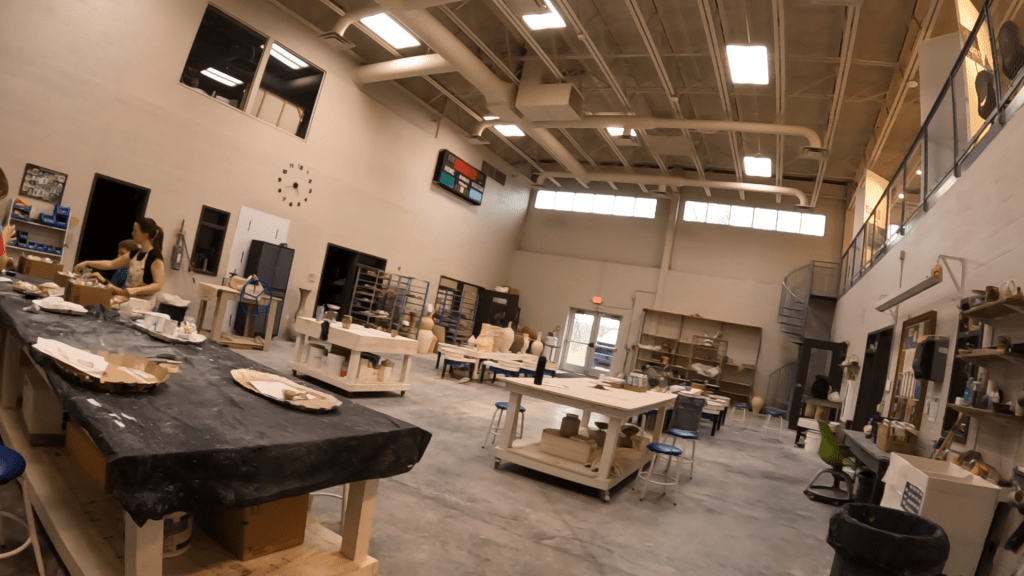
They are officially in the blueprinting stage of a new makerspace! In collaboration with the Economic Development Authority, the Makerspace Board is designing a “third space” for creatives.
- What’s inside: Plans may include a cozy lounge area, a laser cutter, sewing equipment, and a variety of hand tools.
- Status: Still a work in progress but there is momentum.
2. Mural Fest is a GO!
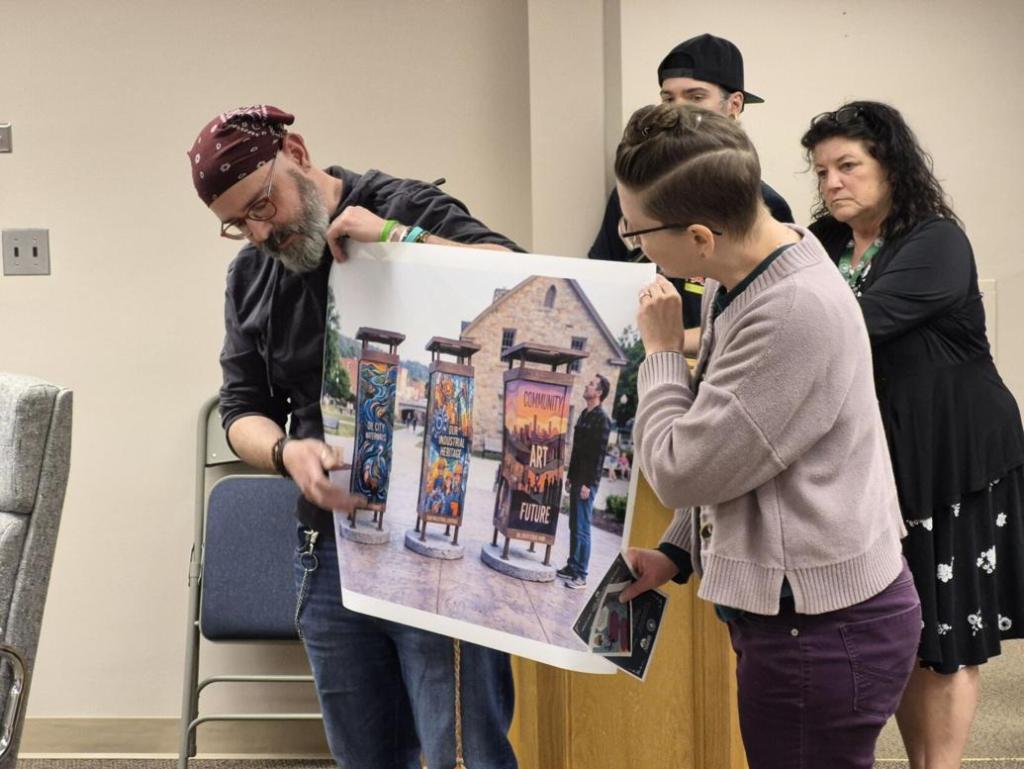
Public art changes the way people see a town, and we’re about to prove it. After a grant was initially denied, they decided to privately fund the project because they believe in this vision.
- The Project: We will be creating six-foot-tall, four-sided “mural monoliths.” * Artist Support: 16 regional artists will be selected to receive a stipend for their time and materials.
- The Goal: These monoliths will debut at Arma Fest in September and may even serve as permanent wayfinding signs for the city.
3. Regional Connection & Field Trips
We aren’t an island. One of our major goals is to connect with arts guilds in Meadville, Clarion, and Corey.
- The Philosophy: We took inspiration from “Hopecat” in Sharon. They’ve shown that if you give people a beautiful, welcoming space, their sense of what they are capable of increases.
- Next Steps: We are looking into organizing inspirational field trips… literally hopping on a bus together to see how other towns are making art work and bringing those ideas back to Oil City.
4. Fresh Events on the Horizon
The brainstorm session was wild in the best way possible. Keep your eyes peeled for:
- Wearable Art Show: An inclusive, “the crazier the better” fashion show in Pipeline Alley. This idea came from Cassie and SKYLAR.
- Summer Solstice/Ren Faire: A mid-summer themed event to celebrate the light. This idea from Kaleb.
- Plein Air Painting: Our local group continues to meet monthly to paint outdoors—it’s the perfect way to get out of the studio and into the community. Rachel was at the meeting speaking about this.
Notable Quotes from the Night
“But you drive through a small town and you see breathtaking art and murals and things everywhere, it makes you stop and reevaluate… there’s something different about this town.”
Next Steps & Action Items
We’re not just talking; we’re doing. Here is what we are working on before our next meeting:
- The “Art Rolodex”: Creating a shared, color-coded contact list of local artists to help us collaborate faster. Chelsey is creating this.
- Wearable Art Committee: Possibly forming a team to scout dates for late summer/early fall?
- Local Business Partners: Reaching out to spots like King’s Family Restaurant for gallery space for local work. Crystal introduced this and I will be sharing the info in the newsletter on Sunday.
Want to hear the full conversation?
The talent in this region is undeniable. Let’s keep building a space where that talent can’t be ignored. See you at the next one!
General Overview (TRANSCIPTS AND NOTES FOR THE MEETING)
Conversation Summary
The conversation was a meeting among members of an arts collective to discuss ongoing projects, provide updates, and brainstorm future initiatives. Key topics included the progress of a new makerspace, the successful funding and planning for an upcoming “Mural Fest,” and details about other events like the “Emergent Pedals” show and a recurring “Night Market.” The group also discussed the activities of a local plein air painting group and explored new ideas, such as organizing a wearable art show, a mid-summer festival, and collaborative field trips to other art-centric towns for inspiration. The overarching theme was fostering a vibrant, visible, and collaborative arts community to revitalize their region.
Key Points
The speakers provided several key updates and points:
- A makerspace was in the blueprinting stage, with plans for a lounge area, laser cutter, and sewing equipment. It was a collaboration with the Economic Development Authority, and while there was progress, logistical details like electrical installation costs were still being finalized.
- “Mural Fest” received private funding after an initial grant application was denied. The project involved creating four-sided, six-foot-tall “mural monoliths” painted by regional artists. The plan was to pay artists a stipend for their work.
- The group discussed the importance of connecting with other regional arts guilds in places like Meadville, Clarion, and Corey to share ideas and build a larger creative network.
- Inspiration was drawn from successful arts initiatives in other towns, such as “Hopecat” in Sharon, which demonstrated how creating beautiful, accessible spaces could empower a community. This led to the idea of organizing group field trips.
- A local plein air painting group was highlighted, which met monthly to paint outdoors, foster community among artists, and hold an annual show.
- New event ideas were brainstormed, including a wearable art show in Pipeline Alley, a mid-summer solstice/renaissance faire-themed event, and opportunities for artists to display and sell work at local businesses like King’s Family Restaurant.
Notable Quotes
- “But you drive through a small town and you see breathtaking art and murals and things everywhere, it makes you stop and reevaluate there’s something different about this town.” (19:25) – Speaker 4 said this while discussing the potential impact of the Mural Fest, emphasizing how public art can change the perception of a town.
- “They built their whole thing on the premise that if you give people of all socioeconomic backgrounds a space that is beautiful and where they feel welcome and where they feel on the level with anyone else that’s there, that what they feel they’re capable of… increases.” (18:28) – Speaker 1 said this when describing the philosophy of the “Hopecat” arts center in Sharon, presenting it as a model for their own community-building efforts.
- “It’s really about developing relationships with the artists in our community and getting out of our studios and we also do a show at the end of the year.” (21:08) – Speaker 7 said this while describing the purpose of the local plein air painting group, highlighting its dual focus on community and showcasing work.
- “Okay, this is an art town, but it doesn’t look like it. So how do we get it?” (1:03:06) – Speaker 14 posed this question, summarizing a central challenge the group was trying to address: making the town’s vibrant arts community more visible to outsiders and residents.
Kicker Quotes
- “We have so much talent in this region that I feel like every single one of these towns people should be stopping.”
- “A lot of the really great change that has happened is because of the artist community that’s there.”
- “What can we do in oil city that they have done successfully, but make it our own?”
Detailed Insights
Main Arguments
- The development of a local makerspace was a key priority, though it faced bureaucratic hurdles and logistical challenges. The speakers argued for its importance as a “third space for creatives” (0:05) and detailed the scaled-down but more achievable current plan for a space with hand tools, sewing equipment, and a laser cutter (1:43, 5:35).
- The “Mural Fest” was presented as a major upcoming public art initiative. The main argument was that these “mural monoliths” would add significant, lasting artistic value to the town, serve as potential wayfinding signs, and create a recurring annual event (8:30, 9:25). It was also argued that artists must be compensated, with plans for a stipend to cover time and materials (11:29).
- Collaboration and networking were positioned as essential for growth. The speakers argued for connecting with other regional arts guilds (14:45) and taking field trips to learn from successful arts towns (16:53), positioning these activities as vital for inspiration and strategic planning.
- A wearable art show was proposed as a new, engaging event. The argument was that it would be a unique and inclusive event (“the crazier, the better” (31:35)) that could engage reclusive clothing artists and even local high school students, thereby broadening community participation (33:27, 33:59).
Supporting Evidence
- To support the idea of a makerspace, speakers referenced the successful, volunteer-run “Hack Pittsburgh” as a model for what their space could become (6:24).
- The viability of the Mural Fest was supported by the fact that although a grant was denied, private funders loved the project so much they decided to fund it directly (7:47). The city council’s interest in using the monolith design for wayfinding was also cited as evidence of community buy-in (9:25).
- The argument for learning from other towns was supported by the specific, powerful example of “Hopecat” in Sharon. The speakers described its beautiful space and its proven philosophy that a welcoming environment increases participants’ sense of capability (18:28, 18:54).
- The potential success of a wearable art show was supported by a member who had direct experience running a similar annual event for three years in Phoenix, Arizona, and offered their curriculum and expertise as a resource (34:23).
Themes and Trends
Recurring Themes
- Community Building: The desire to connect artists with each other and the broader community was a constant theme, mentioned in the context of the makerspace lounge (0:07), the plein air group (21:08), and the idea of a wearable art show (33:27).
- Placemaking through Art: A recurring idea was using art to transform the town’s identity and make it a destination. This was central to the Mural Fest discussion (19:25) and the desire to make the “art town” identity more visible (1:03:06).
- Resource and Space Acquisition: The challenge of finding, funding, and developing physical spaces for art was a recurring topic, from the makerspace’s lengthy development (1:14) to other guilds looking for a permanent home (13:12) and the affordable rental options at the Transit building (25:09).
- Artist Support: The importance of supporting artists financially and professionally was a consistent theme, evident in the plan to provide stipends for Mural Fest painters (11:29) and the discussion of creating more opportunities for artists to sell their work (1:07:01).
Emerging Trends
- Inter-Guild Collaboration: A new trend discussed was the deliberate effort to connect with arts guilds in neighboring towns like Clarion, Meadville, and Corey to create a regional network, share ideas, and promote each other’s events (12:35, 14:50).
- Inspirational Field Trips: The idea of organizing formal group trips to other successful arts towns like Sharon emerged as a new strategy for gathering ideas and inspiration, moving beyond individual visits to a more collective, strategic approach (16:53, 1:03:59).
- Experiential and Unconventional Events: There was a clear trend toward brainstorming events beyond traditional gallery shows. The proposals for a wearable art fashion show (30:12) and a mid-summer solstice festival (37:13) indicated a desire for more interactive, thematic, and community-engaging experiences.
Interview Dynamics
Conversation Flow
The conversation flowed from structured updates to collaborative brainstorming. It began with leaders (primarily Speaker 1 and Speaker 4) providing detailed progress reports on established projects like the makerspace and Mural Fest. The tone was informational and organized. As the meeting progressed, the floor opened up, and the flow became more dynamic and interactive. Members began sharing information about their own groups (like the plein air painters) and spontaneously proposed new ideas, such as the wearable art show. The tone shifted from reporting to enthusiastic and creative, with rapid, overlapping exchanges as members built on each other’s suggestions.
Interaction Analysis
The interactions were highly effective and collaborative. The leaders presented information clearly, and other members asked pertinent clarifying questions (e.g., about makerspace management (0:58), Mural Fest dates (8:48), and application processes (10:46)). The brainstorming sessions were particularly productive; for example, the initial idea of a wearable art show was immediately expanded upon with suggestions to add themes, involve high school students, and draw on the experience of a member who had run a similar event. This demonstrated a supportive environment where ideas were welcomed and collectively developed rather than just presented.
Context and Background
Contextual Information
The conversation took place among a group of artists and community organizers in a small town, identified as Oil City (8:00). This group, referred to as the “art syndicate” (16:53), was actively working on multiple fronts to foster a local arts scene. They appeared to be a mix of long-time residents and newer arrivals who relocated to the area. The discussion referenced several local entities, including the Economic Development Authority, the Chamber of Commerce, and local businesses like the Exchange and Woods and River, indicating a network of community partnerships.
Related Events
Several past, present, and future events were referenced:
- Emergent Pedals: An art show opening “tomorrow night” at the Exchange (7:14).
- Mural Fest: A future event planned for July or August, where artists would paint monoliths (8:50).
- Arma Fest: An event in September where the completed murals would be debuted (9:00).
- Night Market: A market planned for the third Thursdays of June, July, and August in Linden Alley (25:48).
- Curb Market: A weekly market that occurred on Thursdays (26:10).
- First Friday: A monthly event from May through autumn where studios opened to the public (35:15).
- Venango Pride: An upcoming pride event for which vendor applications were open (41:04).
Potential Impact
The statements and plans discussed had the potential to significantly impact the local arts community and the town’s identity. The successful execution of high-visibility projects like Mural Fest could tangibly change the town’s physical appearance and attract tourism. The focus on inter-guild collaboration could create a more unified and powerful regional arts network, leading to larger-scale projects and wider audiences. The brainstorming of new, inclusive events like the wearable art show could engage a broader segment of the community, including youth and previously disconnected artists, strengthening the creative ecosystem from within.
Follow-Up Questions:
- What is the specific timeline for the makerspace’s electrical installation, and what are the proposed models for membership and “pay what you can” days once it is operational?
- For Mural Fest, what is the specific budget for artist stipends, and what are the criteria the selection committee will use to choose the 16 participating artists?
- Regarding the wearable art show, what are the next concrete steps to form a planning committee, and what would be the ideal date in late summer or early fall to host it in Pipeline Alley?
- How can the “art syndicate” formalize the idea of “inspirational field trips”? What would be the process for choosing a destination, arranging logistics like a bus, and ensuring the ideas gathered are formally discussed and implemented?
- What is the process for creating the shared, color-coded contact list of local artists, and what privacy protocols will be in place to manage that data?
- Could the group partner with the King’s Family Restaurant to host a reception or “meet the artists” night to promote the local art being displayed there?
SIGN UP HERE!
Discover more from Rafi And Klee Studios
Subscribe to get the latest posts sent to your email.